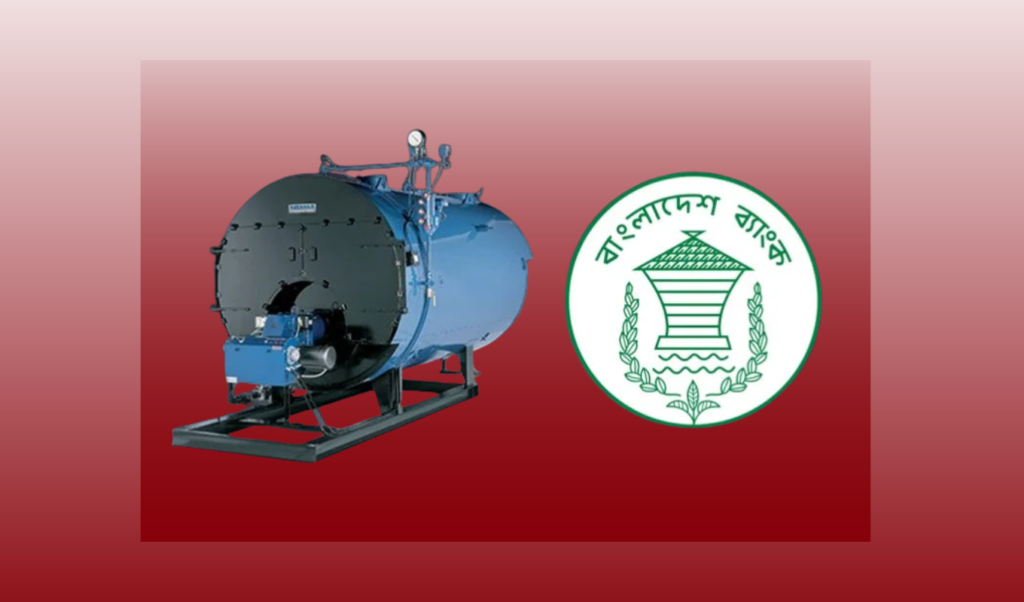
DHAKA — The central bank of Bangladesh has instituted a stringent regulatory framework for the importation of industrial boilers and their associated components, making prior official clearance mandatory. Operating under direct guidance from the Ministry of Industries, Bangladesh Bank has dispatched an official circular to all authorised dealers in foreign exchange, compelling financial institutions to strictly enforce these newly minted oversight measures before processing import documentation.
Issued on Tuesday by the Foreign Exchange Policy Department of the central bank, the directive aligns with a ministerial memorandum originally circulated by the boiler wing of the Ministry of Industries on 28 June 2026. The policy overhaul introduces layer-upon-layer of technical verification, seeking to curb unregulated machinery acquisitions and standardise the structural integrity of high-pressure vessels operating across the nation’s manufacturing landscapes.
Strict Timelines and Post-Sale Protocols
Under the revised framework, domestic and international industrial manufacturers face exceptionally tight construction windows. The central bank directive stipulates that boiler manufacturers must completely finish production within a maximum timeframe of 12 months, commencing precisely from the date their initial engineering drawings and structural designs receive official state endorsement.
The imposition of clear architectural deadlines aims to prevent outdated or compromised engineering blueprints from being utilised in active industrial manufacturing units.
The legislation similarly recalibrates the responsibilities of machinery suppliers following a transaction. Upon the successful sale or distribution of industrial boilers, suppliers are legally bound to hand over all necessary technical certifications, safety declarations, and registration documentation directly to the purchasing enterprise. Suppliers must additionally submit written notifications containing the explicit corporate names and operating addresses of the buyers to the Office of the Chief Inspector of Boilers, ensuring comprehensive state traceability for all high-pressure machinery.
Institutional Evaluation and Application Procedures
The pre-importation clearance protocol demands that businesses submit a comprehensive application via a prescribed institutional framework before entering into international trade agreements. Upon receiving an import dossier, designated administrative officers will rigorously verify the technical specifications and underlying safety literature before tendering a final review document to the Chief Inspector. The regulatory body retains the definitive authority to either grant the import licence or outright reject the submission based on the structural viability of the machinery.
Approved applications will culminate in an official clearance letter issued directly by the Deputy Chief Inspector of Boilers. Conversely, if an import petition is rejected, the regulatory body is legally obligated to provide a comprehensive, written justification detailing the exact engineering flaws or documentation deficiencies within seven working days. Disappointed applicants retain the right to rectify these structural anomalies and reapply for import clearance upon the settlement of a standard administrative fee.
To ensure absolute adherence to international safety metrics, the circular empowers national inspection teams to conduct physical audits of foreign manufacturing facilities. Inspectors are authorised to cross borders to evaluate the raw material quality and assembly processes at the manufacturer’s plant before giving final clearance for shipment to domestic factories. Beyond engineering metrics, the policy explicitly dictates that factories deploying these imported boilers must strictly uphold existing labour laws, guaranteeing comprehensive occupational health and safety protocols for the industrial workforce operating near high-pressure equipment.