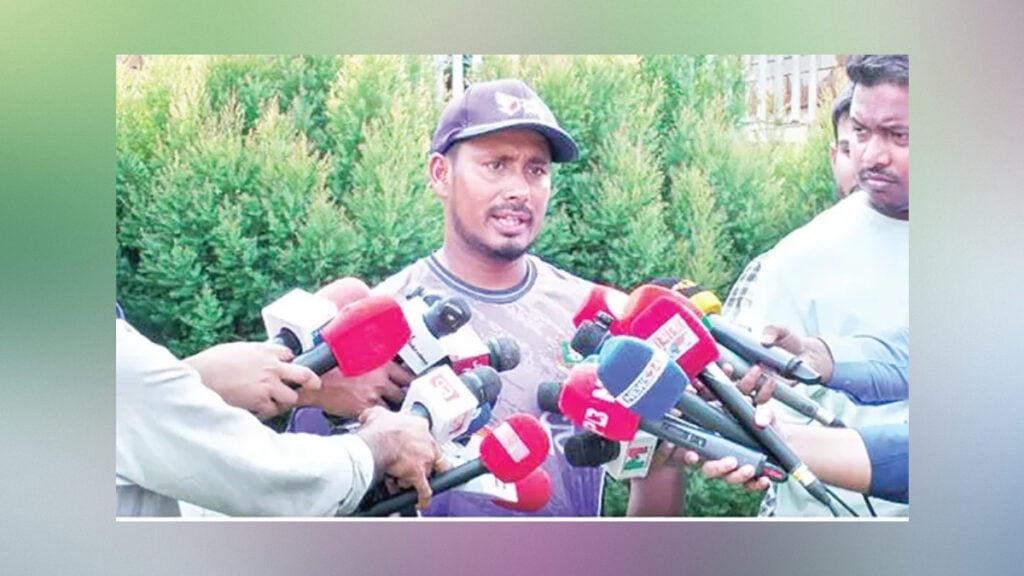
Bangladesh have begun their formal skills camp at the Sher-e-Bangla National Cricket Stadium in Mirpur ahead of their upcoming Afghanistan series in the United Arab Emirates, with the coaching staff placing particular emphasis on adaptability, endurance and the ability to handle different types of wickets.
The players have been spending extended periods in the nets, working on both batting and bowling. The sessions have included spin-bowling machines and specially prepared slabs for the fast bowlers, allowing the squad to rehearse situations that could arise in the UAE.
Bangladesh batting coach Mohammad Ashraful spoke to the media about the team’s preparations, injury concerns and the form of several batters.
Preparing for more than just Afghanistan’s spin
The use of spin-bowling machines is not solely a response to Afghanistan’s strength in spin, Ashraful said. Head coach Phil Simmons has regularly incorporated such specialised training into the team’s preparation, including before the previous series against Pakistan.
Bangladesh are scheduled to have six skills sessions before travelling to Dubai. While members of the Test squad had already been working on their fitness and individual preparation, the team’s collective skills programme has now begun.
Afghanistan could produce spin-friendly surfaces, but Bangladesh are preparing for a range of possibilities rather than focusing on one specific type of wicket.
“We are considering every possible situation and training accordingly,” Ashraful said.
Long spells and longer stays at the crease
The latest training session was deliberately demanding. The players worked for around two hours before lunch and another hour and a half after the break.
For the batters, the central objective was to develop the ability to remain at the crease for long periods. The bowlers, meanwhile, were asked to maintain the stamina and control required to deliver extended spells.
Ashraful said the same approach would continue in the following session, with the coaching staff looking to reinforce the mindset required for Test cricket.
The emphasis is particularly relevant when conditions are expected to vary. Batters may need to show patience on slower surfaces, while bowlers could be required to maintain discipline over lengthy spells rather than relying on short bursts of intensity.
Nahid Rana unavailable for the Test
Fast bowler Nahid Rana will miss the one-off Test because of injury and is currently undergoing rehabilitation.
His availability for the subsequent ODI series remains uncertain. Ashraful said the decision would be taken after discussions involving the head coach, captain and selectors, depending on the bowler’s recovery and fitness.
Bangladesh, however, have other pace options within the squad. Ashraful pointed to the team’s recent performances in Australia, where Bangladesh won one Test without Rana and competed strongly with their pace attack in the second match as well.
He said the players receiving opportunities were continuing to demonstrate their ability to contribute at international level.
Zakir Ali showing confidence again
Wicketkeeper-batter Jaker Ali Anik has returned to the squad after an absence of almost a year, and Ashraful has been encouraged by what he has seen in training.
According to the batting coach, Jaker had also looked in excellent touch during preparations for the first Test in Australia. He subsequently scored runs while playing for the Bangladesh ‘A’ team in South Africa and Zimbabwe.
Ashraful believes those performances have helped restore the confidence Jaker had previously shown with the bat. If selected in the playing XI, the coach expects him to make the most of the opportunity.
Planning for both high-scoring and difficult surfaces
Bangladesh are also taking different wicket and outfield conditions into account during their preparation.
Ashraful referred to recent women’s matches in Japan, where scores of more than 200 have been recorded. He said the ball has been coming nicely onto the bat and the fast outfield has made it easier for batters to find boundaries.
Bangladesh’s first practice match, by contrast, produced a total in the 140s, with a wet outfield making boundary-hitting difficult.
The coaching staff are therefore preparing for contrasting scenarios. On a good batting surface, the focus is on building totals beyond 200. On a slower wicket, the players are being prepared for matches where a score in the 140-160 range could still be competitive.
Ashraful also indicated that the coaching staff have been in contact with curator Gamini de Silva as part of their preparations.
Sadhman working to regain his rhythm
Opener Sadhman Islam has not been at his most consistent in recent Test appearances, but Ashraful remains confident in his ability to return to form.
Sadhman has played 30 Tests for Bangladesh and has focused primarily on the longest format for a considerable period. He has two Test centuries to his name and recently produced consecutive scores of 80 against Ireland.
Ashraful said Sadhman has been working hard in the nets and trying to address the technical issues that have affected his batting.
His experience in Test cricket remains an important asset, the coach said, expressing hope that the opener will soon return to the runs.
With the UAE series approaching, Bangladesh’s preparation is centred on flexibility rather than a single game plan. The team are working on staying at the crease for extended periods, maintaining discipline with the ball and adapting quickly when conditions change. For a squad preparing to face an Afghanistan side capable of exploiting spin-friendly conditions, that ability to adjust could become a significant part of the challenge ahead.