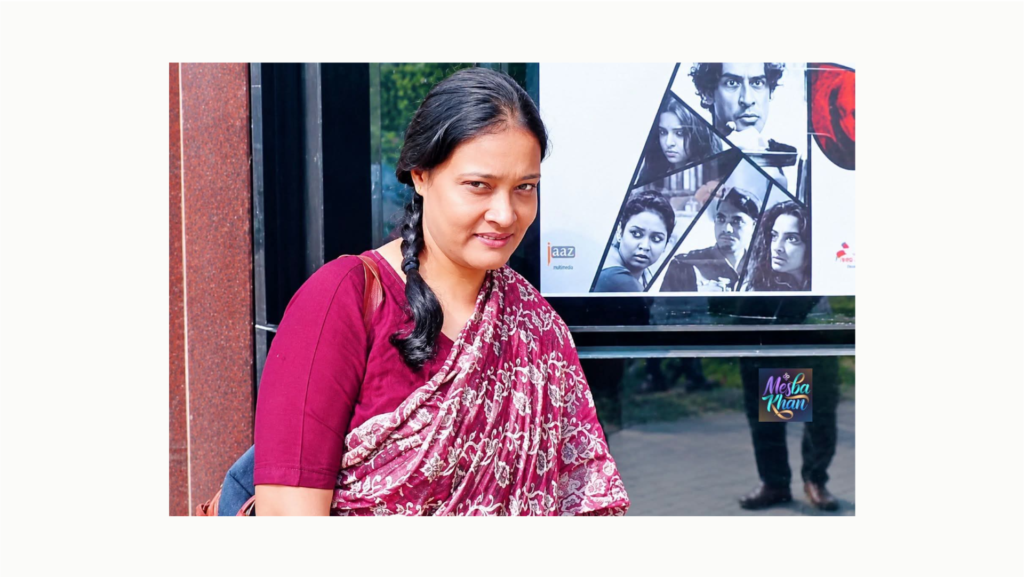
Shuku breathed her last shortly after midnight on Friday, 27 November 2026, while receiving treatment at a private hospital in the capital, Dhaka. Her death marks the loss of a talented creative professional whose work reflected a strong sense of storytelling and artistic expression.
Her passing has prompted grief among those familiar with her work and the wider cultural community. She was widely recognised for her contributions as a screenwriter and filmmaker, establishing a distinctive identity through television dramas, serials and film production.
A Life Shaped by Art and Storytelling
Matia Banu Shuku was the daughter of renowned language movement activist Abdul Matin, popularly known as Bhasha Matin, who played a significant role in organising the historic Language Movement of 1952. His contribution to the struggle for recognition of Bangla as a state language remains an important part of Bangladesh’s history.
Growing up in a family associated with the country’s cultural and political history, Shuku developed her own creative identity through education and professional work. Her sister was Maliha Subhan.
She studied in the Printmaking Department of the Faculty of Fine Arts at the University of Dhaka. Her academic background in the visual arts contributed to her broader creative outlook, which she later brought to television and filmmaking.
Shuku initially established herself as a screenwriter for television dramas and serials. Her ability to develop engaging narratives and create distinctive characters helped her gain recognition among audiences.
The television mega-serial Labanya Prabha was among the productions that brought her wider recognition. She also worked on notable projects such as Mon E Mon and the 52-episode television serial Ekta Kinle Arekta Free.
The latter was particularly significant in her career, as she not only wrote its screenplay but also served as an assistant director. The experience reflected her involvement in different stages of television production, extending beyond writing to the practical aspects of directing.
From Television to Film Production
Shuku made her directorial debut with the television series Too Late, broadcast on NTV. The project marked an important step in her professional journey, allowing her to demonstrate her abilities behind the camera.
She subsequently expanded her work into film production, where she continued to contribute to Bangladesh’s creative industry.
One of her most notable achievements came through the production of Lal Moroger Jhuti, a film set against the backdrop of Bangladesh’s Liberation War. The production received the National Film Award for Best Film, earning recognition for its contribution to the country’s cinema.
The Liberation War remains one of the most significant subjects in Bangladeshi filmmaking, providing a historical and emotional foundation for stories about sacrifice, resistance and the struggle for independence. Films based on this period also play an important role in preserving collective memory and introducing younger generations to the nation’s history.
The recognition received by Lal Moroger Jhuti stands as an important milestone in Shuku’s career and highlights her contribution to films dealing with Bangladesh’s historical experiences.
Family and Personal Life
In her personal life, Shuku was married to Nurul Alam Atique, a prominent television playwright, screenwriter and filmmaker. The couple had three children.
Both she and her husband were associated with Bangladesh’s creative and entertainment industries, contributing to television and cinema through their respective professional work.
Shuku’s career reflected a commitment to storytelling across different formats. From television scripts and serials to directing and film production, she worked in several areas of the entertainment industry and built a body of work that earned her professional recognition.
Her death has brought an end to a creative journey that spanned multiple dimensions of filmmaking and television production. Her contributions, particularly her work on Labanya Prabha, Ekta Kinle Arekta Free, Too Late and the award-winning Lal Moroger Jhuti, will remain part of her professional legacy.
As news of her passing spreads, tributes are expected from colleagues, cultural figures and admirers who remember her work and creative achievements.
Matia Banu Shuku’s death is a significant loss for Bangladesh’s cultural community. She leaves behind her family, colleagues and audiences, along with a body of creative work that will continue to represent her contribution to the country’s television and film industries.
Her family, relatives, colleagues and well-wishers are extended heartfelt condolences during this difficult time.
Farewell, Matia Banu Shuku. Your creative legacy will live on through your work.