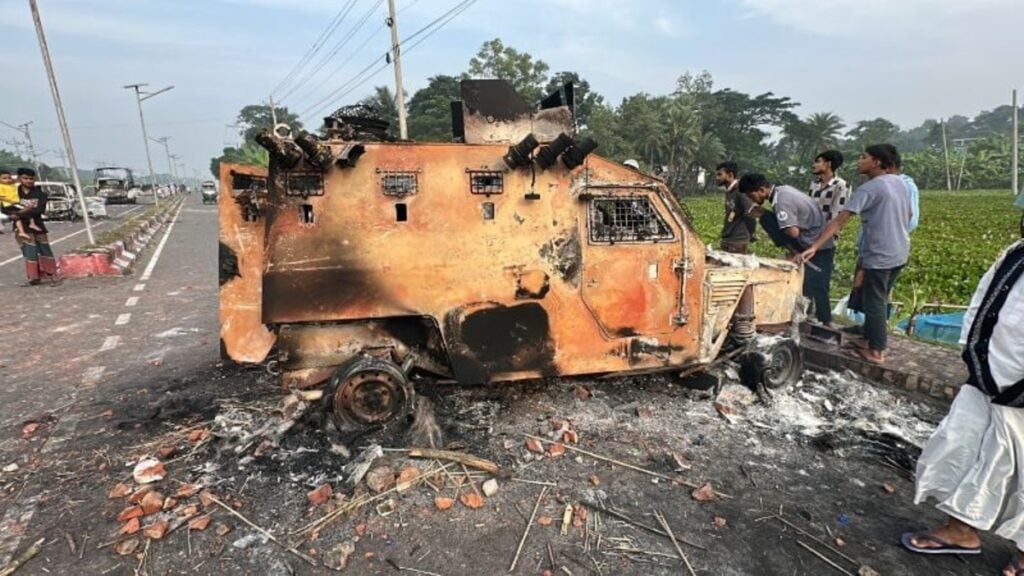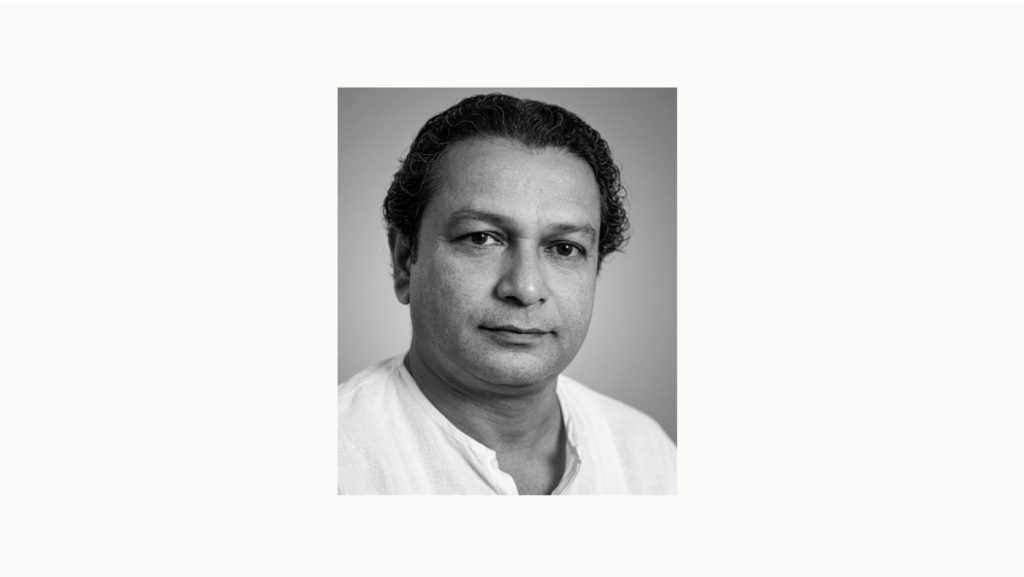
Bangladesh’s struggle for independence involved numerous individuals whose contributions extended far beyond the battlefield. While many prominent leaders and freedom fighters have received considerable attention, others who played significant roles behind the scenes remain relatively overlooked. Chittaranjan Sutar was one such figure. A politician, organiser and behind-the-scenes participant in the independence movement, he occupied an unusual position in Bangladesh’s political history. His life encompassed the preparations for independence, the Liberation War of 1971, parliamentary politics in the newly established country and a series of controversial developments that continued to attract attention long after he left Bangladesh.
His political journey was marked by both influence and uncertainty. While his involvement in the independence movement has been highlighted in various historical accounts, his alleged connections with intelligence networks and controversial political movements have also made him a subject of debate.
Early Life and Entry into Politics
Chittaranjan Sutar was born on 23 March 1928 in Batnatala village, in present-day Nesarabad Upazila of Pirojpur district, then part of Barisal district. His father was Lalit Kumar Sutar and his mother was Beloka Sundari. He was married to Manjushree Sen.
He completed his graduation at Brojomohun College (BM College) in Barisal, an educational institution with a significant place in the intellectual and political history of southern Bangladesh.
Sutar became involved in politics and social organisations during his student years. Much of his early political activity focused on the rights and representation of minority and Scheduled Caste communities in what was then East Pakistan. He was associated with the Scheduled Caste Federation, which sought to address social discrimination and secure political rights for historically marginalised communities. He subsequently developed links with left-wing political circles.
His electoral career began during a significant period in the political history of East Pakistan. In the 1954 United Front election, he contested as an independent candidate and was elected to the East Pakistan Provincial Assembly.
Following the political division within the Awami League in 1957, Sutar joined the National Awami Party (NAP). He later returned to the Awami League, where he became known as a close political associate of Bangabandhu Sheikh Mujibur Rahman.
His political affiliations reflected the changing alliances and ideological currents that shaped East Pakistan during the years leading up to Bangladesh’s independence.
A Behind-the-Scenes Role in the Independence Movement
Sutar’s importance in the history of Bangladesh’s independence movement is largely associated with his organisational activities and political contacts in India.
According to various historical accounts, he was entrusted with maintaining communication with Indian political circles and relevant authorities under the direction of Sheikh Mujibur Rahman. Such contacts were particularly important during the years when the political leadership of East Pakistan was preparing for the possibility of a major confrontation with the Pakistani authorities.
During the Liberation War in 1971, his residence, Sunny Villa, in Bhawanipur, Kolkata, reportedly became an important meeting point and communication centre for Bangladeshi political leaders and organisers involved in the independence struggle.
The house provided accommodation and a degree of security for individuals involved in coordinating political activities during one of the most turbulent periods in the region’s history. Kolkata itself became a major centre of Bangladesh’s wartime political and diplomatic activities, hosting leaders, activists, refugees and representatives of the provisional government.
Accounts of the period have highlighted Sutar’s role in facilitating communication between senior Awami League leaders, including Tajuddin Ahmad, and relevant Indian political circles. His residence has also been mentioned in discussions about the early contacts and planning associated with the formation of the Mujib Bahini.
The Liberation War was not fought solely through armed resistance. Behind the military operations stood an extensive network of political negotiations, diplomatic initiatives, organisational arrangements and efforts to secure international support. Establishing reliable communication channels with India was particularly important for the emerging Bangladeshi leadership.
Sutar was among those whose activities were connected with this less visible dimension of the independence struggle. Although the precise extent of his contribution requires further examination through historical records and independent research, his name remains associated with the political and organisational networks that operated from Kolkata during 1971.
Political Career in Independent Bangladesh
Following Bangladesh’s independence, Sutar returned to the country’s political landscape and continued his involvement in the Awami League.
In the first parliamentary election of independent Bangladesh, held in 1973, he was elected as a member of parliament from the Swarupkathi-Banaripara constituency in the Pirojpur region as an Awami League candidate.
His political career subsequently entered another important phase when he became a member of the central committee of the Bangladesh Krishak Sramik Awami League, commonly known as BAKSAL.
BAKSAL was established in 1975 as part of Sheikh Mujibur Rahman’s proposed restructuring of the country’s political system. The initiative introduced a single national political platform and brought major changes to Bangladesh’s political and administrative arrangements.
Sutar also served as a nominated member of parliament during this period.
His transition from an organiser associated with the independence movement to an elected legislator and subsequently a member of the central leadership of BAKSAL reflected his changing position within the country’s political establishment. It also placed him among the individuals connected with the major political transformations that took place during the early years of independent Bangladesh.
Controversies, Allegations and the Banga Bhumi Movement
Despite his association with the independence movement and the early political establishment, Sutar’s name later became linked with several controversial developments.
His activities in Kolkata, the alleged use of alternative identities, claims about connections with Indian intelligence agencies and reported involvement in the Banga Bhumi movement have all contributed to the complex picture surrounding his political life.
Various accounts claim that Sutar used the name Bhujanga Bhushan Roy while staying in Kolkata. His residence, Sunny Villa, has also been described in some writings as a communication centre associated with India’s external intelligence agency, the Research and Analysis Wing (RAW).
However, the claim that he formally worked as an intelligence officer has not been established through widely available, reliable primary documentation. It is therefore important to distinguish between reported associations, historical claims and independently verified facts.
One of the most controversial aspects of his later political life concerns the Banga Bhumi movement, which emerged in Kolkata in 1977.
The movement reportedly sought to establish a separate state by bringing together certain areas of southern Bangladesh. Its objectives raised serious questions about Bangladesh’s territorial integrity and national sovereignty, making it a highly contentious subject in the country’s political history.
Several accounts have associated Sutar with the movement and claimed that he operated under the pseudonym Partha Samanta. However, the precise nature of his organisational involvement and the extent of his influence remain subjects requiring further historical investigation.
Another serious allegation concerns an alleged proposal made in 1972 by Sutar and Kalidas Baidya to India’s then Prime Minister, Indira Gandhi, suggesting that Bangladesh should become part of India.
This claim has appeared in various controversial writings. However, without reliable primary documents or independently verified evidence, it would be inappropriate to present the allegation as an established historical fact.
These controversies illustrate why Sutar’s political life requires careful examination. His documented participation in the independence movement and parliamentary politics should be assessed separately from allegations that remain insufficiently substantiated.
Departure from Bangladesh and Final Years
The political landscape of Bangladesh changed dramatically following the assassination of Sheikh Mujibur Rahman and most members of his family on 15 August 1975.
A few days before the assassination, on 11 August 1975, Sutar had left Bangladesh for India. He never returned to the country.
He spent the remainder of his life in India, with various accounts indicating that he lived in Kolkata and other locations. His departure came at a particularly turbulent moment in Bangladesh’s political history, when the country was approaching a period of profound institutional and political change.
Chittaranjan Sutar died in New Delhi, the Indian capital, on 27 November 2002.
His death brought an end to a life that had been closely connected with several important and controversial chapters of the political history of Bangladesh and the wider subcontinent.
A Political Figure Between History and Controversy
Chittaranjan Sutar’s life cannot easily be understood through a conventional political biography. His journey brought together several distinct phases of Bangladesh’s history: the struggle for minority rights in East Pakistan, the political movement for autonomy, preparations for independence, the Liberation War, the establishment of the new state and the political upheavals that followed.
His reported activities in Kolkata during 1971, particularly the significance attributed to Sunny Villa, form an important part of the accounts surrounding his contribution to the independence movement. His association with senior Awami League leaders and his subsequent role in the country’s parliamentary politics also deserve attention.
At the same time, the controversies surrounding his alleged intelligence connections, alternative identities and the Banga Bhumi movement cannot be overlooked. These issues require examination based on credible historical documents, independent testimony and verifiable evidence rather than unsubstantiated claims.
History often contains individuals whose contributions and subsequent actions generate sharply different interpretations. Sutar’s life offers an example of such complexity. His role in the independence movement, his political position in the early years of Bangladesh and the allegations associated with his later activities should all be considered within their respective historical contexts.
Remembering Chittaranjan Sutar, therefore, requires more than recounting the events of his life. It calls for a balanced assessment that recognises his place in the country’s political history while maintaining a clear distinction between established facts, historical interpretations and unresolved allegations.
For Bangladesh’s historians and researchers, his life remains a subject worthy of further investigation. A more comprehensive understanding of his activities, particularly during the Liberation War and his subsequent years in India, could help shed additional light on some of the less explored dimensions of the country’s independence struggle and its aftermath.