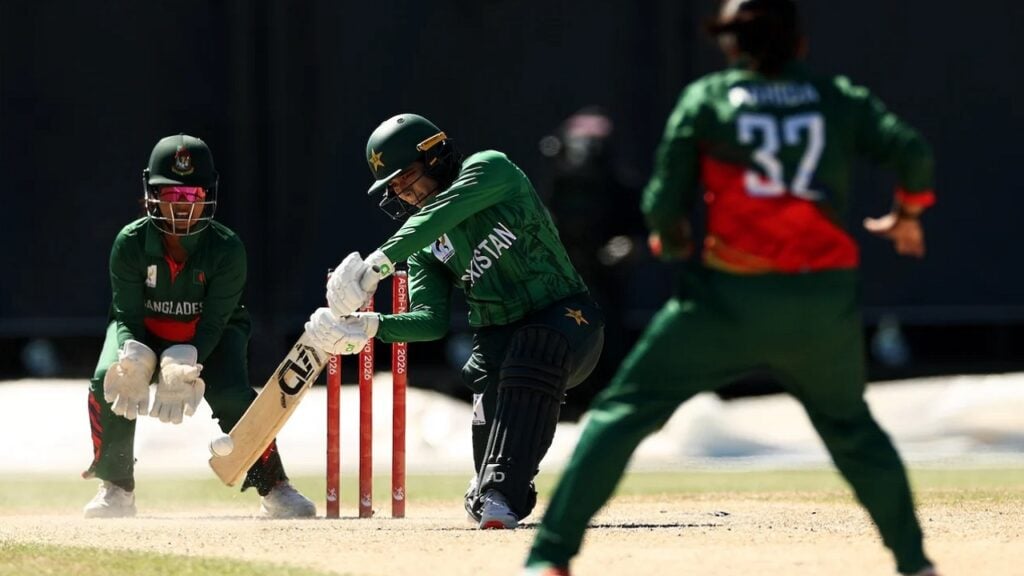
Bangladesh women’s cricket is facing a profound institutional breakdown following a dismal campaign at the Asian Games, where on-field struggles were heavily compounded by off-field turbulence and structural deficiencies. Failing to defend the bronze medal won in China in 2023, Bangladesh slumped to a 31-run defeat against Pakistan in the third-place play-off at the Korogi Sports Park in Nishine, Japan.
The team’s performance throughout the tournament remained chronically feeble. After advancing to the semi-finals on a toss rule following a rain-abandoned fixture against China, Bangladesh suffered a crushing 114-run defeat at the hands of India. The bronze medal fixture proved equally disheartening. Chasing a target of 145 set by Pakistan, the batting line-up faltered once again, managing only 114 runs for the loss of seven wickets in their allotted 20 overs.
Head coach Sarwar Imran laid bare the core factors driving the squad’s prolonged slump, tracing the roots of their psychological fragility back to the Women’s Asia Cup earlier in the summer. A bitter defeat to Sri Lanka in a match Bangladesh had comfortably controlled severely damaged team morale. That collapse initiated an alarming pattern of low scores—failing to breach the 120-to-130 run mark even against lower-ranked opposition such as Indonesia and the United Arab Emirates—which persisted right through to the Asian Games.
Tactical missteps during critical periods further crippled their chances. Analysis of the powerplay overs against Pakistan highlights a severe lack of urgency:
-
Target set by Pakistan: 145 runs
-
Runs required from the final 60 balls: 103 runs
-
Powerplay score (First 6 overs): 24 runs for no loss
-
Mid-way score (10 overs): 43 runs for the loss of 3 wickets
-
Final innings total: 114 runs for 7 wickets (Defeat by 31 runs)
Sarwar Imran noted that reaching 40 to 45 runs in the powerplay would have kept the pursuit manageable, but an overly defensive approach left an insurmountable run rate. The absence of natural power-hitters capable of clearing the boundary ropes rendered the late-overs recovery statistically improbable.
Beyond tactical errors, unrelenting administrative pressure and leadership instability severely undermined squad focus. Captain Nigar Sultana Joty announced her intention to step down from the Twenty20 leadership shortly before the tournament commenced, creating unwanted friction within the dressing room. Head coach Sarwar Imran expressed deep frustration over the constant public scrutiny directed at the leadership group, stressing that the primary hurdle facing the setup is psychological—specifically, the total failure to foster a supportive environment for players under stress.
The systemic crisis extends far deeper than short-term management issues. Unlike competing nations such as Sri Lanka, where grassroots development is integrated into hundreds of schools, Bangladesh lacks an established domestic pipeline for female cricketers. National selectors currently struggle to assemble a talent pool of more than thirty viable players at any given time. Without structural reforms—including the immediate implementation of inter-school tournaments, an active Under-18 competitive structure, and dedicated training facilities for women—Bangladesh risks being left permanently behind its South Asian peers.