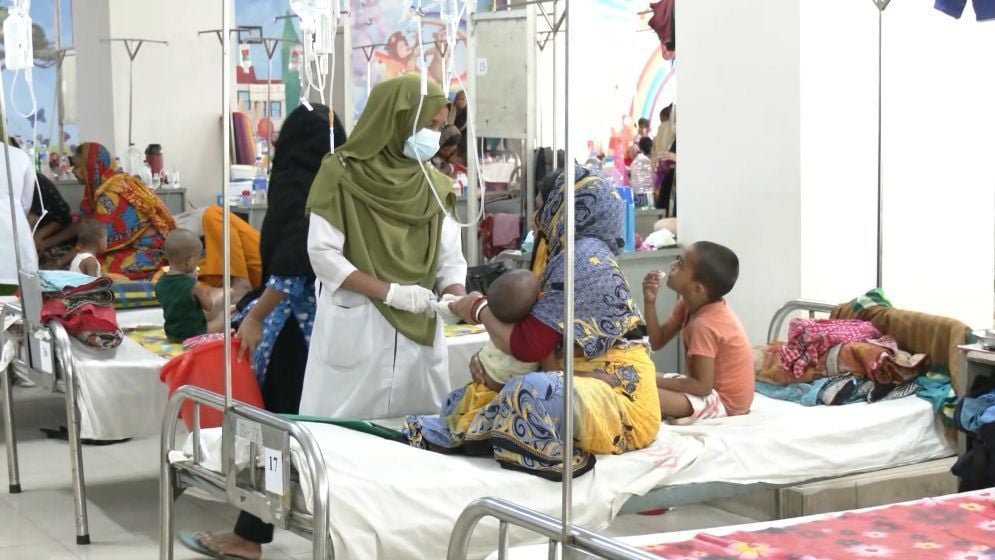
At least 22 children have died in India following an outbreak of the rare Chandipura virus, an infection that causes acute brain inflammation.
In response to the escalating health crisis, the Indian government dispatched National Response Teams (NRT) to the affected western states of Gujarat and Rajasthan. The news agency Anadolu Agency confirmed the development citing official health sources.
India’s Ministry of Health announced in a statement that these specialized teams, composed of medical and epidemiological experts, are working alongside state authorities to contain the spread. Their mandate includes strengthening local healthcare infrastructure, assisting in clinical management, and implementing rigorous public health measures across vulnerable districts.
According to guidelines from the World Health Organisation (WHO), the Chandipura virus is primarily transmitted through vectors such as sandflies, mosquitoes, and ticks during the monsoon season. The pathogen specifically targets children under 15 years of age, causing acute encephalitis syndrome—a severe condition characterized by rapid swelling of brain tissue that can become fatal within hours of onset.
Gujarat has emerged as the epicenter of the current outbreak. Praful Pansheriya, Gujarat’s Minister of State for Health, confirmed that blood samples from 184 suspected cases have been tested so far, with 35 returning positive for the virus. Neighbouring Rajasthan also reported two pediatric fatalities linked to the infection over the past month.
Health officials have launched door-to-door surveillance campaigns, vector control drives involving insecticide spraying, and public awareness initiatives to contain further transmission. Medical experts have urged parents to seek immediate clinical care if children exhibit sudden high fever, vomiting, seizures, or altered mental states.