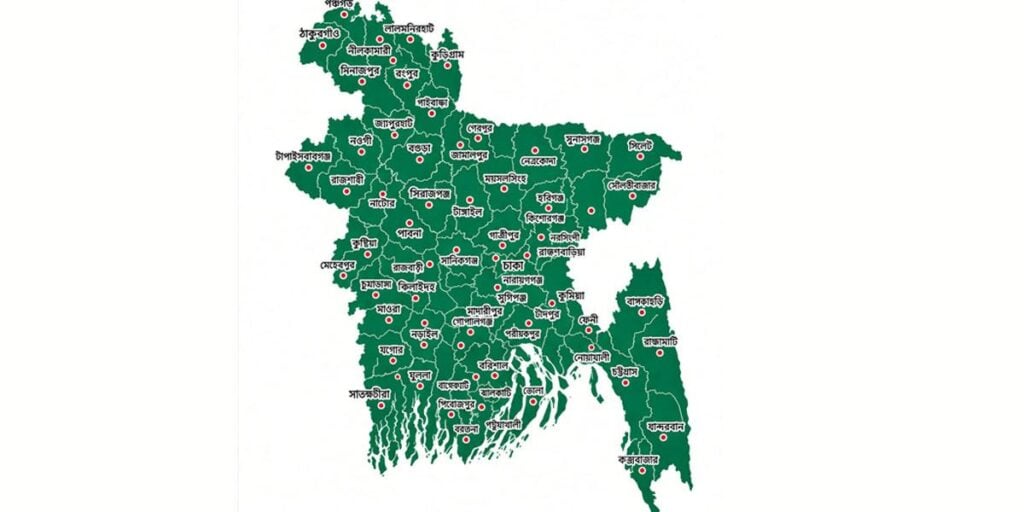
Interactive digital mapping tools are rapidly gaining traction amongst travel enthusiasts in Bangladesh, offering a visually compelling way to log visits across the nation’s 64 districts. Driven by a surge in domestic tourism, modern explorers are moving away from traditional travel journals in favour of personalized, shareable visual record-keepers.
At the forefront of this trend is “Unseen Bangladesh,” an interactive web application developed by travel enthusiast Md. Sabbir Hossain Robin. Designed to simplify trip logging, the platform features an intuitive interface where users can select districts directly from an interactive map, browse an organised alphabetical registry across the country’s eight administrative divisions, or locate specific areas using a targeted search bar. As districts are selected, an automated progress counter displays the user’s travel milestones (such as 10/64 districts completed). The platform also offers convenience features including “Select All” and “Clear All” options, alongside five distinct aesthetic themes to suit individual visual preferences. Travellers can further personalise their generated maps by uploading a profile photo and adding a custom title; if left blank, the system defaults to the national banner Amar Bangladesh (My Bangladesh). Once finalised, users can export high-resolution copies in PNG, JPG, or PDF formats for social media sharing.
For those seeking alternative tools or broader global mapping features, platforms like MapChart offer similar utility. By navigating to MapChart’s dedicated Bangladesh district template, users can select custom color palettes—assigning distinct hues to visited regions versus unexplored territories—before downloading the final graphic to their local devices.
This digital shift reflects a broader renaissance in Bangladesh’s domestic tourism sector. Over the past decade, improved infrastructure, expanded connectivity, and a rising middle class have encouraged more Bangladeshis to explore domestic destinations beyond traditional hubs like Cox’s Bazar and Sylhet. By turning personal travel histories into engaging visual graphic cards, these digital platforms foster a sense of community engagement, prompting social media challenges where friends compare map coverage and inspire further local exploration.