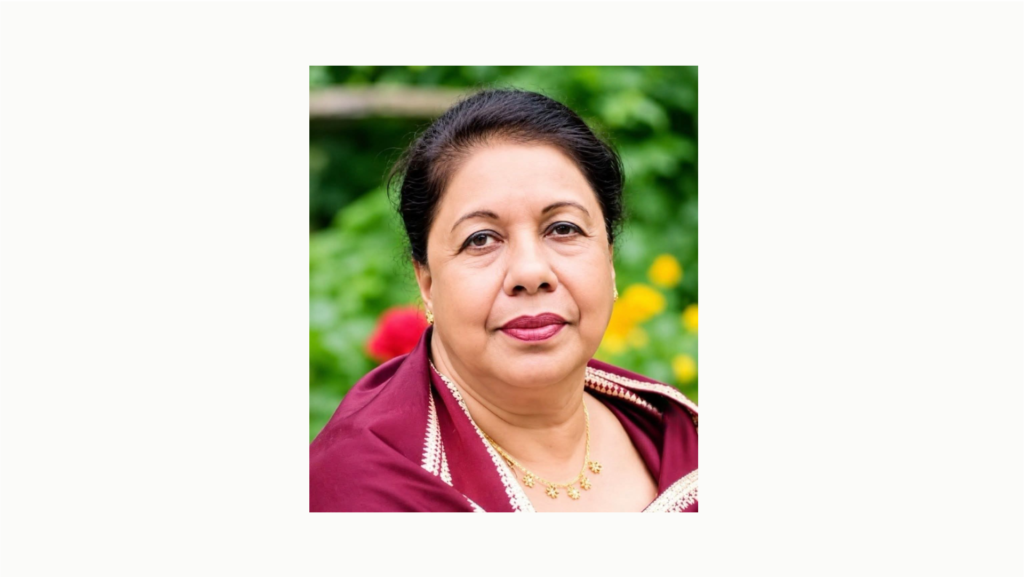
Born on 20 November 1932 into an educated and prominent family in Faridpur, she was the daughter of Justice Muhammad Ibrahim, a former Vice-Chancellor of the University of Dhaka, and Lutfunnesa Ibrahim. Growing up in an environment that valued education, intellectual freedom and humanism, she developed the qualities that would later define her life and career.
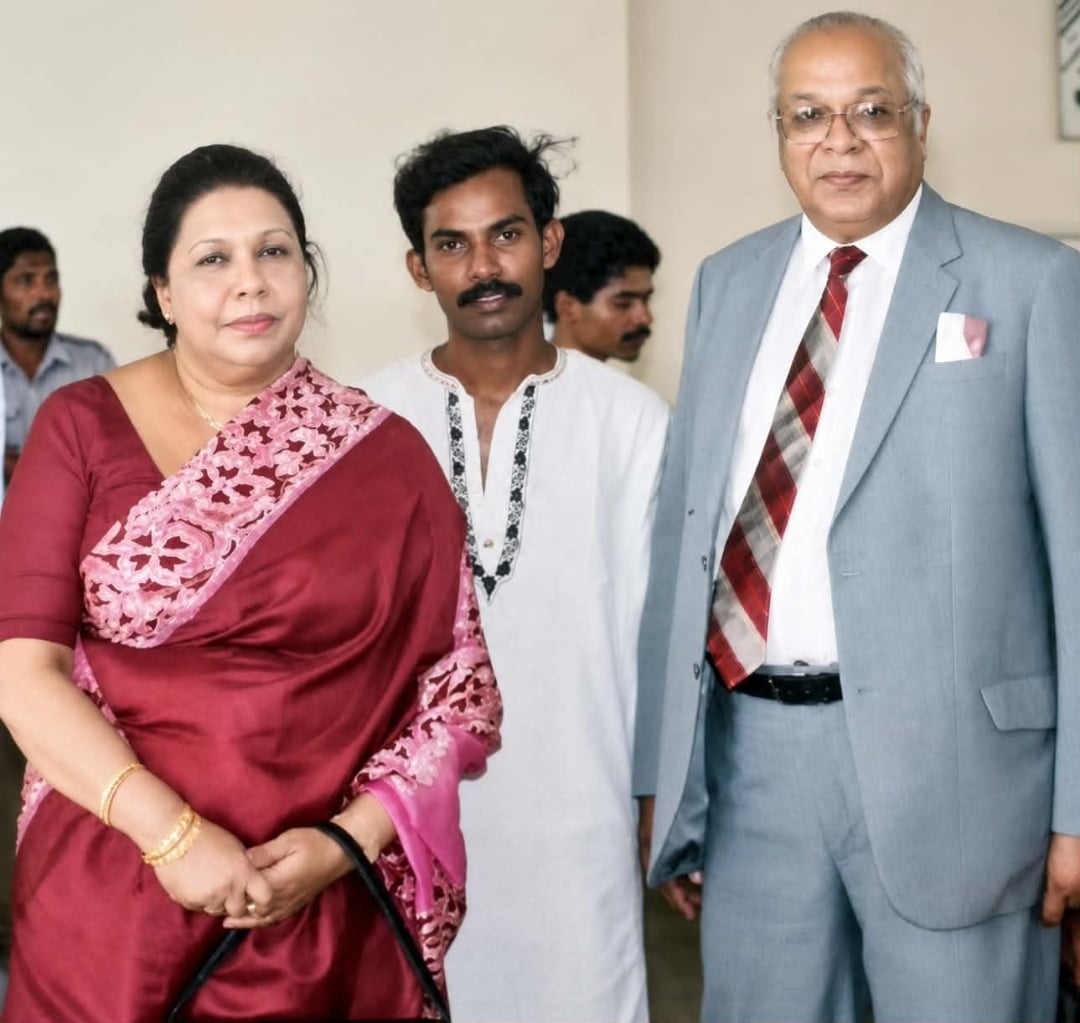
She was an exceptionally talented student. After completing her studies at Brojomohun College in Barishal, she enrolled in the Department of Islamic History and Culture at the University of Dhaka in 1950. She earned her honours degree in 1953 and her master’s degree in 1954. She subsequently pursued higher studies in the United Kingdom and obtained a PhD in 1960 from the School of Oriental and African Studies (SOAS), under the University of London.
Her academic achievements, however, were only one aspect of her remarkable life. She was also actively involved in the historic Language Movement of 1952, which sought to establish Bengali as one of the state languages of Pakistan. As a student at the University of Dhaka, she stood among those who challenged the restrictions imposed by the Pakistani authorities in defence of their mother tongue.
On 21 February 1952, she joined students who defied Section 144 and took to the streets in protest. Her involvement reflected the determination of women students to participate in the struggle for linguistic rights at a time when social and political barriers often limited their public engagement. She also played an important role in encouraging female students to join the movement and helping raise funds for its various activities.
The Language Movement was a defining chapter in Bangladesh’s history, laying the foundations for a broader struggle for cultural identity, political rights and national independence. Dr Sufia Ahmed’s participation demonstrated the important contribution women made to that movement, both on the streets and behind the scenes.
On 30 January 1961, she joined the University of Dhaka’s Department of Islamic History and Culture as a lecturer. Over the decades, she built a distinguished career through teaching, research and academic leadership. She served as the department’s chair from 1981 to 1984 and continued to make significant contributions as a professor until her retirement in 1993.
Her commitment to scholarship and education earned her widespread respect among colleagues and students. She was known for her dedication to academic rigour, historical inquiry and the development of future generations of researchers and educators.
In 1995, she became Bangladesh’s first female National Professor, marking a historic milestone in the country’s academic history. The recognition was not merely a personal honour; it represented a significant achievement for women in higher education, demonstrating that scholarly excellence and leadership could transcend longstanding gender barriers.
Her research focused primarily on the history and social development of Muslim communities in the Indian subcontinent, particularly Bengal, alongside the history of Turkey. Her notable scholarly work, The Muslim Community in Bengal (1884–1912), gained recognition in academic circles and was included in the curricula of universities at home and abroad.
She authored four research books and published more than 25 scholarly articles, contributing substantially to historical understanding of the social, cultural and intellectual evolution of Bengal’s Muslim population. Her work was valued for its research-based approach and its contribution to the study of regional history.
Beyond the university, Dr Sufia Ahmed held several important positions in national and international institutions. She served as a member of the board of directors of Bangladesh Bank, president of the Bangladesh Itihas Parishad (Bangladesh History Association) and international commissioner of the Bangladesh Girl Guides Association.
She also worked as a visiting professor at Bosphorus University in Türkiye and Alverno College in the United States, extending her academic engagement beyond Bangladesh. Her involvement in different institutions reflected her broad interests in education, cultural development, historical scholarship and international academic exchange.
Her contributions to the Language Movement and her work in education and culture were recognised with the Ekushey Padak in 2002, one of Bangladesh’s most prestigious civilian honours. In 2015, she received the Sufia Kamal Padak, further acknowledging her contribution to society and intellectual life.
Her legacy has also been commemorated through public recognition. A road in Dhanmondi, Dhaka, was named ‘Bhasha Sainik Dr Sufia Ahmed Road’ in her honour, ensuring that her name remains part of the city’s civic landscape.
In her personal life, she was married to Barrister Syed Ishtiaq Ahmed, a prominent lawyer, former Attorney General of Bangladesh and adviser to a caretaker government. They married in 1955. Their son, Justice Syed Refaat Ahmed, became the 25th Chief Justice of Bangladesh, while their daughter, Tasnim Raina Fateh, is a doctor.
Throughout her life, Dr Sufia Ahmed remained devoted to intellectual pursuits, historical research, education and humanistic values. She died on 9 April 2020, aged 87, while receiving treatment at United Hospital in Dhaka. Her death marked the end of a distinguished life and left a profound void in the country’s academic and cultural communities.
Dr Sufia Ahmed was more than a National Professor or an accomplished historian. She was a courageous participant in the struggle for linguistic rights, a trailblazer for women in academia and an inspiring example of how knowledge, conviction and patriotism can serve society.
Her life remains a testament to the power of education, self-respect, courage and dedication. Her contributions will continue to inspire future generations, and her name will remain deeply cherished in Bangladesh’s history.
With profound respect and heartfelt admiration, we remember National Professor and Language Movement activist Dr Sufia Ahmed.