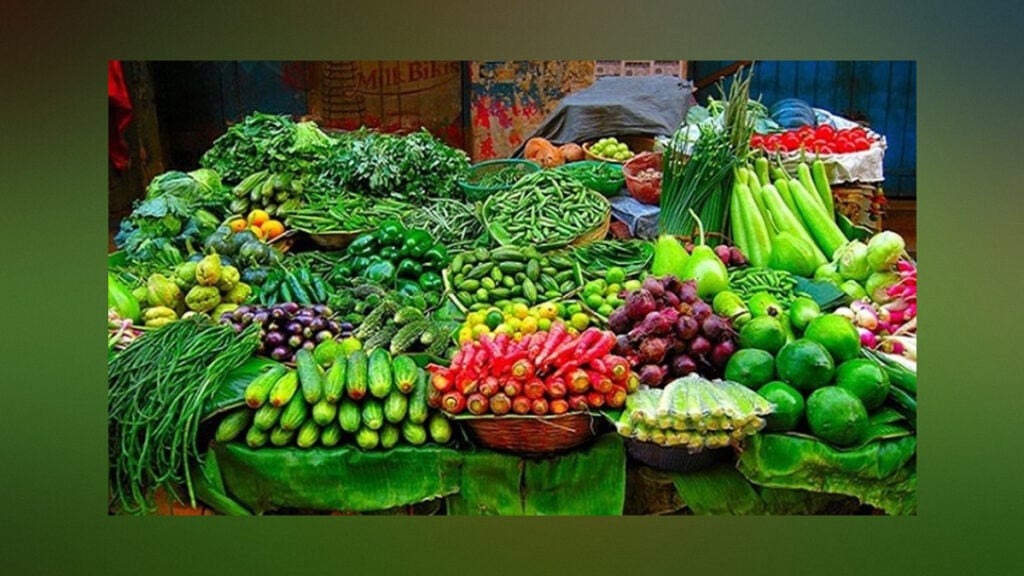
Dhaka’s fresh produce markets are beginning to fill with early winter vegetables, including beans, cauliflower and radishes, but high prices continue to put pressure on household budgets. Despite the growing availability of seasonal produce, many shoppers are struggling to afford their daily groceries, with low- and middle-income families bearing the brunt of rising food costs.
A visit to several markets across the capital, including Khilkhet, Rampura, Malibagh and Karwan Bazar, on Friday, 16 October, revealed that most vegetables were selling for between Tk 50 and Tk 140 per kilogram. Tomatoes were particularly expensive, costing Tk 160 to Tk 200 per kilogram or even more in some markets.
Although green papaya and a handful of other vegetables remained relatively affordable, prices across much of the food market continued to weigh heavily on consumers. Egg prices had eased slightly, but poultry, fish and meat remained expensive, leaving shoppers with little relief in their overall grocery bills.
Winter vegetables arrive, but affordability remains a concern
Prices varied considerably depending on the type, quality and size of the vegetables. Green beans were selling for Tk 120 to Tk 140 per kilogram, while bitter gourd and teasel gourd cost Tk 80 each. Okra was priced at Tk 80 to Tk 90 per kilogram, and ridge gourd was selling for Tk 80.
Snake gourd, sponge gourd and yardlong beans were available at Tk 70 per kilogram. Pointed gourd cost Tk 60 to Tk 80, while taro stolons were selling for Tk 80 and taro corms for Tk 70. Radishes were available at Tk 60 per kilogram.
Cucumber and carrots were also relatively expensive. Local cucumbers were selling for Tk 100 per kilogram, while hybrid varieties cost Tk 60 to Tk 80. Carrots were priced at Tk 100 to Tk 120 per kilogram, and green chillies were selling for Tk 140 to Tk 150.
Prices also differed among varieties of aubergine. Long aubergines were available at Tk 80 per kilogram, white round varieties at Tk 100 and black round aubergines at Tk 140.
Tomatoes remained among the most expensive items in the vegetable section, with prices ranging from Tk 160 to Tk 200 per kilogram, depending on size and quality. Such prices can make it difficult for families to maintain their usual shopping habits, particularly when several different vegetables are needed for everyday meals.
Other seasonal vegetables were available at comparatively moderate prices. Medium-sized bottle gourds were selling for Tk 60 to Tk 70 each, while ash gourds cost Tk 60. Cauliflowers were priced at Tk 70 to Tk 80 each, and cabbages were selling for Tk 60 to Tk 80.
Green papaya was among the cheapest options, at Tk 30 per kilogram, while sweet pumpkin was available at Tk 50.
The arrival of winter vegetables has raised hopes of lower prices in the coming weeks. However, shoppers are still waiting for increased supplies to translate into meaningful reductions at retail level.
Egg prices ease slightly, but poultry remains expensive
Egg prices have fallen modestly in recent days, offering some relief to consumers. A dozen brown eggs was selling for Tk 140 to Tk 145, while white eggs cost around Tk 130. However, prices varied between markets, with brown eggs reaching Tk 150 per dozen and white eggs Tk 140 in some locations.
Duck eggs were more expensive, selling for Tk 180 to Tk 185 per dozen.
Rahim, an egg seller in Khilkhet, said the price of a dozen eggs had fallen by approximately Tk 10 over a few days. He expressed hope that prices would decline further, potentially bringing some relief to consumers.
Poultry prices, however, remained high. Broiler chicken was selling for Tk 180 to Tk 200 per kilogram, while cock or Pakistani-breed chicken cost Tk 310 to Tk 350. Layer chicken was priced at Tk 380 per kilogram, and indigenous chicken reached Tk 700.
For households that depend on eggs and poultry as relatively accessible sources of protein, these prices make it harder to manage food expenditure. Even a modest reduction in egg prices may offer only limited relief when other essential food items remain expensive.
Fish prices add to household expenses
The cost of fish, a staple in many Bangladeshi households, was another source of concern for shoppers.
Rohu was selling for Tk 350 to Tk 600 per kilogram, depending on size and weight, while catla cost Tk 300 to Tk 550. Prawns were among the most expensive options, with prices ranging from Tk 800 to Tk 1,600 per kilogram.
Other varieties were also costly. Small indigenous kachki fish were selling for Tk 400 to Tk 500 per kilogram, climbing perch for Tk 220 to Tk 250, pabda for Tk 400 to Tk 600 and tengra for Tk 600 to Tk 1,000.
Tilapia was available at Tk 230 per kilogram, while pangasius cost Tk 220. Although these varieties were comparatively cheaper than some of the more expensive fish, shoppers still had to spend a substantial amount to purchase enough for a family meal.
Firoz, a fish seller, said wholesale supplies had improved somewhat compared with earlier levels. He suggested that the arrival of winter vegetables could contribute to lower prices in the market.
However, he also pointed to transport expenses and additional charges as factors that could push up retail prices. The cost of bringing produce and other goods to urban markets can influence the final price paid by consumers, even when wholesale supplies improve.
Beef and mutton remain beyond many budgets
Meat prices continued to add to the financial pressure on households. Beef was selling for as much as Tk 800 per kilogram, while mutton cost Tk 1,250 per kilogram.
At these prices, purchasing meat regularly can be difficult for families with limited incomes. Many households must balance the cost of protein-rich foods against other essential expenses, including rent, transport, education and healthcare.
When vegetables, fish, poultry, eggs and meat are all expensive at the same time, consumers have fewer opportunities to compensate for increases in one category by switching to another. Even relatively affordable alternatives can become costly when purchased in sufficient quantities to feed an entire family.
Consumers struggle to balance income and expenditure
The continuing rise in everyday food costs has left many shoppers frustrated. Jagannath, who was shopping at a market in the capital, said household income was no longer keeping pace with expenditure.
He described including protein in everyday meals as increasingly difficult and said that small reductions in the prices of a few vegetables had done little to ease the overall burden.
For families on fixed or limited incomes, food inflation can force difficult choices. Some shoppers may reduce the quantities they buy, while others may switch to cheaper alternatives or limit purchases of fish and meat.
The pressure is particularly noticeable when households need to buy several essentials in a single shopping trip. A modest quantity of vegetables, a dozen eggs and some fish or chicken can quickly consume a significant share of a family’s daily food budget.
Shoppers hope seasonal supplies will bring relief
The arrival of early winter vegetables has raised expectations that prices may begin to fall as supplies increase. Seasonal produce can become more affordable when larger quantities reach wholesale and retail markets, although the extent and timing of any reduction depend on production, availability, transport costs and market conditions.
For now, the gap between the availability of vegetables and their affordability remains a central concern for consumers in Dhaka. The presence of seasonal produce has not yet delivered the price relief many households had anticipated.
Shoppers are hoping that supplies of beans, cauliflower, cabbage, radishes and other winter vegetables will increase further in the coming weeks, bringing prices within reach of ordinary families. They are also looking for relief in the fish, poultry and meat markets, where high prices continue to restrict their choices.
Despite the growing range of vegetables on display, the overall picture remains difficult for consumers. Until lower wholesale costs and improved supplies translate into more affordable retail prices, many households are likely to continue struggling to balance their food budgets with their daily needs.