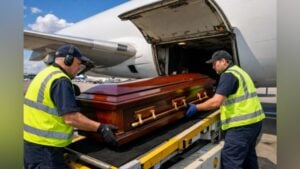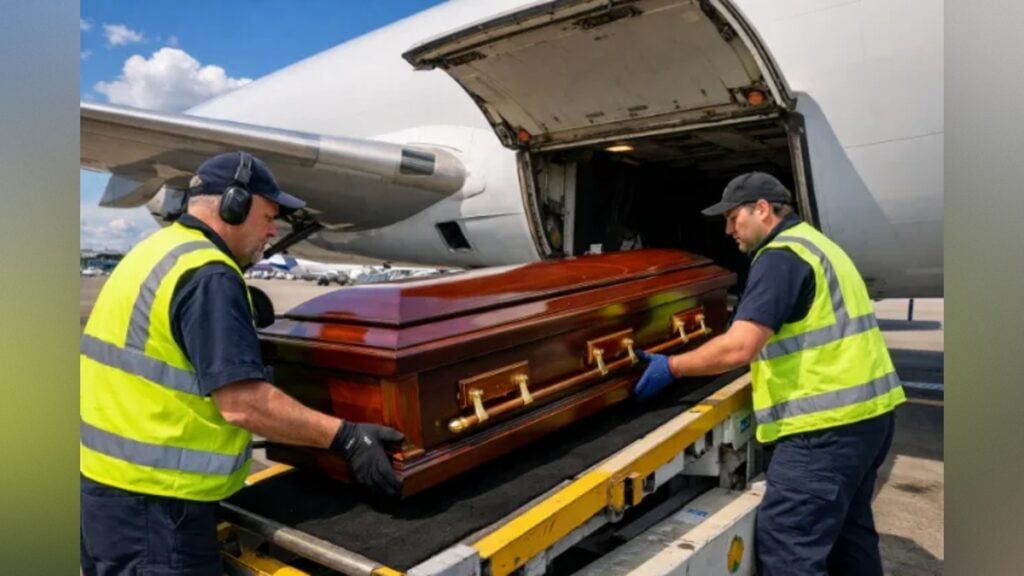
Some families are forced to spend several lakh taka to repatriate the bodies of their loved ones, while others wait for weeks or even months before the necessary arrangements are completed. In many cases, fellow Bangladeshi expatriates step in, raising money among themselves to cover the costs and ensure that the deceased can be brought home.
The experiences of two families illustrate the difficulties involved. The family of Mofazzal Hossain, who died in Saudi Arabia, had to spend around 17,000 Saudi riyals to bring his body back to Bangladesh, including legal fees. Meanwhile, the body of Mokhlesur Rahman, who died in Kuwait, has yet to be repatriated because his employer has not settled his outstanding payments.
Bangladeshis living in Italy and Qatar have reported similar experiences, saying that expatriate communities frequently have to organise fundraising efforts to send the bodies of deceased compatriots home.
A five-lakh-taka struggle to bring a father home
Mofazzal Hossain died in Saudi Arabia on 28 January 2024. His son, Habibur Rahman, told Insan Times that the family had to manage almost every aspect of the repatriation process themselves, including hiring a lawyer and completing the necessary paperwork.
Initially, the family approached the Wage Earners’ Welfare Board, hoping to receive government assistance. However, they were told that responsibility for bringing the body back to Bangladesh rested with the relevant embassy.
Despite waiting for a considerable period, they received no clear response or effective assistance from the authorities.
Habibur said the family eventually lost hope after repeatedly moving between government offices without any meaningful progress. With help from a friend living in Saudi Arabia, they hired a local lawyer and arranged the necessary documentation.
According to Habibur, the family spent approximately Tk 500,000 at the exchange rate prevailing at the time. The financial burden was so substantial that they have still not fully recovered from the setback.
He expressed frustration that Bangladeshis working overseas often endure exhausting conditions to support their families but receive little assistance when tragedy strikes.
Families, he said, are frequently left to depend on relatives, friends and fellow expatriates rather than receiving timely support from the authorities.
Habibur also criticised the performance of Bangladeshi diplomatic missions, saying that expatriates rarely receive the level of assistance they expect when facing emergencies.
Unpaid wages holding up repatriation from Kuwait
Another family is struggling to bring home the body of Mokhlesur Rahman, a resident of Naogaon Sadar Upazila, who died in Kuwait on 23 September.
His son-in-law, Mishuk Pramanik, contacted the helpline of the Ministry of Expatriates’ Welfare and Overseas Employment the following day to request assistance with repatriation. However, the embassy did not contact him until around 20 days later.
After visiting the Expatriates’ Welfare Building in Dhaka and speaking to officials, Mishuk learnt that the process had stalled because Mokhlesur’s employer had not paid his outstanding wages.
Mishuk alleged that the company was unwilling to settle the dues, while the embassy had failed to take sufficiently firm action to resolve the matter.
Despite travelling from Naogaon to Dhaka several times, he said, he had repeatedly returned home without receiving any definite information about the progress of the case.
Mokhlesur was a registered worker with the Bureau of Manpower, Employment and Training (BMET). He went to Kuwait around 2015 and worked as a cook at a restaurant.
Mishuk also raised concerns about possible errors in the authorities’ information management. He said officials repeatedly contacted another person’s telephone number instead of the number he had provided.
He suspects that his contact details may have become mixed up with the records of another deceased worker, although this has not been independently established.
The confusion has added to the family’s uncertainty at a time when they are already struggling to cope with their loss.
Expatriates raise funds to avoid lengthy official procedures
Mohammad Milon, a Bangladeshi expatriate living in Qatar, said he had encountered considerable difficulties several years ago while arranging the return of the body of a compatriot named Karim.
According to Milon, the situation becomes particularly complicated when a deceased worker’s visa has expired or the person has been living abroad without valid immigration documents.
In such cases, the Wage Earners’ Welfare Board or the ministry does not necessarily assume full responsibility for repatriation. Although the board may provide limited financial assistance, the procedures for obtaining it can be lengthy and complicated.
Milon said family members often have to visit several government offices and complete multiple formalities to secure assistance. For grieving relatives, waiting for months to receive the body of a loved one can become unbearable.
As a result, expatriates frequently organise their own fundraising initiatives. Colleagues and acquaintances contribute money, while relatives in Bangladesh also send funds to meet the expenses.
Abdul Roni, a Bangladeshi expatriate in Italy, described a similar situation. He said repatriating a body from abroad can involve substantial costs, while the administrative procedures for obtaining assistance through an embassy or ministry often take considerable time.
Roni believes diplomatic missions should demonstrate greater compassion and respond more promptly to families dealing with such emergencies. He criticised what he described as slow and indifferent responses from some officials.
Based on his experience, fundraising among expatriates can enable a body to be sent to Bangladesh within about a week. By contrast, following the formal procedures through an embassy may take between 15 days and a month, or even longer.
Consequently, many families prefer to seek immediate assistance from Bangladeshi communities in the country where the death occurred rather than wait for official arrangements.
Roni said expatriates in Italy often collect donations through local mosques and community networks to finance the repatriation of deceased Bangladeshis. However, when sufficient money cannot be raised, some families have little choice but to arrange burial in the country where their relatives died.
Undocumented workers face additional complications
The difficulties are often more severe when a Bangladeshi migrant dies without valid residence or employment documents.
Without the necessary paperwork, families may face additional legal requirements before the authorities in the host country allow the body to be released for repatriation.
The process can involve verifying the deceased person’s identity, obtaining official death certificates and completing immigration-related formalities. Families may also need to establish employment details and resolve outstanding financial claims.
For relatives in Bangladesh, navigating these procedures from a distance can be particularly challenging. Language barriers, unfamiliar legal systems and limited access to reliable information can make an already distressing situation even more difficult.
The problem is not limited to the physical transportation of the body. Outstanding wages, employment-related compensation and other financial entitlements may also need to be settled before the process can move forward.
What assistance does the government provide?
Mohammad Zakir Hossain, a deputy secretary at the Ministry of Expatriates’ Welfare and Overseas Employment, said the government bears the full cost of repatriating the body of a migrant worker who dies at their workplace, provided the individual travelled abroad legally with BMET clearance.
In addition, the family of the deceased worker receives Tk 300,000 in financial assistance from the Wage Earners’ Welfare Board.
However, workers who travel abroad without BMET clearance are generally not eligible for these benefits.
Zakir Hossain said the ministry may occasionally provide financial assistance in particularly difficult circumstances if the family submits an application, even when the deceased worker does not meet the standard eligibility requirements.
Responding to complaints about delays, he said the repatriation process largely depends on the activities and coordination of the relevant Bangladeshi embassy in the country where the death occurs.
Attempts to contact Delwar Hossain, Bangladesh’s ambassador to Saudi Arabia, for comment on the allegations were unsuccessful.
More than 4,000 bodies repatriated this year
An official of the Wage Earners’ Welfare Board said 4,048 bodies of Bangladeshi expatriates had been brought back to the country between January and 26 October this year.
Of these, approximately 1,000 came from Saudi Arabia, making it one of the largest sources of repatriated bodies among countries employing Bangladeshi migrant workers.
The figures highlight the scale of the issue and the importance of effective support for families dealing with the deaths of relatives overseas.
However, the number of bodies returned to Bangladesh does not reflect the full extent of the difficulties families may encounter during the process. Behind each case are relatives struggling with grief, financial uncertainty and administrative complications.
For many migrant workers, overseas employment is a means of improving their families’ financial circumstances. They work long hours, often in demanding conditions, and send money home to support their dependants.
Yet, when they die abroad, their families may find themselves navigating unfamiliar legal systems and government procedures at one of the most vulnerable moments of their lives.
The experiences shared by families and expatriates point to the need for better coordination between diplomatic missions, government agencies and employers. Faster responses from embassies, effective action to recover unpaid wages and simpler procedures for accessing welfare assistance could help reduce the burden on grieving families.
Clear information about eligibility, designated officials to handle individual cases and timely communication with relatives would also make the process less distressing.
For families who have lost a loved one overseas, bringing the body home is not simply an administrative requirement. It is an essential part of mourning and a deeply personal responsibility. They should not have to spend months navigating bureaucratic obstacles or raise large sums of money through community donations to fulfil that final duty.