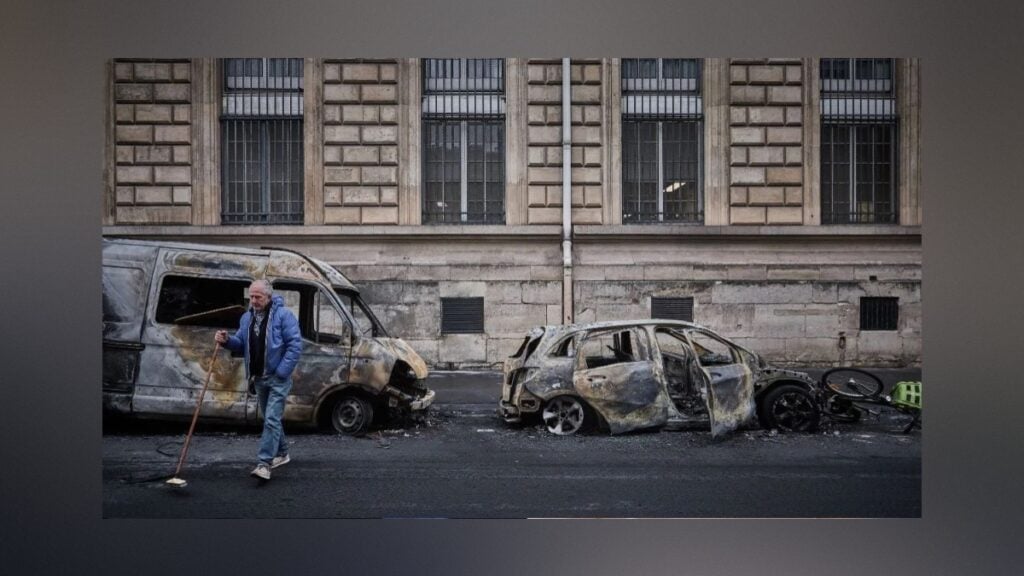
France has stepped up security measures, extended curfews in several areas and deployed additional police officers as demonstrations, arson and looting put President Emmanuel Macron’s government under growing pressure. After weeks of unrest, the authorities are struggling to restore order while addressing the economic and social grievances driving people onto the streets.
According to US broadcaster CBS News, the protests have exposed deepening public frustration over the education system, the rising cost of living and the deterioration of public services. Students, teachers and workers have been demonstrating for five weeks, putting the government under pressure to deliver tangible improvements.
The crisis has been compounded by mounting public debt, a widening budget deficit and political divisions in parliament. These constraints have made it increasingly difficult for the government to introduce reforms that could ease public discontent.
Curfews Tightened as Police Presence Increases
Prime Minister Sébastien Lecornu announced on Tuesday, 20 October, that a substantial number of police officers would be deployed ahead of demonstrations scheduled for 24 October. The announcement followed an admission by Interior Minister Laurent Nuñez that the authorities had underestimated the scale and intensity of the unrest.
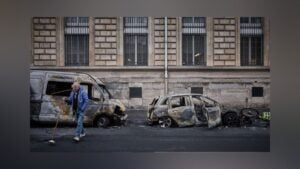
Saturday’s demonstrations descended into violence in several cities, with reports of arson, vandalism and looting. The authorities have since intensified security measures to prevent further outbreaks.
According to Justice Minister Gérald Darmanin, more than 2,500 people had been taken into police custody by Monday evening. Among the incidents reported during the unrest was the burning of a historic town hall in Limoges, a city in central France.
In Paris, night-time curfews have been imposed in the Place de la République area and the Les Halles shopping district. Restrictions have also been introduced in Lyon and other cities.
Although no major incidents of violence were reported in Paris or Lyon on Monday night, officials remain concerned about the possibility of renewed unrest. Police patrols and surveillance have been strengthened as the authorities prepare for further demonstrations.
In an address to the nation on Sunday, Macron drew a distinction between peaceful protesters and those involved in violence. He said the government was prepared to listen to people calling for better education and working conditions, while warning that those responsible for violent acts would face legal consequences.
The government is attempting to balance public order with the right to peaceful protest. However, the effectiveness of its response will depend partly on whether it can demonstrate meaningful progress towards addressing the protesters’ demands.
Education Crisis Fuels Wider Discontent
The current wave of protests began in mid-September, when secondary school students and teachers in the outskirts of Paris took to the streets over deteriorating conditions in educational institutions.
Their main concerns included overcrowded classrooms, ageing school buildings and shortages of teachers. What initially began as a campaign focused on education gradually expanded as workers’ unions and activists associated with the Yellow Vests movement joined the demonstrations.
The movement subsequently developed into a broader expression of frustration over rising living costs, working conditions and declining public services.
The cost of everyday essentials has become a major concern for many households. When living expenses rise faster than incomes, low- and middle-income families face increasing financial pressure. At the same time, shortcomings in public services can intensify dissatisfaction with the government.
These concerns have converged in France’s ongoing protests, creating a challenge that extends well beyond the education sector.
The government has announced some measures in response. On 8 October, the national education ministry unveiled plans to recruit more than 3,000 substitute teachers for secondary schools facing the most severe staffing shortages. Authorisation was also granted for the recruitment of several hundred additional teachers.
However, recruitment alone may not resolve the education system’s longstanding problems. Improving school infrastructure, easing overcrowding and ensuring that institutions have sufficient teaching staff will require sustained investment and long-term planning.
Implementing such measures will also depend on the government’s ability to secure the necessary funding at a time of mounting fiscal pressure.
Public Debt and Budget Deficit Limit Government Options
France’s financial position has emerged as another major obstacle to the government’s efforts to ease public discontent.
According to the country’s national statistics agency, public debt reached approximately €3.6 trillion at the end of June, equivalent to around 119 per cent of annual gross domestic product (GDP).
The scale of the debt has restricted the government’s room for manoeuvre, making it more difficult to increase spending on public services while maintaining control over the national finances.
The government forecasts that France’s budget deficit could reach 5.4 per cent of GDP this year. It aims to reduce the figure to 5 per cent in 2027, although achieving that target may prove difficult as the cost of servicing public debt continues to rise.
According to projections cited in the report, annual interest payments on government debt could increase by €12 billion next year, reaching €91.2 billion.
Such a substantial financial commitment could leave less room for additional spending on education, healthcare, infrastructure and other public services. This presents the government with a difficult policy dilemma: protesters are demanding improvements that may require greater investment, while the country’s fiscal position is creating pressure to rein in expenditure.
Failure to strike a workable balance could deepen both economic difficulties and political tensions.
Parliamentary Divisions Complicate Budget Approval
The government’s difficulties have been intensified by its lack of a parliamentary majority. Without sufficient support in the legislature, securing approval for major policy decisions and budgets has become increasingly complicated.
France’s budget for the current year was not approved until February. The government ultimately moved to implement it through a special constitutional procedure without a final parliamentary vote.
The move prompted two no-confidence motions against the government. Both failed, allowing the administration to remain in office, but the episode highlighted its political vulnerability.
Disputes over the budget have consequences beyond parliamentary proceedings. Without political agreement on spending priorities and economic policy, implementing reforms in education, healthcare and other public services becomes more difficult.
The current protests have brought these competing pressures into sharper focus. The government must respond to demands for better services while confronting the financial constraints that limit its ability to act.
Macron Faces a Test of Leadership
France’s immediate challenge is to restore public order without losing sight of the underlying causes of the unrest. Curfews and additional police deployments may help contain violence in the short term, but they cannot, on their own, resolve concerns over education, employment conditions and the rising cost of living.
Addressing these issues will require practical measures, sustained investment and a credible plan to manage public finances. The government must also navigate a divided parliament, where securing support for major reforms remains difficult.
The demonstrations scheduled for 24 October could therefore prove an important test for Macron’s administration. The scale and character of the protests, together with the government’s response to the protesters’ demands, may help determine how the crisis develops in the coming weeks.
The central question is whether the government can restore stability while delivering meaningful improvements to public services and household living standards.
For Macron, the task is not simply to contain the unrest. It is to find a sustainable way to address public frustration while managing France’s debt burden and political divisions. Balancing these competing priorities will remain one of the most significant challenges facing his administration.