A formal written complaint has been submitted to the Shahbagh Police Station in Dhaka against a group of high-profile citizens—comprising journalists, television anchors, lawyers, and cultural personalities—alleging that their digital commentary has defamed the July popular uprising. The complainants contend that the individuals involved have actively sought to undermine the legitimacy of the historic mass movement, insulted the memory of the martyrs, and attempted to politically rehabilitate the ousted Awami League administration.
The Dhaka Metropolitan Police (DMP) have confirmed that the matter currently stands as a written allegation and has not yet been registered as a First Information Report (FIR). Law enforcement authorities have maintained that any formal punitive action will remain contingent upon a rigorous verification process of the specific social media links, video transcripts, and digital footprints cited in the complaint. Meanwhile, prominent human rights defenders and media practitioners have raised concerns, arguing that the weaponisation of criminal complaints to suppress ideological dissent poses a severe threat to foundational democratic liberties.
Cyber Investigation Initiated by DMP
The dynamic of the investigation is presently focused on digital forensic verification. Police sources indicate that the controversial material has been dispatched to the Cyber and Special Crime Division of the DMP to ascertain the authenticity of the content. Investigators are tasked with determining whether the targeted accounts are genuine, whether the multi-media files have been digitally altered or manipulated, and what the overarching context of the remarks was when they were published.
The Officer-in-Charge (OC) of Shahbagh Police Station, Md Moniruzzaman, stated:
“Because the core elements of the complaint involve digital communications and social media broadcasts, the matter has been referred to our specialised Cyber Unit. They will conduct a comprehensive forensic review, and subsequent legal steps will be guided entirely by their technical findings.”
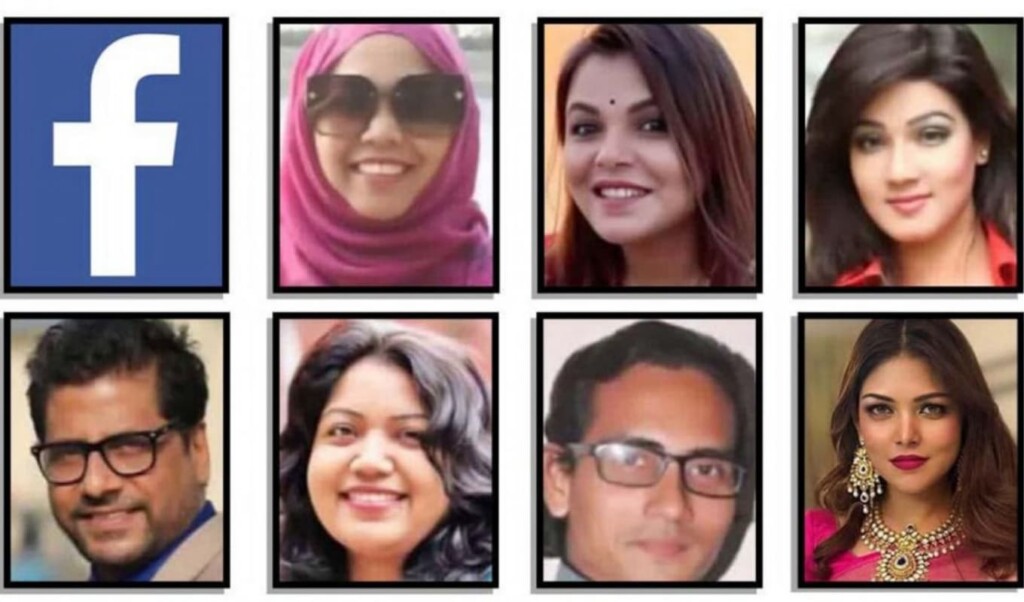
The written complaint was filed on Sunday, 5 July, by Millat Hossain, representing an organization known as the ‘State Dialogue Forum’. The individuals explicitly cited in this specific petition include:
-
Anis Alamgir (Veteran Journalist and Commentator)
-
Soma Islam (Television Presenter)
-
Jannatul Ferdous Peya, widely known as Peya Jannatul (Advocate and Fashion Model)
-
Momin Mehedi (Columnist)
-
Maria Kispotta (Model)
-
Tusti (Actress)
This development follows closely on the heels of a separate police diary filed against acclaimed actress Meher Afroz Shaon, cinema actress Mahiya Mahi, and cultural activist Shanta Farjana, who face similar accusations of trivialising the mass uprising and desecrating temporary revolution memorials.
Breakdown of the Specific Accusations
The complainants have articulated distinct grievances against each of the accused, asserting that their public commentary across Facebook posts, video blogs, and televised talk-shows aimed to demean the struggle:
-
Soma Islam: Alleged to have used her broadcast platform to minimise the significance of the July movement while facilitating the public rehabilitation of the banned Awami League.
-
Peya Jannatul: Accused of utilizing derogatory nomenclature by allegedly referring to the student demonstrators as a “mob” and showing callous disregard for the plight of the wounded.
-
Momin Mehedi: Specifically accused of desecrating a July monument by hurling footwear at it and broadcasting derogatory remarks concerning the iconic student martyr, Abu Sayed.
-
Anis Alamgir: Accused of utilising his post-detention liberty to collaborate with banned political elements, allegedly spreading misinformation to destabilise the achievements of the revolution and mocking those who suffered life-altering injuries.
-
Maria Kispotta: Alleged to have framed the popular uprising as an act of coordinated terrorism while making inflammatory statements regarding the victims.
-
Tusti: Accused of characterizing the historic month of July as a “period of deception” and falsely claiming during interviews that no genuine martyrdoms occurred.
-
Shaon, Mahi, and Farjana: Submissions against this group allege that Shaon dismissed the uprising as a “staged drama”, Mahi publically lampooned the student leadership bodies, and Farjana engaged in the physical desecration of a memorial site.
Tariqul Islam, Deputy Commissioner of the DMP’s Cyber and Special Crime Division (South), noted that whilst the physical case files were in transit to his department, the evaluation would strictly adhere to verifying technical parameters before rendering a legal opinion.
Socio-Political Context: Defining the Boundaries of Dissent
This legal friction highlights the deep political sensitivities characterizing Bangladesh following the extraordinary events of mid-2024, colloquially termed the July Revolution. The student-led agitation against quota allocations in public sector employment rapidly coalesced into a broader civil uprising, culminating in the collapse of the long-standing Awami League government.
Following the transition, an interim government led by Nobel Laureate Professor Muhammad Yunus assumed state responsibilities with an explicit mandate to implement structural reforms and restore democratic norms. However, this transitional period has exposed a delicate tension between safeguarding the ideological legacy of the uprising and upholding absolute freedom of speech. Critics argue that expanding the definition of “contempt of the revolution” to include administrative critique risks creating a new paradigm of political intolerance.
Arguments on Free Expression vs Criminal Incitement
The accused journalist, Anis Alamgir, has vehemently refuted the allegations, describing them as malicious falsehoods calculated to achieve superficial notoriety.
“I have never shown disrespect to the July movement or its martyrs. My criticisms have been consistently directed against administrative lapses under Dr Yunus and the rise of vigilantism, extortion, and undemocratic behaviour by individuals using the revolution as a convenient shield. If critique of governance is to be criminalised as ‘July disrespect’, it represents a dangerous retreat into authoritarian censorship.”
Senior media analyst Masud Kamal drew a sharp distinction between protected political speech and actionable criminal incitement. He argued that while explicit calls to violence or vandalism must be met with the full force of the law, subjective evaluations of a political movement must remain unrestricted.
“If a citizen posits that the lofty expectations of the July movement remain unfulfilled, that is a legitimate political critique, which is protected in any free society. However, if an individual incites an assault against someone by branding them ‘anti-revolution’, that crosses the line into a criminal offence. The state must never confuse ideological disagreement with physical incitement.”
Human rights advocate Abu Ahmed Faijul Kabir observed that in a mature democracy, contentious or unpalatable opinions should be met with robust intellectual counter-arguments rather than immediate legal retaliation. He cautioned that allowing police complaints to become the standard response to critical speech would inevitably foster a chilling effect, discouraging professionals from engaging in independent analysis.
Concurrently, Ejajul Islam, the Executive Director of the Human Rights Support Society (HRSS), called for restraint from all quarters of society. While acknowledging that public emotions regarding the casualties of the movement are valid and deeply felt, he emphasised that the right to free expression is a constitutionally protected guarantee that must not be compromised by hyper-sensitivity.