Violence erupted across the industrial belt of Ashulia on Tuesday morning as thousands of ready-made garment (RMG) workers took to the streets to demand a substantial increase in their minimum monthly wage. The escalating unrest, marked by fierce clashes between protesting workers and law enforcement officials, compelled factory authorities to shut down operations in at least 41 apparel units across the region.
The trouble began shortly after morning shifts commenced. Workers arrived at their respective premises, logged their attendance, and promptly walked out to launch coordinated demonstrations across four to five key locations in the district. Protesters blocked major thoroughfares, halting traffic and disrupting supply chains, while chanting slogans advocating for a minimum monthly wage of 30,000 BDT.
Escalation and Law Enforcement Response
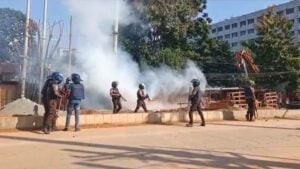
As demonstrations intensified, confrontations between protesters and security personnel turned violent. Police units deployed tear gas canisters and sound grenades to disperse crowds attempting to maintain blockades on critical roadways.
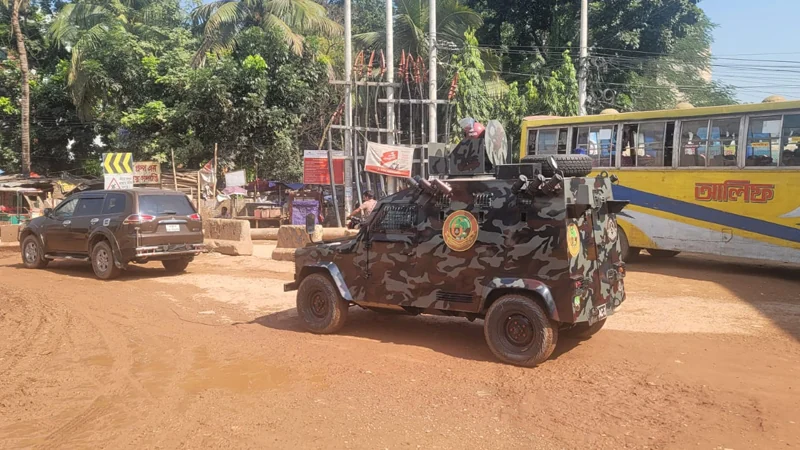
Mominul Islam Bhuiyan, Superintendent of Police for Ashulia Industrial Police, confirmed that extra law enforcement personnel had been stationed throughout the industrial zone to prevent further chaos. He dismissed widespread reports circulating on social media regarding casualties caused by police firing, maintaining that security forces acted with restraint.
“No such incident occurred. The police did not fire rubber bullets or use shotguns. We deployed tear gas and sound grenades solely to restore order and clear the roads.”
— Mominul Islam Bhuiyan, Superintendent of Police, Ashulia Industrial Police
Despite police intervention, safety concerns forced widespread factory closures. Prominent garment exporters and manufacturing units that suspended operations include:
-
Envoy Group
-
Sterling Creations
-
Hollywood Garments Limited
-
C.S.L. Knit Composite
-
Sterling Apparels
-
A.M. Design Limited
-
Moon Readywears Limited
-
Tech Max Limited
-
Next Collection
-
Virtual Bottoms Limited
-
Yagi Bangladesh Limited
-
Sterling Styles Limited
-
Bando Design Limited
-
Sin Sin Apparels Limited
-
Saad Fashion Limited
-
Reza Fashion Limited
Factory complexes belonging to the Ha-Meem Group also shuttered after 1:00 pm as tension spread through neighboring industrial sectors.
Background to the Wage Dispute
The clashes mark a sharp escalation in weeks of ongoing labor unrest across Bangladesh’s RMG sector, which generates the vast majority of the nation’s export earnings. Tensions reached a boiling point following the second meeting of the Minimum Wage Board on Monday.
During the session, labor representatives formally proposed a new monthly minimum wage of 32,000 BDT. Factory owners, however, refrained from submitting a counter-proposal, requesting a one-week extension to consult broader industry stakeholders amidst ongoing field disruptions.
ABM Shamsuddin, representing the factory owners, explained that widespread instability in industrial hubs had delayed consensus among management teams. In response, Syed Azad Subhani, Chairman of the Minimum Wage Board, directed employers to submit their proposal within four working days, warning that the board would proceed to unilaterally determine the wage structure should management fail to meet the deadline.
Labor Arguments and Structural Demands
Prior to the formal proceedings, five major alliances representing 55 registered trade unions submitted a joint memorandum outlining structural reforms to the sector’s pay framework. Labor leader Babul Akhter and other union representatives argued that an updated wage model is essential to safeguard the standard of living for the sector’s roughly 4 million workers.
The unions urged the board to evaluate 12 key socio-economic criteria, including rising living costs, local inflation, and comparative wage benchmarks from competing garment-producing nations such as Vietnam, Cambodia, India, and Pakistan.
Key structural demands put forward by the labor movement include:
-
Basic Pay Ratio: Setting basic salary at 60 percent of total gross pay (reverting to the 2006 framework). Trade unions argue that a low basic wage severely diminishes overtime compensation and reduces long-term service benefits, leaving veteran workers financially vulnerable upon retirement.
-
House Rent Allowance: Fixing housing support at 50 percent of total wages to cover soaring urban rents in industrial zones like Savar, Gazipur, and Ashulia.
-
Annual Increments: Implementing an annual pay increment of 15 percent to counter persistent food inflation and basic commodity price spikes.
With negotiations stalled and street protests expanding, both government officials and factory management face mounting pressure to finalize a realistic wage compromise before further disruption hits the country’s flagship export industry.