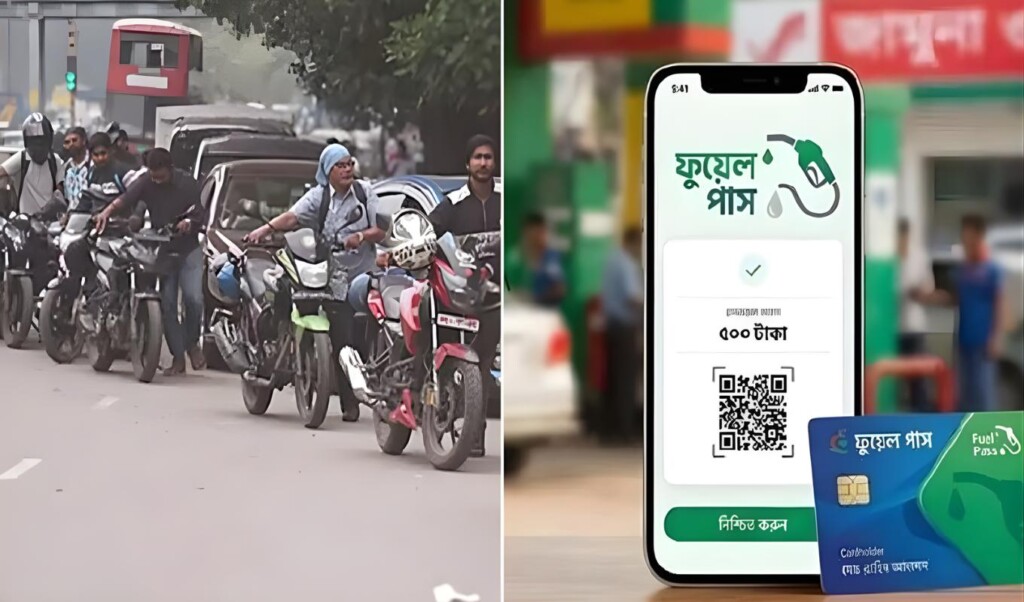
The government has expanded the use of a QR code-based mobile application, “Fuel Pass”, to enhance transparency and reduce congestion in fuel distribution across the capital. From Sunday, 12 April, the system has been made mandatory for motorbike users at seven selected filling stations in Dhaka.
The initiative, introduced by the Energy and Mineral Resources Division under the Bangladesh Petroleum Corporation (BPC), aims to digitise fuel distribution, minimise irregularities, and ensure more efficient monitoring of petroleum supply chains. Initially piloted at two stations, the programme has now been extended to seven outlets following the addition of five more stations on Saturday.
Officials said the move comes in response to longstanding challenges in the fuel distribution system, including long queues at pumps despite adequate national stock, delays caused by manual processing, and allegations of individuals collecting fuel multiple times by rejoining queues. The digital system is expected to address these issues by automating verification and introducing real-time oversight.
Participating Filling Stations in Dhaka
| Sl. | Filling Station Name | Area |
|---|---|---|
| 1 | Trust Filling Station | Tejgaon |
| 2 | Sonar Bangla Filling Station | Asad Gate |
| 3 | Talukdar Filling Station | Asad Gate |
| 4 | Gulshan Service Station | Mohakhali |
| 5 | Meghna Model Pump | Shahbagh |
| 6 | Nikunja Model Service Centre | Nikunja |
| 7 | Khalek Service Station | Kollyanpur |
Under the new system, motorbike users can only purchase petrol or octane after verifying their identity through the “Fuel Pass” application. Each transaction is recorded digitally, and fuel is dispensed only after scanning a unique QR code generated for each registered user.
The Energy Division has stated that the system is directly integrated with the Bangladesh Road Transport Authority (BRTA) central database. This linkage ensures verification of vehicle ownership and helps prevent misuse or duplication of fuel allocation. Even users without smartphones can register through a web portal and download or print their QR code for use at filling stations.
According to officials, station operators will now be required to complete digital entries before dispensing fuel. This allows authorities to maintain real-time records of fuel distribution and monitor individual consumption patterns through a central dashboard.
The central monitoring system is expected to provide nationwide visibility over fuel supply and demand, enabling authorities to respond more effectively during periods of volatility or shortage. It is also anticipated to reduce wastage, prevent artificial shortages, and improve overall accountability in the sector.
To access the system, users must download the “Fuel Pass” application from the Google Play Store and complete registration using their mobile number. Additional requirements include vehicle registration details, national identity information, driving licence data, and a passport-sized photograph.
Authorities have indicated that the pilot programme will gradually be expanded to cover all types of vehicles and eventually be implemented nationwide, marking a significant step towards full digitalisation of fuel distribution in Bangladesh.
With this initiative, policymakers hope to modernise a sector long criticised for inefficiencies, while ensuring fair access and reducing public inconvenience at fuel stations across the country.