The country’s worsening gas shortage has moved beyond a temporary disruption and is emerging as a serious threat to industrial production and employment. In major industrial hubs including Narsingdi, Narayanganj, Gazipur, Savar-Ashulia, Bhaluka in Mymensingh and Sreepur in Gazipur, gas pressure has fallen so sharply that many gas-dependent factories have either suspended production or cut output drastically.
In some factories, production has fallen to just 20 to 30 per cent of normal capacity, while others have reported reductions of 70 to 75 per cent. Some plants are unable to operate their machinery at all because the gas pressure is too low.
The disruption is increasingly visible on factory floors. Places that would normally be filled with the noise of machinery and the movement of workers are now unusually quiet. In some factories, workers arrive but have little or no work to do. Others have been sent on leave, while workers at some fully closed plants have been told to return home.
Industrialists fear that if the crisis continues, the consequences will extend well beyond production and exports. Employment could also come under serious pressure. Even when production stops, factories must continue paying workers, servicing bank loans and covering electricity, maintenance and other operating costs. A prolonged shutdown could eventually force some businesses to reduce their workforce or close altogether.
A month-long crisis worsens again
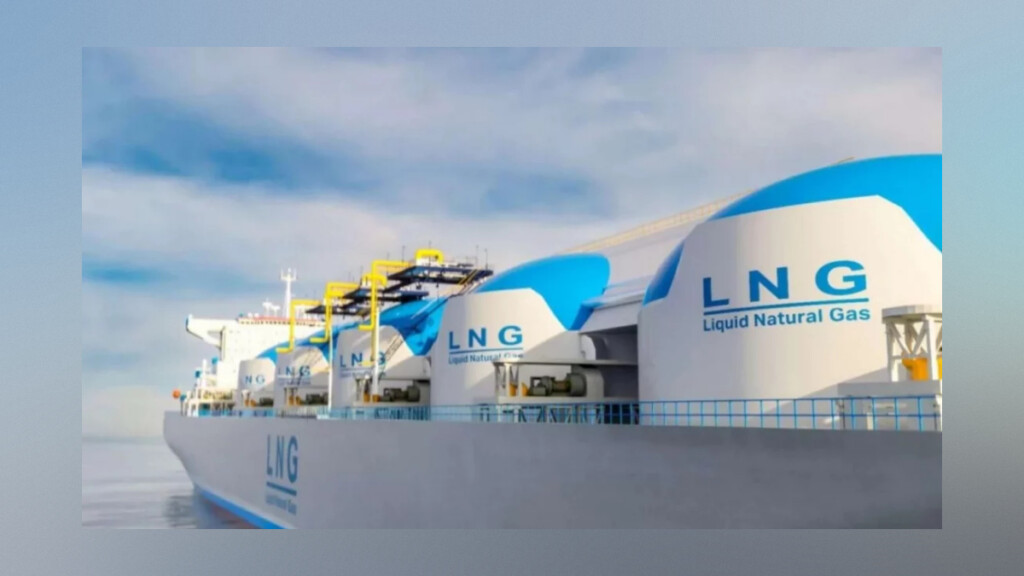
The latest disruption follows an accident and technical problems at a floating terminal used to supply liquefied natural gas. The resulting shortfall has affected the national gas supply for almost a month.
There was a brief improvement when supply increased after Summit’s LNG terminal resumed full-capacity operations and Excelerate Energy’s terminal returned to partial operation. That relief, however, proved short-lived. A subsequent cargo shortage forced gas supplies from Excelerate Energy’s terminal to stop again, renewing pressure on industrial areas.
According to Petrobangla, Bangladesh’s daily gas demand is around 3.8 billion cubic feet, while supply normally falls short of that requirement even under relatively stable conditions. During the current crisis, the shortage has become considerably more severe, forcing difficult decisions over supplies to industry, power plants, fertiliser production, compressed natural gas stations and residential consumers.
Total national gas supply reportedly fell to around 1.73 billion cubic feet at one point in recent days. It later rose to about 2.44 billion cubic feet before falling again to roughly 2.18 billion cubic feet. Supply therefore remains substantially below national demand.
The authorities are consequently facing a difficult balancing act. Giving priority to fertiliser and electricity generation reduces the amount of gas available to factories. Yet lower industrial gas pressure means production is disrupted, jobs are put at risk and exporters struggle to meet delivery deadlines.
Narsingdi’s industrial engine grinds to a halt
The situation in Narsingdi illustrates the scale of the crisis. Hundreds of gas-dependent factories in Sadar, Madhabdi, Chawla and surrounding industrial areas have either reduced production or suspended operations.
Local industrialists estimate that Narsingdi has more than 4,000 factories, including around 3,000 textile, dyeing, sizing, spinning and garment-related businesses. About 400 factories depend directly on gas for their operations.
According to industry representatives, factories in the district are losing hundreds of crores of taka in production every day. In many plants, output has fallen by as much as 70 per cent, while some are operating at only 10 per cent of capacity.
Several factories have turned to wood-fired boilers as an alternative to natural gas. Although this has allowed some production to continue, the additional expense is considerable. One factory is spending more than Tk10,000 a day on wood alone.
At Momin Textile Mill in the Chawla industrial area, seven of its 10 units have been shut because of the gas shortage. The mill can normally produce 2.5 million yards of fabric a day, but output has fallen to only a few thousand yards. Of its roughly 2,500 workers, around 1,500 are effectively without work.
Ashulia sees output plunge by 75 per cent
The crisis is equally severe in the Savar-Ashulia industrial belt. A factory operated by Fashion Globe Group in the Kathgara-Amtala area continued for several weeks at reduced capacity before shutting down completely.
The factory has a daily production capacity of 50,000 pieces. Once the gas shortage began, it could produce no more than 20,000 pieces even after bringing in gas from outside. Around 24 of its 80 to 90 machines have had to remain idle.
The factory normally requires gas pressure of around 10 PSI for production, but pressure has fluctuated between zero and 2.5 PSI. Even when a small amount of pressure becomes available, it is insufficient to keep the machinery running.
Attempts to maintain production with externally sourced gas have also proved costly, adding roughly Tk30,000 to expenses every hour. Elsewhere in Ashulia, a textile factory has been completely shut for around 15 days, with its owner estimating losses of nearly Tk1 crore a day.
Another dyeing factory, capable of producing 90 tonnes a day, is now unable to produce even two tonnes. It employs around 975 workers, who must still be paid despite the collapse in production. Loan repayments, electricity, security and maintenance costs also continue to accumulate.
Dyeing and finishing units paralysed in Narayanganj
The picture is much the same in the Fatullah and BSCIC industrial areas of Narayanganj. Low gas pressure has prevented many dyeing, finishing and textile factories from operating normally. In some areas, pressure has fallen to between one and 1.5 PSI, far below the level required to run major machinery.
Inside the factories, rows of unfinished fabric are lying idle while production remains suspended. Some workers report for duty and then return home. Others are being kept occupied with cleaning and maintenance work in an effort to retain them during the shutdown.
According to the organisation representing entrepreneurs in Narayanganj’s knit dyeing industry, at least 152 factories are at risk of closure. Industry sources say one factory has already shut down permanently.
The consequences extend directly to the garment export sector. If dyeing and finishing factories cannot supply fabric on time, garment manufacturers are also unable to complete their production schedules.
Gazipur factory operating at just a quarter capacity
At Artisan Ceramics in the Mawna area of Gazipur, gas shortages have reduced production to around 25 per cent of capacity. The factory can produce 22,000 pieces of tableware a day but has recently managed only about 6,000.
Low gas pressure has made it impossible to produce goods requiring high-temperature firing, leading to the suspension of some orders. The problem extends beyond immediate production losses. When manufacturers cannot deliver on time, international buyers may turn to suppliers in other countries. Once an order moves elsewhere, winning it back can be difficult.
Mohammad Hatem, president of the Bangladesh Knitwear Manufacturers and Exporters Association, described the gas shortage as a threat to the survival of industry. He said gas-dependent dyeing, knitting and finishing factories were operating at less than half capacity in many cases, while some had been forced to shut entirely. Yet wages, loan repayments, electricity bills and other costs continued even when production stopped.
He also pointed to the unpredictability of the supply situation, saying businesses have no certainty over when gas pressure will be available. The uncertainty, he warned, is affecting not only factory output but also exports.
Supply chain faces greater risk than garment factories
The shortage is having a particularly severe impact on yarn, fabric, dyeing and finishing factories because their production processes depend heavily on gas.
A garment factory may sometimes manage to continue limited operations using reduced gas supplies or alternative fuels. Dyeing, finishing and fabric production, however, rely heavily on boilers, steam and heat-intensive processes that require a stable gas supply. When those upstream facilities slow down or stop, garment manufacturers face shortages of essential raw materials.
Industrialists say some exporters are already having to spend more to send goods by air to meet deadlines. Others face the prospect of offering discounts to buyers because of delays.
The impact therefore extends beyond individual factories. Reduced production can affect export earnings, foreign exchange receipts, supply chains and Bangladesh’s ability to maintain reliable delivery schedules in international markets.
Employment emerges as the biggest concern
The greatest long-term concern is employment. If factories remain closed for an extended period, businesses may struggle to continue paying workers indefinitely. Falling production can lead first to reduced shifts, followed by leave, temporary workforce reductions and eventually layoffs.
In Narsingdi, around 1,500 workers at one factory are already effectively without work out of a workforce of approximately 2,500. At a spinning mill in Ashulia, the owner has warned that prolonged disruption could make a workforce reduction of at least 30 per cent unavoidable. Other factories have already sent workers on leave.
The potential economic impact would not stop at factory gates. If industrial workers lose income, transport operators, food shops, landlords, local markets and small businesses could also suffer. A prolonged gas shortage could therefore spread economic pressure throughout industrial communities.
Businesses face pressure from three directions
Industrialists are currently dealing with three simultaneous pressures. First, falling production is reducing revenue. Second, factories must continue paying wages, loan instalments, electricity bills, maintenance costs and other expenses even when output is severely reduced. Third, alternative fuels are increasing production costs.
Some factories are burning wood to operate boilers, others are buying gas from outside suppliers, while some are relying on diesel-powered generators. All of these alternatives raise costs.
Manufacturers, however, cannot simply pass the additional expense on to international buyers. Global buyers are already pushing for lower prices, leaving producers to absorb much of the additional cost. If the situation continues, the financial resilience of many factories could weaken rapidly.
Gas and power shortages reinforce each other
The gas shortage is also affecting electricity generation because a significant portion of Bangladesh’s power plants rely on gas. Reduced gas supplies therefore contribute to lower electricity generation.
When electricity is unavailable, factories have to turn to diesel generators, further increasing their fuel costs. In this way, the gas shortage contributes to power shortages, while unreliable electricity raises industrial production costs even further.
Some industrialists say prolonged load-shedding has increased diesel consumption several times over. Garment and leather-goods factories are also facing higher fuel expenses. The additional costs come at a difficult time, with international buyers already seeking lower prices from Bangladeshi suppliers.
Mahfuz Uddin Rubel, a former director of the Bangladesh Garment Manufacturers and Exporters Association and founder and chief executive of Bangladesh Apparel Voice, said the gas shortage was becoming a major concern for industry. He said disruptions in dyeing, finishing, knitting and textile factories were gradually affecting the entire garment supply chain.
He warned that a prolonged crisis could increase production costs, make it harder to fulfil export orders on time and weaken buyers’ confidence. He also said prolonged disruption could make it difficult for some factories to retain workers, stressing the need for a stable and predictable gas supply.
Declining domestic production increases import dependence
Although the immediate crisis has been triggered by problems at LNG terminals, the underlying gas shortage is more structural. Experts say production from older domestic gas fields has been declining, while insufficient new production has been added from new fields and wells.
As a result, Bangladesh has become increasingly dependent on imported LNG to bridge the domestic supply gap.
A significant share of the country’s gas supply now comes from imported LNG. This makes the national supply system vulnerable to disruptions at LNG terminals. The latest crisis has highlighted the limitations of relying increasingly on imported gas without strengthening domestic production.
Immediate decisions needed to contain losses
Industrialists say their most urgent demand is not necessarily uninterrupted gas around the clock, but a reliable and predictable supply schedule. Even if gas cannot be supplied for 24 hours a day, factories need to know when it will be available, for how long and at what pressure. Such predictability would allow manufacturers to plan production more effectively.
In the short term, experts have called for LNG supplies to be restored and damaged terminals to be brought back into operation as quickly as possible. At the same time, greater momentum is needed in domestic gas exploration and the drilling of new wells.
Existing gas fields should also be assessed for additional production, while efforts to bring gas from Bhola into the national grid should be accelerated, according to recommendations cited in the report.
Long-term reform, however, cannot depend solely on increasing gas supplies. Industries will also need to improve energy efficiency and expand the use of electricity, solar power and other alternative energy sources wherever feasible. Tackling illegal gas connections, waste and weaknesses in supply management will also be necessary.
How long will the factory wheels remain still?
The current gas crisis is no longer simply a story of disruption in a handful of industrial zones. It has become a warning for Bangladesh’s industrialisation, employment and export capacity.
Factories cannot sustain prolonged shutdowns indefinitely. Workers cannot remain without work indefinitely. Exporters cannot repeatedly absorb higher costs and delivery delays without consequences.
The immediate question is therefore not only when gas supplies will return to normal, but how quickly a reliable and predictable energy system can be restored. Without effective action, today’s idle machinery could become tomorrow’s permanent closure, leaving workers and businesses facing a far deeper economic crisis.