Bangladesh strengthened its grip on the Darwin Test on Saturday as a disciplined all-round performance put Australia under sustained pressure. The visitors made early inroads into Australia’s second innings, but Cameron Green survived an extraordinary dismissal scare when a delivery from Taskin Ahmed struck the stumps without dislodging the bails.
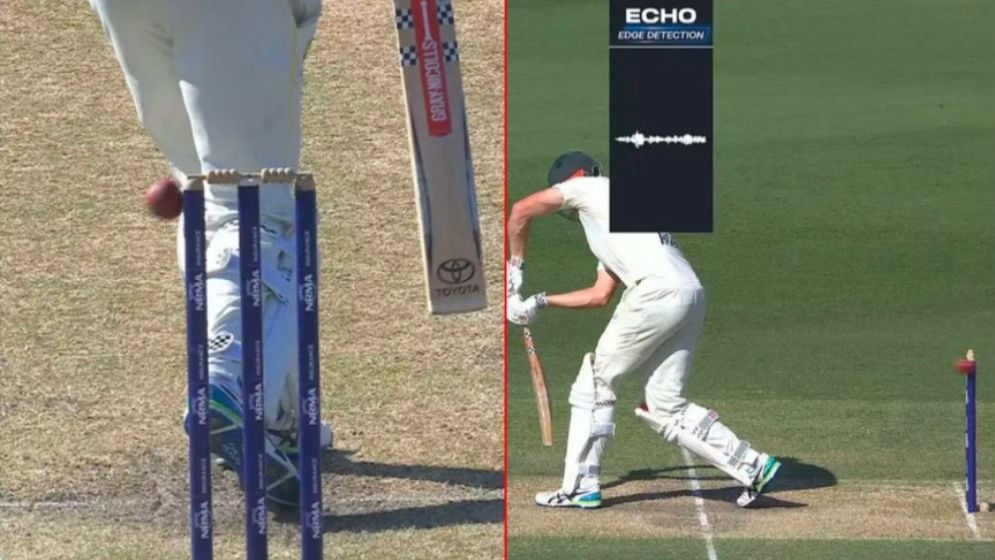
Bangladesh had already removed three Australian batters early in the second innings, creating the possibility of another rapid collapse. Green, however, received an extraordinary slice of fortune during the 31st over.
Taskin produced a delivery that found the edge of Green’s bat before travelling back towards the stumps. The ball made contact with the leg stump, and television replays clearly showed that it had struck the wicket. Yet the impact was not strong enough to knock the bails from their grooves. With the bails remaining in place, Green was not out under the laws of cricket.
The unusual incident immediately attracted attention in the commentary box. Former Australian international Alyssa Healy jokingly suggested that Travis Head might have left some glue on the bails, highlighting just how improbable the escape appeared.
For Bangladesh, the moment was particularly frustrating because the wicket would have added further pressure to an Australian batting line-up already struggling to establish control. A ball hitting the stumps and the batter still remaining at the crease is one of the more unusual sights in Test cricket, although the laws do not require the bails to fall for every contact with the wicket to result in a dismissal.
Green was not the only Australian batter to benefit from an unusual incident in the match. Steven Smith had also survived a controversial moment during Australia’s first innings.
A delivery from Ebadot Hossain appeared to brush Smith’s bat before carrying through to wicketkeeper Litton Das. Bangladesh appealed, but umpire Kumar Dharmasena did not give Smith out. Bangladesh reviewed the decision, hoping technology would confirm an edge. However, UltraEdge failed to show a detectable spike, leaving the original decision unchanged.
The incident became even more intriguing after Smith later acknowledged in his post-match press conference that he had felt the ball make contact with his bat. That admission added another layer to an already contentious moment, particularly from Bangladesh’s perspective.
The two incidents have given Australia an unusual combination of fortune and technology-related controversy. Bangladesh’s bowlers have created genuine pressure and opportunities, but converting those chances has not always been straightforward.
For the visitors, the challenge now is to maintain their intensity and ensure that missed opportunities do not allow Australia to recover. In a Test match where momentum can shift rapidly, Green’s remarkable escape could yet prove significant if he goes on to build a substantial innings.