‘How resilient is a storm-battered home,
It never bows its head before the storm—
The home where people live.’
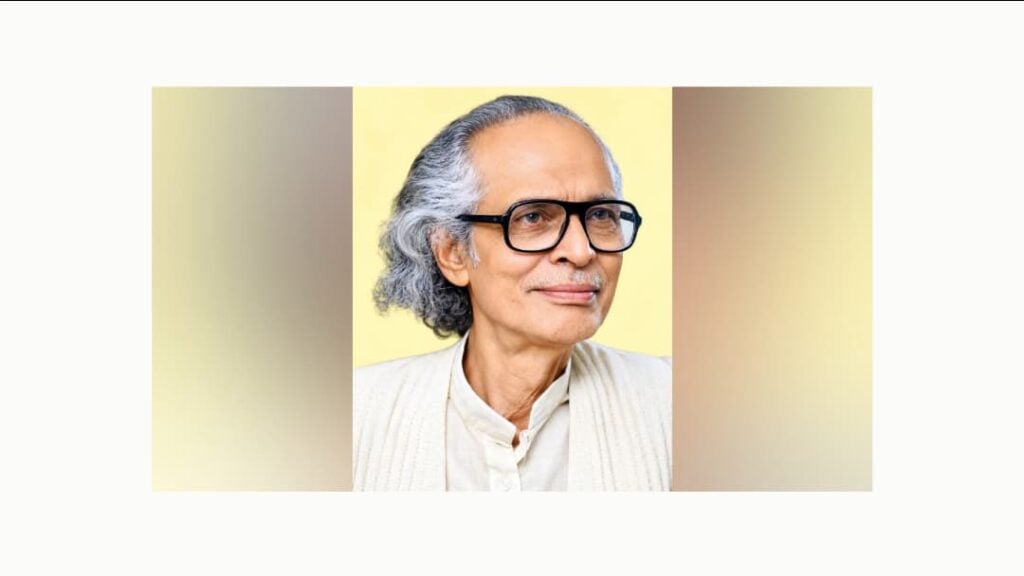
Few artists have captured the struggles, aspirations and resilience of ordinary people as profoundly as Hemanga Biswas. A towering figure in Bengali protest music and the cultural movement of the masses, he devoted his life to giving musical expression to the struggles of workers, peasants and the oppressed. His songs became an enduring voice against exploitation, inequality and injustice, carrying the hopes of generations who dreamed of a society free from oppression.
Biswas was not merely a singer. He was a lyricist, composer, poet, writer, dramatist and committed cultural activist whose work bridged the worlds of music, literature and political resistance. His contribution to Bengali folk music and the Indian People’s Theatre Movement remains an important chapter in the cultural history of the subcontinent.
Born on 14 December 1912 in Mirashi village, under Chunarughat in the then Habiganj subdivision of Sylhet district, Hemanga Biswas was the son of Harakumar Biswas and Sarojini Devi. Growing up in the culturally rich Sylhet-Assam region, he developed an early interest in music and literature. The folk traditions and everyday experiences of the people around him would later become fundamental to his artistic identity.
After completing his schooling at Habiganj Government High School, he enrolled at the historic Murari Chand College in Sylhet. His college years coincided with a period of intense political activity against British colonial rule. He became involved in the independence movement and gradually developed an interest in left-wing political thought. During the 1930s, his association with communist ideology became increasingly significant, and by 1932 he had established close links with the Communist Party.
His political activities brought him into conflict with the colonial authorities, resulting in imprisonment. Despite the physical hardships and health difficulties associated with his time in prison, he remained committed to his political beliefs. These experiences strengthened his conviction that art should not exist in isolation from society but should reflect the lives, struggles and aspirations of ordinary people.
For Biswas, music was never simply a form of entertainment. He believed that artistic expression could inspire collective awareness, strengthen solidarity and encourage people to resist injustice. This philosophy became the foundation of his lifelong engagement with people’s music.
During the late 1930s, he worked alongside cultural activists and artists, including Binoy Roy, Niranjan Sen and Debabrata Biswas, contributing to the development of the Indian People’s Theatre Movement. Associated with the ideals and activities of the Indian People’s Theatre Association (IPTA), he helped establish a cultural tradition in which music, theatre and performance became instruments of social awareness.
In 1943, through his initiative and with the assistance of Jyotiprakash Agarwala, the Sylhet People’s Theatre Association was established. The organisation sought to bring politically conscious cultural performances to ordinary people. Through songs and theatre, it aimed to communicate social realities and encourage greater awareness among communities often excluded from mainstream cultural spaces.
The lives of peasants, factory workers, tea-garden labourers, boatmen and rural communities provided the central themes of his compositions. He gave musical expression to their hardships, hopes, everyday experiences and demands for justice. His songs were rooted in the language and rhythms of ordinary people, making them accessible far beyond conventional concert halls.
One of his best-known compositions, ‘Tomar Kaste-tare Dio Jore Shan’ (Sharpen Your Sickle Well), became an enduring expression of the struggles of agricultural workers. The song carried a powerful message about the rights of peasants and their determination to stand against exploitation.
Similarly, ‘Kishan Bhai Tor Sonar Dhane Bargee’ and ‘Hei Samalo Dhan Ho’ reflected the anxieties and struggles of agricultural communities, calling for unity in protecting their crops and resisting those who sought to exploit their labour. These compositions were not simply musical accounts of rural life. They conveyed a broader message of collective strength and resistance.
His ability to transform everyday experiences into powerful musical expressions distinguished him from many of his contemporaries. Rather than relying on elaborate arrangements or the conventions of elite musical traditions, he drew inspiration from the voices, dialects and cultural practices of ordinary people. His songs travelled naturally from village courtyards to tea-garden settlements, workers’ gatherings and political demonstrations.
In 1948, during the Telangana peasant movement in India, Biswas was arrested again and spent an extended period in prison. His involvement in political activism, support for workers’ and peasants’ rights, and commitment to communist ideals repeatedly brought him into confrontation with the authorities. Yet imprisonment failed to silence his artistic voice or weaken his determination.
One of the most distinctive aspects of his musical legacy was his remarkable understanding and use of regional folk traditions. He drew inspiration from a wide range of musical forms across Bengal and neighbouring regions. These included Jhumur from Rarh Bengal, Bhawaiya and Chatka from northern Bengal, Jari and Sari songs from the Bagri region, Murshidi and Bhatiyali traditions, Baul music from Birbhum and Fakiri songs from Nadia.
The folk traditions of Sylhet also played a significant role in shaping his compositions. He incorporated elements of Dhamail, Gazi songs and the musical heritage associated with Hason Raja. Rather than simply collecting traditional melodies, he explored their deeper social meanings and transformed them into expressions of collective experience.
This creative approach enabled him to establish a distinctive musical language. By combining regional folk melodies with the themes of protest, solidarity and social change, he helped expand the possibilities of Bengali mass music. His compositions demonstrated that folk traditions could remain rooted in local culture while communicating ideas of universal relevance.
Biswas also made significant contributions to theatre music. He composed and directed music for several stage productions, including ‘Kallol’, ‘Teer’ and ‘Lal Lantern’. His involvement in cinema further extended his artistic influence. His musical association with Ritwik Ghatak’s film ‘Komal Gandhar’ remains a notable part of his creative career.
His interests extended beyond Bengal and India. He took a keen interest in the Chinese Revolution, people’s movements and cultural developments in China. Through cultural exchanges and visits, he sought to strengthen friendship and understanding between the peoples of India and China. His experiences and observations from these journeys also found expression in his literary work.
In 1971, Biswas established a musical group called ‘Mass Singers’ in Kolkata. With the group, he travelled from village to village, performing songs that reflected the lives and struggles of ordinary people. The initiative demonstrated his continued commitment to taking music beyond conventional stages and bringing it directly to communities.
Commercial popularity and the glamour of the entertainment industry never became the principal motivations behind his work. His artistic priorities remained firmly connected to the people whose experiences had inspired his compositions. For him, the true measure of a song’s success was not its commercial appeal but its ability to reach people and give expression to their feelings.
Alongside music, Biswas maintained an active literary career. He also wrote under the pseudonym ‘Sanchay Sen’. His notable publications include ‘Shankhachiler Gaan’, ‘Hemanga Biswaser Gaan’, ‘Loksangeet Samiksha’, ‘Bangla O Asamer Loksangeet Samiksha’ and ‘Abar China Dekhe Elam’. His writings in Bengali and Assamese covered music, folk culture, social issues and his experiences of travel.
Through these publications, he contributed to the understanding and documentation of regional musical traditions. His work remains valuable not only as a record of folk music but also as an exploration of the relationship between culture, society and people’s lives.
Hemanga Biswas died in Kolkata on 22 November 1987, aged 74. His death marked the end of a remarkable life devoted to music, literature and social commitment. Yet the ideas and artistic principles he championed continued to resonate long after his passing.
Thirty-nine years after his death, his songs remain relevant wherever people struggle for dignity, equality and their rightful place in society. Their enduring appeal lies in their ability to connect artistic expression with lived experience. The sickle, the hammer, the fields and the voices of working people remain central to the world he created through music.
His legacy also offers an important reminder of the role artists can play in society. He demonstrated that music need not be confined to entertainment or aesthetic pleasure. It can challenge injustice, preserve cultural traditions, bring communities together and give courage to those whose voices are often unheard.
At a time when commercial considerations increasingly shape the music industry, his commitment to people’s culture and social responsibility remains particularly meaningful. He showed that an artist’s relationship with society goes beyond creating beautiful melodies. It also involves standing beside people in their moments of hardship and giving expression to their aspirations.
The image of a storm-battered home that refuses to bow before the storm captures much of the spirit of his life and philosophy. Circumstances change, generations pass and individuals disappear, but the desire for freedom and dignity continues. So do the songs that give voice to those aspirations.
On the 39th anniversary of his death, Hemanga Biswas is remembered with profound respect and affection as a pioneering figure in Bengali people’s music, a champion of folk traditions and an uncompromising voice against exploitation.
His songs belonged to the people, his melodies grew from the soil, and his life’s work was devoted to the dream of a more just society. His music continues to remind us that the struggles of ordinary people deserve to be heard, remembered and carried forward.
May the songs of the people live on among the people. May Hemanga Biswas continue to live through his timeless creations.