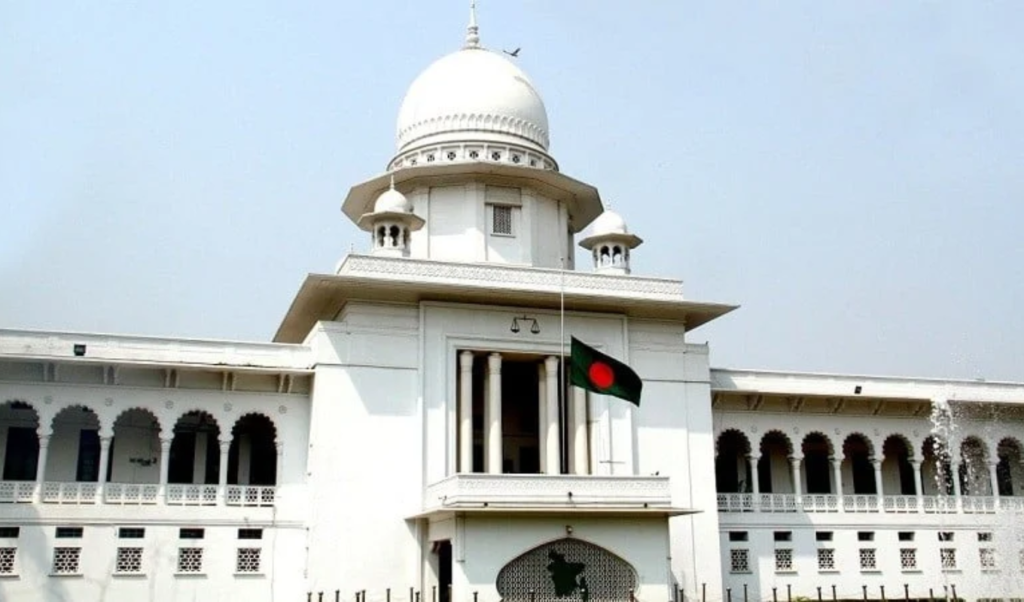
The High Court has issued a rule asking why directives should not be given to appoint female morgue assistants, traditionally known as doms, to handle the post-mortem examinations of deceased women. A High Court division bench, comprising Justice Fahmida Kader and Justice Md Asif Hasan, passed the order following a primary hearing on a writ petition filed in the public interest.
Advocate Mohammad Monir Uddin, a practitioner at the Supreme Court, appeared in court to represent the petition he had filed. Following the conclusion of the hearing, the legal representative briefed reporters on the developments. He stated that the bench directed the respondents to reply to the rule within the next two weeks.
The legal initiative began on 13 July, when Advocate Monir Uddin formally submitted the public interest litigation to the High Court. The petition argues that the current system routinely compromises the modesty and dignity of deceased women. In the vast majority of state-run hospital morgues across Bangladesh, the physical dissection, cleaning, and preparation of bodies for forensic examinations are performed exclusively by male morgue assistants.
The petitioner emphasised that under religious tenets, social values, and constitutional principles, a person is entitled to dignity not only during their lifetime but also after death. When a female body is handled and dissected entirely by male assistants, it often violates the privacy and cultural expectations of the deceased person’s surviving family members. There have also been instances in the past where concerns regarding the security and respectful handling of female bodies in public morgues were raised in the public domain.
Forensic medicine requires careful physical intervention to determine the cause of unnatural or suspicious deaths. By employing authorised female assistants specifically for female corpses, the state can ensure that necessary legal and medical protocols are completed without infringing upon cultural sensitivities. The ruling marks a significant preliminary step towards reforming institutional forensic practices in Bangladesh.