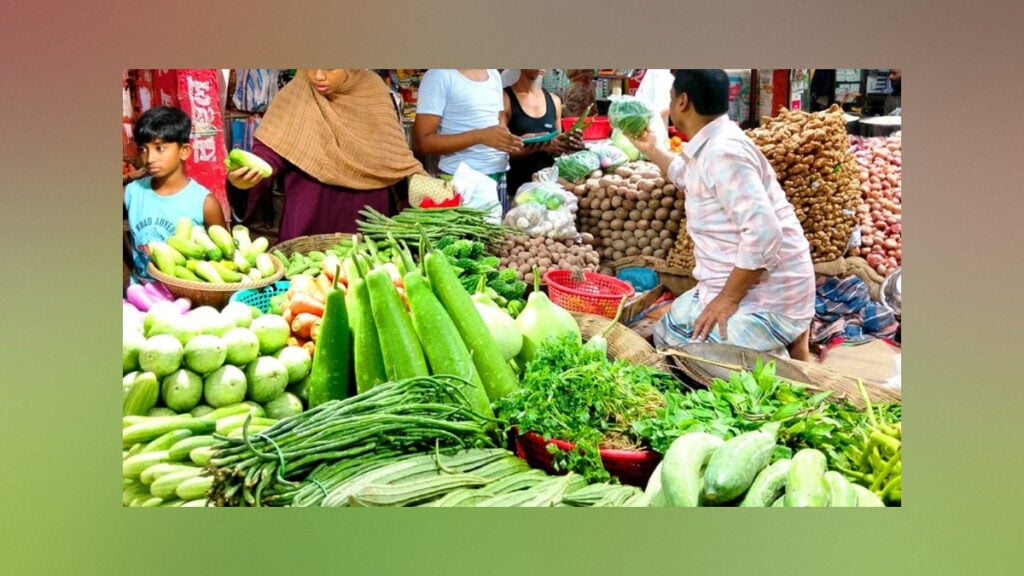
Winter vegetables are gradually making their way into markets across the capital, but their arrival has yet to bring relief to consumers. Despite an increase in the availability of seasonal produce, prices remain stubbornly high, while fish, meat and eggs continue to put pressure on household budgets.
New potatoes are selling for between Tk 140 and Tk 160 per kilogram, while carrots and older locally grown tomatoes are priced at up to Tk 140. Newly harvested local tomatoes are fetching around Tk 130 per kilogram. The high prices have left many shoppers disappointed, as they had expected the arrival of winter produce to ease the cost of everyday shopping.
The situation was observed during visits to several markets in Dhaka on Friday (13 November).
Market prices show that older potatoes are considerably cheaper than the new harvest, selling at around Tk 30 per kilogram. Green chillies are priced at Tk 120, while round aubergines cost Tk 100 per kilogram. Long aubergines are available for Tk 60 to Tk 80, and bitter gourds are selling for Tk 80 to Tk 100.
Prices of beans vary according to variety, ranging from Tk 80 to Tk 120 per kilogram. Cucumbers are selling at Tk 100, while carrots are available for around Tk 100 at some stalls. Cauliflowers cost Tk 50 to Tk 80, depending on size. Ridge gourds, pointed gourds, snake gourds, okra and radishes are each selling for around Tk 60 per kilogram.
Although the range of seasonal vegetables is gradually expanding, many remain expensive compared with what consumers would normally expect from an improving supply. The difference between the prices of newly harvested and older produce is also influencing purchasing decisions, with shoppers increasingly looking for cheaper alternatives.
The fish market is offering little relief either. Most varieties are continuing to sell at relatively high prices, according to market traders.
Rohu is priced at Tk 280 to Tk 380 per kilogram, while large tilapia costs Tk 180 to Tk 200. Silver carp and grass carp are selling for Tk 180 to Tk 200 per kilogram. Pangasius is available at Tk 160 to Tk 250, while catla costs Tk 350 to Tk 380.
Farmed climbing perch is selling for Tk 200 to Tk 220 per kilogram, while pabda commands Tk 380 to Tk 420. These prices are making it increasingly difficult for households to include different varieties of fish in their regular meals.
Hilsa, traditionally a popular choice among Bangladeshi consumers, remains particularly expensive. Depending on size and quality, the fish is selling for Tk 800 to Tk 2,300 per kilogram. Larger specimens are commanding prices exceeding Tk 2,600 per kilogram, placing them beyond the reach of many ordinary shoppers.
Egg prices are adding to the pressure on household food expenses. A dozen brown eggs are selling for Tk 145 to Tk 150, while white eggs cost Tk 130 to Tk 135. As eggs are an important and relatively accessible source of protein for many families, their high prices are placing an additional burden on consumers.
There has been little movement in the meat market either. Broiler chicken is selling for Tk 170 to Tk 190 per kilogram, while Sonali chicken costs between Tk 240 and Tk 330. Beef is priced at Tk 800 to Tk 850 per kilogram, and mutton is selling for Tk 1,200 to Tk 1,250.
Traders said there had been no significant change in the prices of these products compared with the previous week. As a result, consumers continue to face high costs across almost every major category of food.
Vegetable sellers, however, believe prices could begin to ease as the winter harvest reaches the markets in greater quantities. They said the current supply of newly harvested vegetables remained insufficient to meet demand, despite the first signs of seasonal produce becoming available.
According to traders, prices may start falling within the next week as supplies increase. They suggested that a wider range of varieties of the same vegetables arriving from different growing areas would indicate that market availability was improving and prices were beginning to come down.
For shoppers, however, such expectations offer little immediate comfort. Many are already adjusting their daily purchases to cope with the high cost of food. Vegetables, fish, eggs and meat are essential components of household diets, and sustained price pressures across these categories leave families with limited room to reduce spending without compromising their meals.
A shopper named Naim expressed frustration over the situation, saying the market remained extremely expensive. He said the prices of many vegetables were so high that he could not afford to buy them in the quantities he needed. Continuing price increases, he added, would make it increasingly difficult to manage household expenses.
He described a similar experience at the fish market, where he eventually decided not to buy anything. According to Naim, fish that previously cost Tk 800 could now be difficult to find even for Tk 1,200.
His experience reflects the concerns of consumers who are struggling to balance their food budgets against persistently high market prices. While traders anticipate some relief as winter vegetables become more widely available, the cost of fish, meat and eggs remains another major concern.
For many Dhaka households, the arrival of winter produce has therefore brought variety to market stalls but not yet the financial relief they had hoped for. Consumers are now waiting to see whether increased supplies in the coming weeks will translate into lower prices and make everyday shopping more affordable.