A Luminary in the World of Bangladeshi Engineering
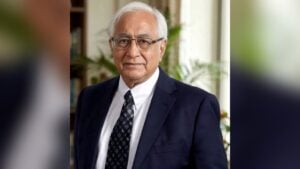
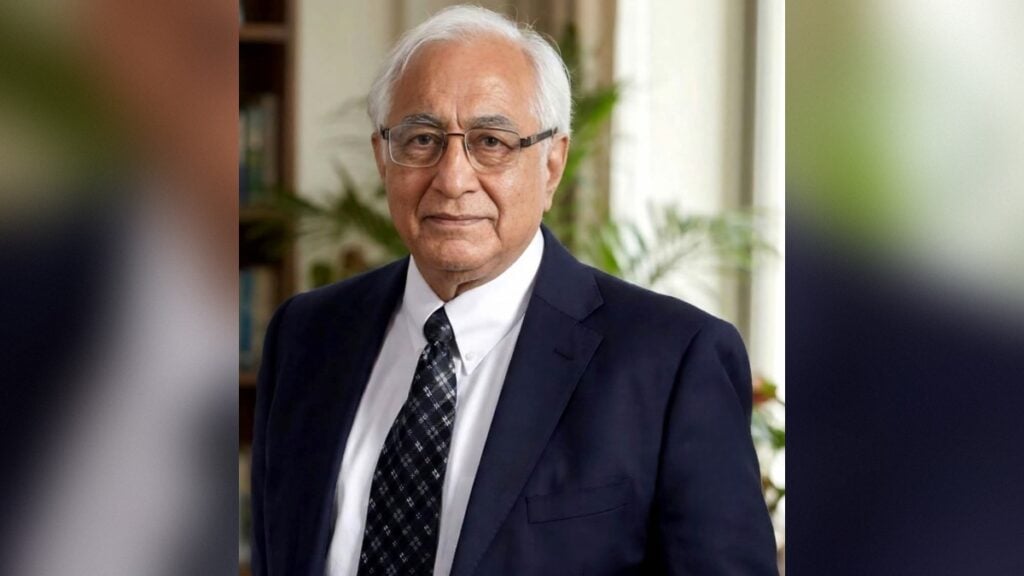
Certain individuals become part of a nation’s history of progress through their intellect, contemplation, wisdom, and deeds. Their contributions are never confined to a specific era or profession; rather, they cascade from one generation to the next. National Professor Jamilur Reza Choudhury was precisely such an extraordinary personality. His name will remain etched forever in the history of Bangladesh’s engineering, science, education, research, and modern infrastructure development.
He was deeply involved in the planning, design, construction, and technical consultation of numerous major physical infrastructures and mega-projects implemented in Bangladesh following independence. His intellect, experience, and counsel played a pivotal role in landmark national development projects, including the Bangabandhu Bridge, the Padma Bridge, the Dhaka Elevated Expressway, and the Karnaphuli Tunnel.
As a renowned civil engineer, researcher, academic, scientist, information technologist, and capable administrator, he earned immense prestige and recognition both at home and abroad.
Birth and Education
National Professor Jamilur Reza Choudhury was born on 15 November 1943 in Sylhet. His father, Engineer Abid Reza Choudhury, was a distinguished engineer, and it was within this familial environment that his interest in engineering first took root. Many members of his family were engineers, and alongside his father, the professional ideals of his relatives inspired him to pursue the field.
At the outset of his schooling, he studied at Mymensingh Zilla School. Later, upon moving to Dhaka, he attended Nawabpur Government High School and St Gregory’s High School. He completed his Matriculation from St Gregory’s School in 1957 and his Higher Secondary education from Dhaka College in 1959.
Subsequently, he enrolled in the Department of Civil Engineering at the then Ahsanullah Engineering College (now the Bangladesh University of Engineering and Technology—BUET). In 1963, he earned his BSc in Engineering, securing first place in the First Class.
In keeping with his brilliant academic record, he joined BUET’s Department of Civil Engineering as a lecturer that very same year. He later travelled to the United Kingdom for higher studies at the University of Southampton, from where he obtained an MSc in Advanced Structural Engineering in 1965 and a PhD in 1968.
Outstanding Contributions to Engineering and Research
While teaching at BUET, he never confined himself solely to the role of an educator; he also played a vital role in research, the modernisation of engineering education, and enhancing the nation’s technological capabilities.
In 1976, he was appointed Professor in the Department of Civil Engineering at BUET. Over the years, he held several key positions, including Head of the Department, Dean of the Faculty, and Director of BUET’s Computer Centre—a post he held for nearly a decade, from 1982 to 1992. He continued teaching at BUET until 2001.
His research on the structural safety of high-rise buildings and shear wall analysis received particular acclaim in the international engineering community. The ‘Coull and Choudhury Method’, jointly developed with Professor Alexander Coull, gained worldwide recognition as a major analytical method for shear walls in multi-storey buildings and has been incorporated into engineering curricula globally.
His body of research was remarkably rich, spanning high-rise construction, earthquake-resistant structures, low-cost housing, infrastructure built to withstand cyclones and storm surges, and the application of information technology. Approximately 70 of his research papers have been published in domestic and international journals as well as international conference proceedings.
A Pioneer in Major National Infrastructure Development
Jamilur Reza Choudhury stands as a peerless figure in the history of Bangladesh’s engineering and infrastructure development.
He played a crucial expert-level role in the planning and implementation of the Bangabandhu Bridge over the River Jamuna. He also served as a key member and technical adviser on the panel of experts for the Padma Bridge project.
Furthermore, his counsel and expertise were utilised in the Dhaka Elevated Expressway, the Karnaphuli Tunnel, the Dhaka Subway, and various other major infrastructure initiatives.
He also played a vital role in formulating Bangladesh’s first National Building Code, contributing significantly to safe building designs that account for the country’s seismic risks and wind characteristics. Additionally, his role in the planning and master-planning of cyclone shelters in coastal regions was noteworthy.
Leadership in Education and State Responsibilities
Following his retirement from BUET in 2001, he took on new responsibilities to advance higher education in the country, serving as the founding Vice-Chancellor of BRAC University from 2001 to 2010. Under his leadership, the university’s academic programmes and institutional foundations were firmly consolidated.
In May 2012, he joined the University of Asia Pacific as Vice-Chancellor, a post he held until the final day of his life.
In 1996, he served as an Adviser to the Caretaker Government, holding the portfolios for the Ministry of Power, Energy and Mineral Resources, and the Ministry of Water Resources. Later, he also served as the Chairman of the Task Force on Software Export and IT Infrastructure Development.
He was associated with several prominent organisations, including the Bangladesh Earthquake Society, Bangladesh Poribesh Andolon (BAPA), and the Bangladesh Mathematical Olympiad Committee. Notably, serving as President of the Bangladesh Mathematical Olympiad Committee from 2003 onwards, he played a transformative role in inspiring a new generation of students to take an interest in mathematics and science.
A Unique Example of an Engineer’s Creativity
A remarkable and unusual anecdote from his career remains unknown to many.
He created the structural design for the aeroplane mounted atop the minaret of the famous Aeroplane Mosque on Elephant Road in the capital. At the time, he was a final-year student at Ahsanullah Engineering College. Even as a student, his extraordinary engineering acumen, creativity, and skill shone through in this work.
This episode demonstrates that to him, engineering was not merely a profession, but a unique realm of creative thought and practical innovation.
Awards and International Recognition
In recognition of his exceptional contributions throughout his career, he received numerous national and international awards and honours.
He was awarded the Dr M A Rashid Gold Medal in 1997 and the Institution of Engineers, Bangladesh (IEB) Gold Medal in 1998. In 2009, he received the ICT Champion Award.
In 2010, the University of Manchester in the United Kingdom conferred upon him an honorary Doctor of Engineering (D.Eng.) degree, making him the first Bangladeshi to receive this honorary distinction from a British university.
In 2013, the Japan International Cooperation Agency (JICA) bestowed a special recognition upon him.
In acknowledgement of his outstanding contributions to science and technology, the Government of Bangladesh awarded him the Ekushey Padak in 2017.
On 19 June 2018, the Government of Bangladesh appointed him a National Professor. That same year, the Government of Japan honoured him with its prestigious ‘Order of the Rising Sun, Gold Rays with Neck Ribbon’.
An Inspiration to a Generation
National Professor Jamilur Reza Choudhury was a man who never used his intellect and qualifications solely for personal gain; rather, he dedicated them to national development, education, research, and human welfare.
To him, the skill and capability of the nation’s engineers were sources of boundless potential. He firmly believed that given the right opportunities, education, and planning, Bangladeshi engineers themselves were fully capable of executing world-class mega-projects.
His life teaches us that the pursuit of knowledge knows no end, that the true fulfilment of intellect lies in the service of humanity, and that a person’s finest identity lives on through their work.
On 28 April 2020, this eminent academic and engineer breathed his last at the age of 76 following a heart attack at his residence in Dhaka.
He is no longer among us today. Yet, his contributions to the advancement of Bangladesh’s bridges, roads, buildings, infrastructure, engineering education, and research will keep his memory alive for all time.
National Professor Jamilur Reza Choudhury was not merely a successful engineer; he was a silent architect of Bangladesh’s development journey and a devoted artisan in building a knowledge-based society.
Through his deeds, intellect, and contributions, he will endure in the history of Bangladesh, in the reverence of its people, and as an inspiration for generations to come.
On the birth anniversary of this great figure, we offer our deepest respect and humble tribute.