Sunday, 5th April 2026

Khabor Wala Desk
Published: 22nd March 2026, 8:35 AM
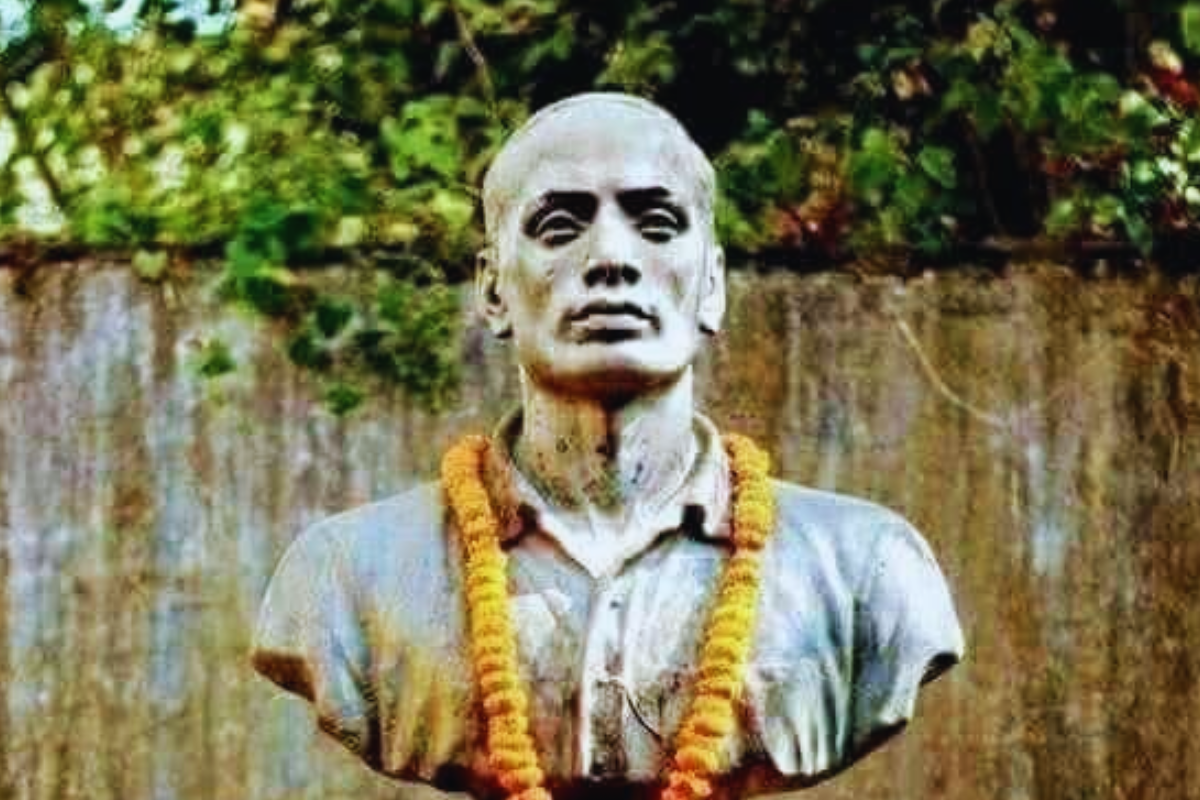
In the annals of Bengal’s struggle for independence, a few names shine like immortal beacons, and Surya Sen is among them. At the forefront of the armed resistance against British colonial rule, he embodied the fearless courage of countless young Bengalis who dared to confront tyranny. By willingly risking his life for the liberation of the motherland, he set a timeless example of selfless patriotism.
Surya Sen was born on 22 March 1894 in Noapara village, Rauzan, Chittagong, to Rajmani Sen and Shashibala. Though his early childhood was nurtured by his parents’ love, he became fatherless at the tender age of five. Thereafter, he grew up under the care of his elder uncle, Gouramani Sen, in an environment where seeds of humanity, responsibility, and love for the nation quietly took root.
After the Battle of Plassey in 1757, the sun of Bengal’s independence seemed to set. Nearly two centuries of colonial oppression cast a long shadow over the land. Yet, revolutionaries like Surya Sen reignited the flame of freedom. Their sacrifices and struggle paved the path toward realising the dream of independence.
During his college years, Surya Sen came into contact with revolutionary ideas. Although he pursued a career in teaching after completing his studies, his true mission lay in awakening the younger generation. As a teacher at Umattara High English School in Chittagong, he did more than instruct; he planted seeds of independence in the hearts of his students. It was here that he became affectionately known as “Masterda.”
He was actively involved with the revolutionary group ‘Jugantar’ and participated in numerous anti-British activities. Repeated arrests, imprisonment, and brutal torture failed to break his spirit.
On the night of 18 April 1930, Chittagong witnessed an unforgettable event. Under Masterda’s leadership, the historic Chittagong Armoury Raid took place. That night, the national flag was hoisted in the armoury compound, symbolising the declaration of a free Chittagong. This daring act shook the foundations of British rule and opened new horizons for the freedom movement across the subcontinent. Among his brave companions was the revolutionary heroine Pritilata Waddedar, a remarkable symbol of female courage and sacrifice.
After a long period in hiding, Surya Sen was eventually captured. He endured inhumane torture in prison—a grim chapter in history. In 1933, he was sentenced to death, and the sentence was carried out on 12 January 1934. Even in death, the British feared his influence; to prevent public outrage, his body was disposed of in the Bay of Bengal.
But was he truly extinguished? No—ideals do not die.
Masterda Surya Sen lives on in every dream of freedom, every act of resistance, and every expression of courage. He was not merely a revolutionary; he was an inspiration, a guiding light. In the hearts of Bengal’s freedom-loving people, his memory remains eternal and ever luminous.
With profound respect, we remember him.
Comments