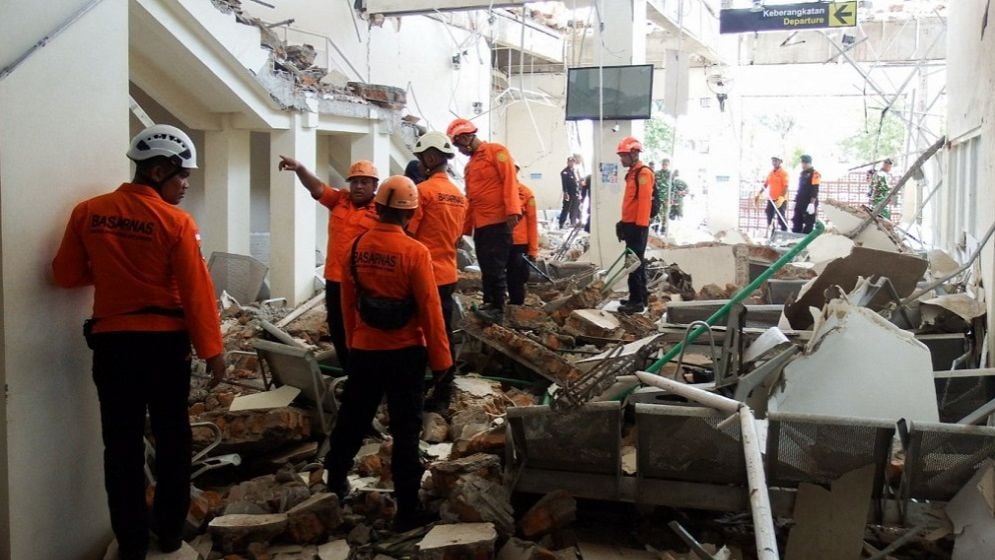
A powerful magnitude 7.7 earthquake has struck eastern Indonesia, killing at least 51 people and injuring 113 others, according to Indonesian authorities. The disaster has caused widespread damage across East Nusa Tenggara province, with landslides and collapsed roads cutting off several communities and making rescue operations considerably more difficult.
The earthquake struck on Saturday morning in the Flores region of East Nusa Tenggara. It was followed by 341 aftershocks, adding to the fear among residents and complicating efforts to search damaged buildings. Officials said 36 of the injured people were in serious condition, while 77 suffered less severe injuries.
Around 5,000 people have been evacuated from areas considered unsafe. Sikka was among the worst-affected locations, where more than 3,300 residents moved to safer areas, many without waiting for formal evacuation arrangements. Fear of further tremors has also kept large numbers of people away from their homes. Some residents have spent the night in open spaces, on verandas or under makeshift tarpaulin shelters.
In Maumere, one of the affected urban areas, medical teams have been treating injured people in tents outside hospital buildings. Such temporary arrangements have become necessary as authorities assess structural damage and try to keep medical services operating amid disrupted infrastructure.
More than 1,300 homes have been damaged, while authorities fear that additional victims could still be trapped beneath collapsed structures. Landslides have blocked important roads, leaving some communities difficult to reach and slowing the movement of rescue teams, medical supplies and other emergency assistance. Power and communications disruptions have added to the challenges faced by emergency workers.
More than 3,500 military and police personnel have been deployed to support search-and-rescue operations, evacuations and relief efforts. Emergency teams are also working to clear debris and reopen blocked routes so that assistance can reach isolated communities.
The earthquake has also disrupted the local fuel supply. Power outages forced state energy company Pertamina to close 20 petrol stations, creating another logistical concern for residents and emergency services at a time when transport is crucial for rescue and relief operations.
Indonesia is particularly vulnerable to earthquakes because much of the country lies along the seismically active Pacific Ring of Fire. The latest disaster is among the country’s most serious earthquakes in recent years, and the continuing aftershocks mean that rescue workers and residents remain at risk even after the main shock has passed.
Authorities are continuing to assess casualties and structural damage, while rescue teams search affected areas for survivors. With roads blocked in several locations and further tremors still possible, the immediate priority remains reaching isolated communities, treating the injured and providing safe temporary shelter for those unable to return home.