Major General Mostafa Izadi, deputy commander of the IRGC, has claimed that technological advances have significantly strengthened Iran’s missile capabilities, allowing its weapons to threaten heavily defended US naval vessels.
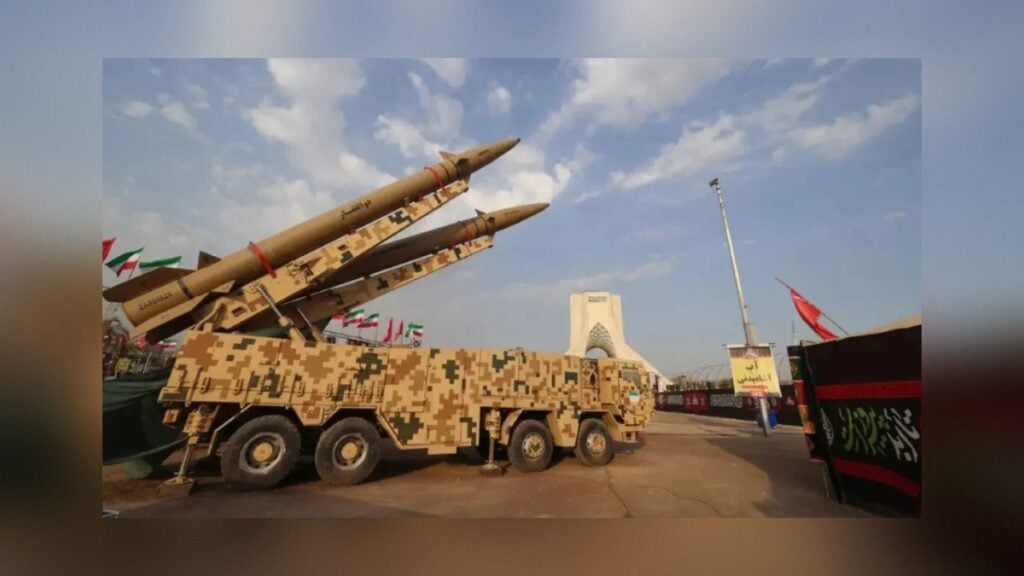
According to Iran’s Mehr News Agency, Izadi said the country’s military development had extended well beyond increasing the number of missiles in its arsenal. He maintained that improvements in domestic technology had substantially enhanced their effectiveness, operational range and precision.
The Iranian commander suggested that even American warships protected by advanced defensive systems could be vulnerable to Iranian missile attacks. However, no independently verified technical evidence was presented in the original report to establish whether the weapons could consistently penetrate such defences.
His remarks come amid continuing military tensions involving Iran, the United States and Israel, particularly over security arrangements in the Persian Gulf and the strategically important Strait of Hormuz.
According to the original report, the United States and Israel launched coordinated military strikes against Iranian territory on 28 February, prompting Tehran to undertake extensive retaliatory operations.
Iran subsequently carried out missile and drone attacks targeting Israeli territory and American military installations located in several Gulf Arab countries. The retaliatory strikes intensified regional tensions and raised concerns about the security of US military facilities across the Middle East.
Although Israel has not disclosed a comprehensive assessment of the damage attributed to the Iranian attacks, reports cited in the original account suggest that several American military installations in the Gulf region sustained considerable damage.
The account referred to a CNN report claiming that repeated Iranian strikes had severely disrupted operations at US military facilities, leaving substantial sections of some installations effectively unusable.
The precise extent of the reported destruction, however, remains unclear from the information provided. Independent confirmation of the affected facilities’ current operational status was also unavailable.
Despite the reported suspension of direct active hostilities between Washington and Tehran, tensions between the two countries remain unresolved.
The original report states that the US Navy continues to maintain a maritime blockade affecting Iranian ports around the Strait of Hormuz. Tehran has warned that American warships could face direct military attacks unless the restrictions are withdrawn.
Iran has also reportedly maintained strict control over maritime movements through the strategically sensitive waterway.
According to the Iranian account, commercial and military vessels attempting to pass through the strait without Tehran’s formal authorisation risk being attacked by Iranian forces. The report further claims that such attacks have continued, although the details and scope of these incidents could not be independently verified.
The Strait of Hormuz occupies a central position in international maritime trade. Connecting the Persian Gulf to the Gulf of Oman and the Arabian Sea, it provides a crucial shipping route for oil and liquefied natural gas exports from major energy-producing countries.
A significant proportion of the world’s seaborne oil shipments passes through the narrow waterway, making its security an issue of international economic importance.
Any prolonged disruption to shipping could affect global energy supplies, increase transportation costs and contribute to volatility in international oil and gas markets.
Iran has long regarded the strait as vital to its national security and strategic interests. The United States, meanwhile, has consistently emphasised freedom of navigation and the protection of international commercial shipping in the Gulf region.
These competing positions have repeatedly contributed to tensions between the two countries, particularly during periods of heightened military confrontation.
Iran’s missile programme remains a central component of its defence strategy. Tehran has invested heavily in developing ballistic missiles, cruise missiles and unmanned aerial systems to strengthen its ability to deter or respond to potential military attacks.
Such capabilities are particularly relevant to naval warfare, where the ability to detect, track and strike moving vessels can influence the balance of military power.
Modern American warships, however, are equipped with layered defensive systems designed to identify and intercept incoming threats. These systems can include sophisticated radar equipment, interceptor missiles, electronic warfare technology and close-range defensive weapons.
The effectiveness of any missile attack against a heavily defended warship depends on several factors, including the weapon’s speed, targeting accuracy, the reliability of its guidance systems and the defensive capabilities of the vessel being targeted.
Consequently, possessing missiles capable of reaching American naval vessels does not necessarily establish that they can successfully overcome every defensive measure deployed aboard those ships.
Izadi’s statements nevertheless reflect Tehran’s determination to demonstrate its military capabilities while maintaining pressure on Washington over the continuing maritime dispute.
The warnings also underline the potential risks associated with renewed military confrontation in the Strait of Hormuz, where commercial shipping and naval operations take place within a relatively confined geographical area.
With the reported maritime restrictions still unresolved, further military threats or incidents could increase the possibility of renewed hostilities between Iran and the United States.
Any escalation in the region could have consequences extending beyond the immediate confrontation, potentially affecting Middle Eastern security, international shipping routes and global energy markets.