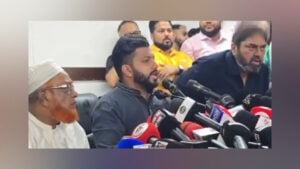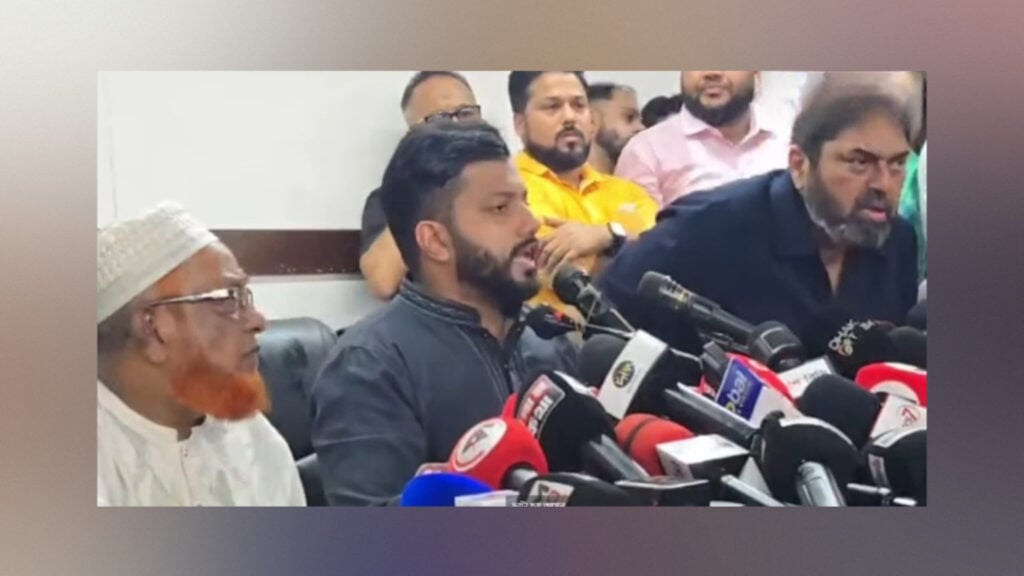
Ishraq Hossain, a Member of Parliament for Dhaka-6, has resigned as State Minister for Liberation War Affairs following mounting criticism over his display of a firearm during an anti-drug operation in the capital’s Gandaria area. He announced his decision at a press conference at the National Press Club on Monday, 19 October, two days after the incident sparked widespread debate.
Addressing journalists, Hossain explained the circumstances behind his resignation and said he had sought the Prime Minister’s approval to step down. He also insisted that his commitment to combating drug-related crime would remain unchanged despite his departure from the ministry.
“I am Ishraq Hossain, a Bangladesh Nationalist Party (BNP) MP elected by the people of Dhaka-6,” he said, recalling that he had taken his oath of office on 12 February. He added that Prime Minister Tarique Rahman had subsequently appointed him State Minister for Liberation War Affairs, a position in which he had been carrying out his responsibilities.
Hossain said the incident had attracted considerable attention from both domestic and international media over the preceding two days. He convened the press conference to explain his position and clarify the reasons behind his decision to leave the ministerial post.
According to Hossain, he discussed the matter with the Prime Minister on Monday morning and expressed his intention to resign. He said the Prime Minister had agreed to his request, allowing him to relinquish his responsibilities at the Ministry of Liberation War Affairs.
Explaining his decision, Hossain said he did not want his actions to overshadow the work of the Prime Minister or the government. He also made clear that he intended to continue his anti-drug activities, signalling that his departure from the ministry would not mean abandoning his stated commitment to tackling drug-related crime.
Earlier on Monday, Hossain had announced on his verified Facebook page that he would hold a press conference in the afternoon to declare his resignation. The announcement followed speculation about his political future that had circulated the previous night.
However, a statement issued earlier by Mahfuz Kabir Mukta, the state minister’s press officer, had described reports of Hossain’s resignation as false and misleading. Hossain subsequently addressed the matter himself at the National Press Club, confirming his decision to leave the post.
Firearm Display Triggers Public Backlash
The controversy began on Saturday, when Hossain took part in an anti-drug operation near the railway line in Gandaria, an area in central Dhaka. Images and reports showing him carrying a firearm during the operation prompted widespread discussion on social media and criticism from various quarters.
The incident raised questions about the conduct of public officials during law-enforcement activities, particularly the circumstances in which firearms are displayed and the responsibilities that accompany ministerial office. The debate also drew attention to the need for anti-drug operations to be conducted in accordance with the law and with due regard for public safety.
Although Hossain maintained that his anti-drug activities would continue, the episode placed his conduct under scrutiny. The controversy developed into a wider discussion about the appropriate role of elected representatives in such operations and the standards of accountability expected of government officials.
Reports circulated on Sunday suggesting that Prime Minister Tarique Rahman had instructed Hossain to resign from the Cabinet. However, the information was not immediately confirmed through an official announcement at the time. Hossain’s statement on Monday established that he had discussed resignation with the Prime Minister and that his request had been accepted.
Resignation Leaves Questions Over the Incident
Hossain’s departure marks a significant development in the controversy surrounding the Gandaria operation. His announcement also separates his ministerial responsibilities from his stated intention to remain involved in anti-drug activities.
The circumstances surrounding the firearm display, including the precise context of the operation and any subsequent official assessment, remain relevant to the public debate. A clear account of those details would help establish the full circumstances of the incident.
Anti-drug operations remain a significant public concern in Bangladesh, where law-enforcement agencies regularly face challenges in tackling the distribution and sale of illegal substances. Such activities require effective coordination, lawful procedures and safeguards for those involved, as well as the wider community.
For public officials, the scrutiny can be particularly intense because their conduct carries implications beyond the immediate operation. The Gandaria episode has highlighted those expectations, while Hossain’s resignation has brought his tenure as State Minister for Liberation War Affairs to an end.
He has said that he intends to continue his anti-drug efforts. Whether further official clarification or action follows the incident remains to be seen.