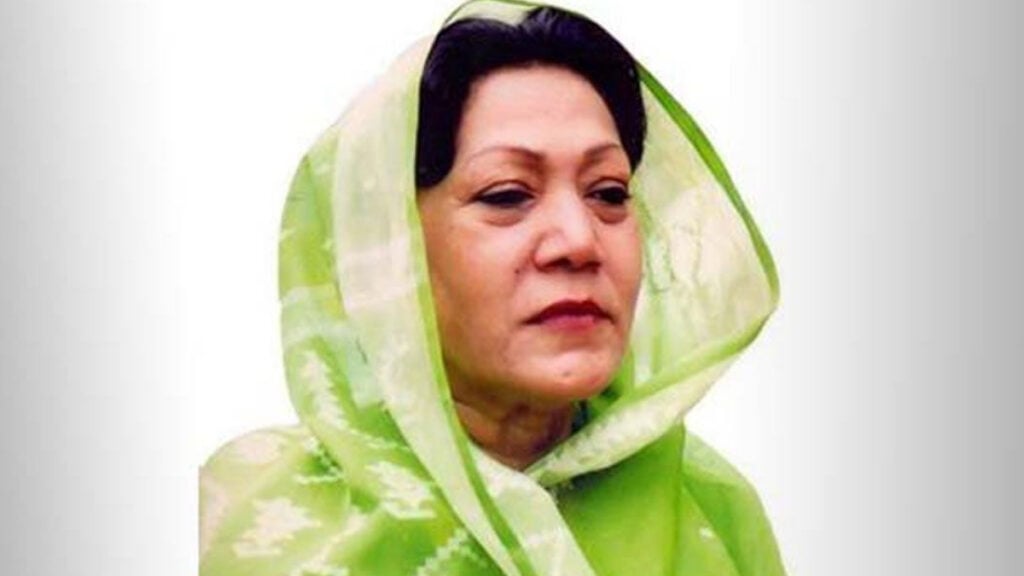
Ivy Rahman remains a prominent figure in the history of Bangladesh’s democratic and secular political movement, remembered for her courage, organisational commitment and close bond with grassroots activists. A leading figure in the women’s movement and a dedicated organiser of the Bangladesh Awami League, she was widely regarded by fellow political workers as a trusted companion in the struggles fought on the streets.
Her full name was Zebuন্নেছা Ivy Rahman. She was born on 7 July 1936 into a respected family in Chandiber village of Bhairab, in Kishoreganj district, then part of greater Mymensingh. From her student years, she developed an interest in social affairs and politics. She later became actively involved in Awami League politics and played an important role in strengthening the organisation at the grassroots level.
Ivy Rahman’s political identity extended beyond party activities. She was also a social worker and an advocate for women’s participation in public life. Through her leadership responsibilities in Bangladesh Mahila Awami League, she worked to encourage women to become politically and socially aware and to take a more active role in public affairs. Her organisational approach helped many women gain confidence in entering mainstream politics.
Her political journey was closely associated with the ideals of Bangabandhu Sheikh Mujibur Rahman and the Awami League’s democratic movement. She also maintained a close personal relationship with the Bangabandhu family. Her bond with Sheikh Hasina, daughter of Bangabandhu, was particularly close and was described as extending beyond political association into a deep family relationship.
Ivy Rahman was married to former President and veteran politician Mohammad Zillur Rahman. While she remained closely connected with her husband’s political life, she also established a distinct identity through her own organisational work, leadership and dedication. To colleagues, she was affectionate and approachable; to grassroots workers, she was a familiar and dependable presence; and to political comrades, she represented courage and commitment.
21 August: A Tragedy That Changed Everything
On 21 August 2004, a grenade attack struck an anti-terrorism rally organised by the Awami League on Bangabandhu Avenue in Dhaka. The gathering descended into chaos within moments as explosions ripped through the crowd. The attack targeted senior Awami League leaders, including then opposition leader Sheikh Hasina.
Ivy Rahman was among her fellow political workers that day. As the explosions continued, party activists formed a human shield around Sheikh Hasina in an effort to protect her. The attack left numerous people dead and hundreds injured.
Ivy Rahman suffered critical injuries, including multiple wounds caused by grenade fragments. She was taken for treatment and remained in a critical condition for three days. On 24 August 2004, she died from her injuries.
Her death was a profound loss for her family, political colleagues and supporters. It also became one of the most painful episodes associated with Bangladesh’s violent political history.
The 21 August attack remains a deeply significant event in Bangladesh’s political narrative, particularly because of the scale of the violence and the prominent political figures who were targeted. The subsequent legal proceedings over the attack continued for years, reflecting the enduring significance of the case in the country’s political and judicial history.
Twenty-two years after her death, Ivy Rahman continues to be remembered for her political dedication, organisational skills and willingness to stand alongside fellow activists during difficult times. Her life was closely intertwined with the political struggles of her era, while her death became a lasting symbol of the human cost of political violence.
On 24 August, her death anniversary, she is remembered with respect for the years she devoted to political organisation, women’s participation and public life.
Ivy Rahman’s name remains associated with sacrifice, courage and steadfastness. For those who knew her and worked alongside her, she was more than a political leader: she was a trusted comrade whose presence brought strength to those around her.
Her memory remains an enduring part of Bangladesh’s political history.