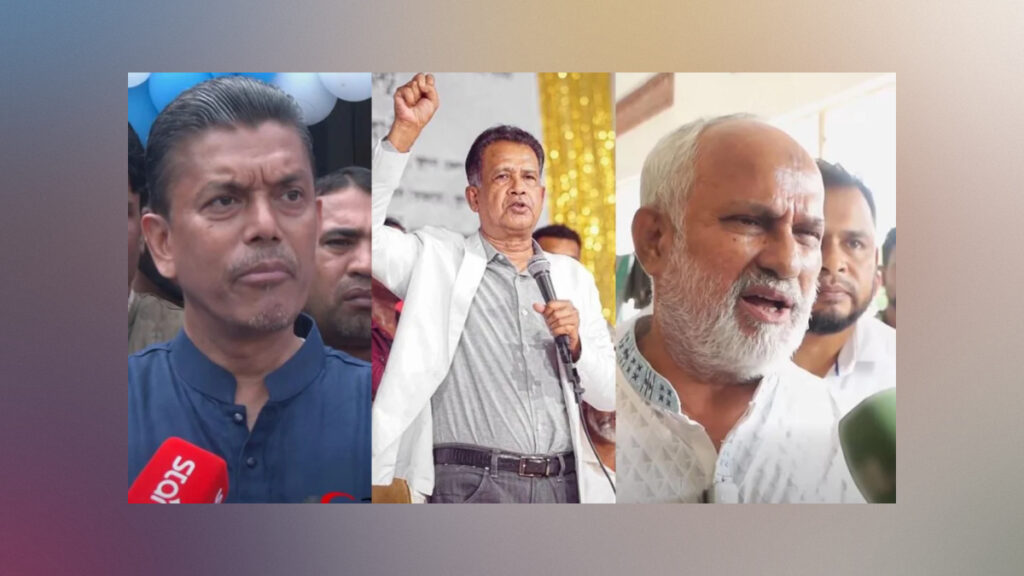
Khulna is facing growing concerns over public safety following a series of murders, armed attacks, extortion, vandalism and other criminal activities. Government lawmakers, a parliamentary whip, the administrator of Khulna City Corporation (KCC) and opposition political figures have voiced frustration over the deteriorating law and order situation, calling on the police and administration to take decisive action against those responsible.
Particular concern has been raised over the killing of political activists in public shootings, attacks on businesspeople and persistent demands for extortion money. Political leaders say the repeated incidents have created an atmosphere of fear across the city, leaving residents, traders and professionals increasingly worried about their security.
They have accused law enforcement agencies of failing to take sufficiently effective action despite repeated warnings. Some have called for coordinated operations involving multiple security forces, while others have demanded stronger surveillance and the arrest of suspected criminals. The growing concern has also prompted warnings that political organisations may become more directly involved in resisting criminal activities if the authorities fail to restore order.
BNP May Take to the Streets if Police Fail to Act
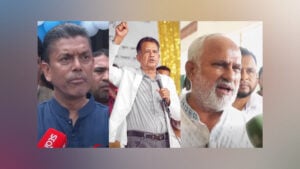
National Parliament Whip and Khulna-3 MP Rakibul Islam Bakul has described the city as a place increasingly dominated by fear and criminal activity.
He said residents were regularly waking up to reports of murders, attacks and vandalism linked to extortion demands. According to him, repeated appeals had been made to the police and administration to take a tougher stance, but the response had not met expectations.
Bakul warned that if the police failed to establish effective resistance against criminal groups, the BNP would take to the streets.
He called for collective efforts to make Khulna free from violence, saying political and social forces needed to work together to restore public confidence.
The MP also highlighted the economic and social circumstances that, in his view, were pushing some young people towards criminal activities. He said financial hardship, frustration and the lure of relatively small sums of money were encouraging some individuals to become involved in violence and drug-related activities.
He referred to amounts of Tk 7,000 and Tk 15,000, suggesting that financial incentives were drawing some young people into criminal networks.
Bakul urged those involved in such activities to abandon the path of violence and return to normal life. He warned that criminal activities could not provide a sustainable future and said the government would eventually take firm action to protect public safety.
He added that those willing to leave criminal activities should have the opportunity to return to society through lawful means.
KCC Administrator Calls for Joint Operations and Curfew
Khulna City Corporation Administrator and former president of the metropolitan BNP, Nazrul Islam Manju, has called for an extensive crackdown on criminal groups operating in the city.
Describing the situation as deeply alarming, he claimed that several organised criminal groups had effectively held around 1.4 million residents hostage through violence, extortion and drug-related activities.
He urged the authorities to launch large-scale joint operations involving different security agencies. He also suggested that a curfew could be imposed if necessary to facilitate the arrest of those involved in criminal activities.
Manju alleged that people who protested against extortion were being targeted and killed. He claimed that between eight and 10 BNP and affiliated organisation activists had been murdered in such incidents.
According to him, extortion has become so widespread that many businesspeople are reluctant to speak publicly about their experiences. Some have reportedly left Khulna, while others have closed their businesses or remained silent out of fear of retaliation.
He alleged that several groups were collecting substantial sums of money, sometimes amounting to hundreds of thousands or even millions of taka. Although many people were allegedly being forced to pay, few were willing to report the incidents because of concerns for their personal safety.
Manju called for direct intervention by the Prime Minister, arguing that a coordinated operation involving all relevant security agencies was necessary to arrest those responsible and dismantle criminal networks.
He also referred to security measures introduced during former Prime Minister Khaleda Zia’s tenure, claiming that around 150 police camps had been established across the Khulna division, alongside additional intelligence surveillance.
Addressing the issue of extrajudicial killings, Manju acknowledged that such practices were inhumane and said they were not an acceptable solution. However, he insisted that the government needed to adopt effective measures to restore security and prevent criminal groups from operating with impunity.
MP Questions Possible Links Between Criminals and Law Enforcement
Khulna-4 MP Azizul Bari Helal has raised questions about the role of the police and administration in tackling the growing criminal activities.
He argued that the continued presence and apparent freedom of suspected criminals raised serious questions about the effectiveness of law enforcement efforts.
Helal questioned why individuals allegedly involved in intimidation, violence and other criminal activities had not been identified and arrested if the authorities were aware of their whereabouts.
He also raised concerns about the possibility of undisclosed connections between criminals and members of the administration.
The MP stressed that anyone involved in criminal activities should be identified and brought to justice, regardless of their political background or involvement in past political movements.
He specifically said that individuals associated with the revolution or mass uprising should not receive any protection if they were found to be involved in criminal activities.
His comments reflect growing political pressure on the authorities to demonstrate that law enforcement operations are impartial and that no individual or group is above the law.
Jamaat MP Says Residents Are Losing Confidence in Public Safety
Khulna-2 Jamaat-e-Islami MP Sheikh Jahangir Hossain Helal has also expressed concern over the deteriorating security situation.
He said residents wanted nothing more than to live peacefully and go about their daily activities without fear. However, uncertainty over when and where the next incident might occur was making ordinary life increasingly difficult.
According to him, some residents were considering leaving the city because they no longer felt safe. Businesspeople had closed their shops and organised protests and human chains to demand protection. Healthcare professionals had also joined demonstrations, calling for better security.
He described the situation as a source of embarrassment for all concerned.
Helal said protecting businesspeople and ordinary citizens was a fundamental responsibility of the state. He questioned how residents could feel secure if extortion continued despite police operations.
He argued that successful law enforcement could not be measured simply by the number of operations conducted. The real test was whether criminal activities declined and people could return to their normal lives without intimidation.
He called for stronger surveillance and practical measures to improve security, emphasising that statements and assurances alone would not restore public confidence.
The MP also said law enforcement agencies had sought assistance from political and professional leaders to combat extortion and violence. He claimed to be providing cooperation from his position and said extortion would not be tolerated in his constituency.
He urged the authorities to create an environment in which criminals would no longer feel confident enough to intimidate residents or demand money.
Civil Society Raises Concerns Beyond the City
Concern over the security situation is not limited to political leaders. Representatives of civil society have also criticised what they describe as the lack of visible action against criminal activities.
Advocate Babul Howlader, member-secretary of Khulna Civil Society, said there had been insufficient visible operations to tackle crime in the area.
He argued that merely preparing lists of suspected criminals and warning them was not enough to address the problem. Meanwhile, murders, extortion and drug-related activities were continuing, leaving ordinary residents increasingly vulnerable.
Howlader said allegations of land grabbing, extortion, murder and drug trafficking had also emerged from areas beyond the five police stations within Khulna city.
He specifically mentioned Batiaghata, Rupsha, Terokhada, Dighalia and Dumuria, where similar allegations had reportedly been raised.
He questioned why suspected criminals were not being arrested if the administration knew where they were operating.
According to him, meaningful action was needed to reassure residents that criminal activities would not be allowed to continue unchecked. He also highlighted the importance of creating an environment in which people could report crimes without fearing retaliation.
Police Promise Further Crackdowns
Khulna Superintendent of Police Sardar Omar Faruk said various operations had been conducted to improve law and order since he assumed responsibility for the district.
He said the police were planning further block raids, involving coordinated searches across specific areas, as part of efforts to identify and apprehend criminals.
Motorcycle-focused operations were also being strengthened, while coordinated action was being planned in areas bordering the jurisdictions of different police stations.
Such measures, he indicated, were intended to improve coordination and strengthen police presence in areas where criminal activities had been reported.
However, the statements from political leaders and civil society representatives suggest that public confidence remains fragile. Residents are looking for tangible improvements rather than announcements of future operations.
Restoring Security Remains the Biggest Challenge
The situation in Khulna has become a significant concern for political representatives, businesspeople and ordinary residents alike. Allegations of organised extortion, repeated killings, drug-related activities and attacks on those who protest have intensified demands for stronger law enforcement.
The concerns raised by representatives of different political parties also indicate that public safety has become an issue requiring attention beyond party lines.
For residents, the immediate priorities are straightforward: protection from violence, freedom from extortion, accountability for criminal activities and the ability to conduct business without fear.
The authorities now face the challenge of translating promises of tougher action into measurable results. Effective investigations, arrests, coordinated security operations and consistent enforcement of the law will be essential to restoring public confidence.
Until residents feel safe in their homes, workplaces and neighbourhoods, Khulna’s law and order situation is likely to remain a source of serious public concern.