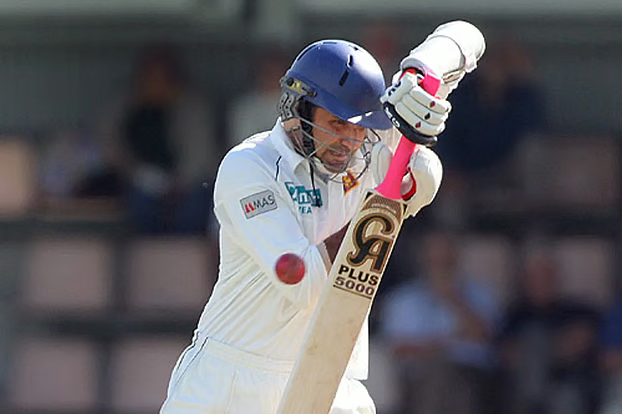
Three Test matches, six innings, and a solitary run. Five of those visits to the crease ended without scoring. On debut, he bagged a pair—dismissed for nought in both innings—and was promptly dropped from the side. Recalled two years later, he registered another duck before finally getting off the mark with a single in the second innings, only to be discarded once again. Eighteen months on, a third opportunity yielded yet another pair.
By every conventional metric of international sport, such a statistical horror show signals an immediate end to a career. Few batters could ever expect to survive a sequence so barren. Yet this exact cricketer went on to play a further 87 Test matches, amassing 16 centuries—six of which he converted into monumental double hundreds.
His name is Marvan Atapattu.
Remarkably, even that lone run across his opening three Tests was not legitimately his. Reflecting on those dark early days years later, Atapattu admitted with a laugh that the run came entirely courtesy of an umpiring error. The delivery had struck his pad rather than his bat, yet the official failed to spot it and credited him with a run instead of signalling a leg-bye. Had that mistake not occurred, the Sri Lankan opener would have etched his name into the record books for the dubious distinction of bagging three consecutive pairs to begin a Test career.
Atapattu could afford to look back on that anecdote with humour precisely because of the heights he eventually scaled. Reaching six double centuries after scraping together a single dubious run in his first six innings remains one of cricket’s most extraordinary tales of resilience.
Credit must equally go to the foresight and patience of the Sri Lankan selectors. By Atapattu’s own admission, he had abandoned all hope of wearing the Test cap again following his third miserable outing. When the selectors handed him a fourth lifeline in March 1997—nearly seven years after his debut—the turnaround was far from instantaneous. Scores of 25 and 22 in his comeback Test were followed by a duck in the next match, forcing him to scrap for a second-innings 25 simply to avoid a third career pair. After nine Tests, his highest score stood at a modest 29, leaving him with a paltry batting average of 10.71.
Nevertheless, the selectors kept faith and included him in the squad for the tour of India, the very country where his nightmare had begun years earlier. In his tenth Test, at Mohali, Atapattu finally exorcised his demons with a fluent 108. That maiden hundred unlocked a newfound self-belief. Rain washed out the subsequent Test in Nagpur, denying him a chance to build on his momentum, before he fell agonisingly short on 98 in the third Test in Mumbai.
Three months later, against Zimbabwe in Kandy, Atapattu truly announced himself as a force in red-ball cricket. Occupying the crease for 569 minutes and facing 448 deliveries, he crafted an epic 223—the first of his six double centuries.
When Atapattu registered his sixth double hundred in 2004, only four batters in the entire history of Test cricket—Don Bradman, Wally Hammond, Brian Lara, and Javed Miandad—boasted more. While Virat Kohli and Mahela Jayawardene have since surpassed that tally, and six others have matched Atapattu’s mark of six, only one other specialist opener sits alongside him in that elite company: India’s Virender Sehwag.
Atapattu’s career was defined by stark statistical contrasts. Among all batters with six or more Test double centuries, he is the sole player to finish with a career average below 40. Out of 156 innings, he was dismissed for 10 or fewer on 63 occasions, and between 11 and 30 a further 41 times. To maintain an average of 39.02 despite failing to pass 30 in 104 of his innings speaks volumes about his appetite for colossal scores once he settled in. Converting six of his 16 centuries into double hundreds represents an astonishing ratio; among the eleven other members of the six-double-century club, Wally Hammond holds the next lowest century total at 22.
Asked once to explain the secret behind his marathon innings, Atapattu offered a candid two-word answer: sheer greed. Those agonising early failures had taught him the true value of a single run, instilling an insatiable hunger whenever he got his eye in.
His statistical legacy remains delightfully paradoxical. Alongside his place among the game’s premier double-centurions, Atapattu also occupies an unwanted spot on the shortlist of batters with four or more Test pairs—standing as the only specialist batter among the eight players on that list.
Motivational speeches rarely carry the weight of a lived example. For anyone facing repeated setbacks at the outset of a new venture, Marvan Atapattu’s journey offers the ultimate blueprint for perseverance—a story especially fitting to revisit today, on the occasion of his birthday.