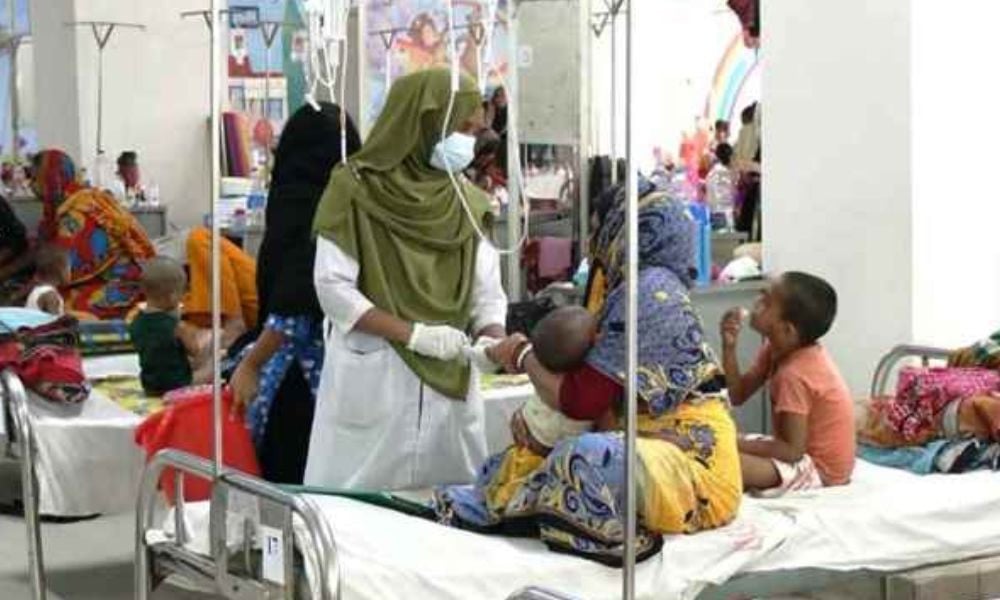
Four more children have died after developing measles-like symptoms across Bangladesh in the past 24 hours, taking the total number of deaths linked to measles and suspected cases to 835 since 15 March.
The latest figures were released by the Directorate General of Health Services (DGHS) in its regular measles surveillance report on Thursday, 30 July. The report also recorded 1,005 new cases of measles or measles-like symptoms during the 24-hour period, highlighting the continued pressure on the country’s health system as infections remain widespread.
Of the four latest deaths, two were reported in the Dhaka division. One child each died after developing measles-like symptoms in the Sylhet and Mymensingh divisions.
According to the DGHS data, a total of 835 people have died from measles and suspected measles cases between 15 March and Thursday. Of these, 739 deaths were recorded among people who had developed symptoms consistent with measles, while 96 were confirmed as deaths caused by measles.
The latest surveillance figures also show that 135 new measles cases were confirmed nationwide in the past 24 hours. At the same time, another 870 people were reported to have developed symptoms associated with the disease.
Since 15 March, a total of 127,410 people have been identified with measles-like symptoms across the country, while 15,874 confirmed measles cases have been recorded over the same period.
The scale of the outbreak is also reflected in hospital admissions. DGHS data show that 110,182 people with measles or measles-like symptoms have been admitted to hospitals nationwide since 15 March. Of them, 106,053 patients have recovered sufficiently to be discharged.
The continuing rise in suspected and confirmed infections has placed particular attention on children, who are among those most vulnerable to severe complications from measles. The disease is highly contagious and can spread rapidly among people who have not developed sufficient immunity. Severe cases can lead to complications such as pneumonia, dehydration and other serious health problems, particularly among young children and those with weakened immune systems.
The latest figures suggest that the outbreak remains a significant public-health concern, with thousands of new suspected and confirmed cases being reported over the course of the surveillance period. Health authorities are continuing to monitor the situation through regular reporting and hospital data as they assess the spread of the disease across different parts of the country.
The distinction between confirmed measles deaths and deaths involving measles-like symptoms is also reflected in the DGHS reporting. While laboratory or clinical confirmation is used to identify confirmed cases, suspected cases are monitored because they may show symptoms consistent with the disease and require medical assessment.
With more than 127,000 people reported to have developed measles-like symptoms since mid-March, the latest data underline the need for continued surveillance, timely medical care and sustained efforts to prevent further transmission, particularly among children and other vulnerable groups.