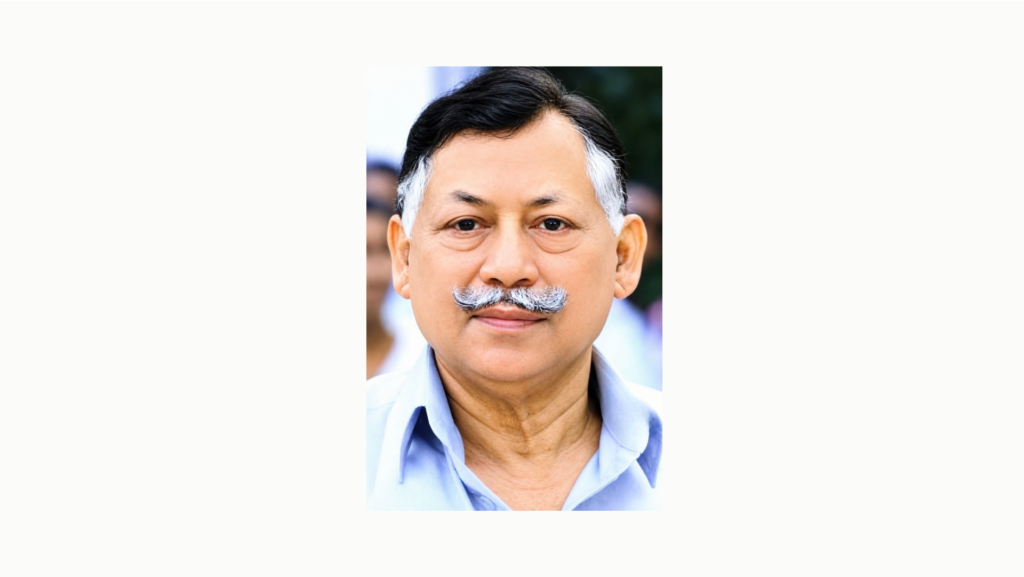
Awarded the Bir Uttam, Bangladesh’s second-highest gallantry honour, Mir Shawkat Ali is remembered for his contribution to the Liberation War, his role in rebuilding the armed forces after independence, his diplomatic service and his principled stand on national issues.
His life was marked by a steadfast commitment to Bangladesh’s independence and the values for which the country was born.
Early life and education
Mir Shawkat Ali was born on 9 December 1938 on Aga Sadek Road in Nazirabazar, Old Dhaka. He grew up in the historic neighbourhood, where he began his education at Mahut Tuli Pre-Primary School.
He later attended Armanitola Government High School, completing his matriculation examination in the first division with letter marks in four subjects. He subsequently completed his higher secondary education at Dhaka College before enrolling at the University of Dhaka.
His academic journey, however, took a different direction when he received a commission in the Pakistan Army, beginning a military career that would eventually place him at the forefront of Bangladesh’s struggle for independence.
A courageous role in the Liberation War
In 1971, Mir Shawkat Ali was serving as a major in the Pakistan Army’s Bengal Regiment. As the Pakistani military launched a brutal crackdown against the Bengali population, he rejected the military establishment’s actions and joined the struggle for Bangladesh’s independence.
He was appointed commander of Sector 5 during the Liberation War, leading freedom fighters in battles across the Sylhet region. His responsibilities extended beyond directing military operations. He had to organise fighters, coordinate movements and manage limited weapons, ammunition and other resources in difficult wartime conditions.
The freedom fighters under his command fought against Pakistani forces across a challenging landscape, facing considerable military pressure and logistical obstacles. His leadership, tactical judgement and determination helped sustain resistance in the sector.
His contribution to the war earned him the Bir Uttam gallantry award, recognising his exceptional bravery and service to the nation.
Rebuilding the armed forces after independence
Following Bangladesh’s independence, Mir Shawkat Ali became involved in the task of establishing and strengthening the country’s newly formed armed forces. His experience gained during the Liberation War proved valuable in the process of organising the military structure of the new state.
He played an important role in forming an infantry brigade in Chattogram and subsequently served as its commander. Over the years, he held several senior positions in the Bangladesh Army, contributing to its organisational development and operational preparedness.
Among his notable appointments were Chief of General Staff (CGS), General Officer Commanding (GOC) of the 55 Infantry Division and Principal Staff Officer to President Ziaur Rahman.
His long military career came to an end on 9 June 1981, when he retired with the rank of lieutenant general. His departure from active service marked the end of a distinguished chapter in the armed forces, but it was not the end of his public life.
Diplomatic service and a principled resignation
After retiring from the military, Mir Shawkat Ali entered the diplomatic arena, representing Bangladesh in several countries. He served as ambassador and high commissioner in Egypt, Sudan, Germany, Austria, the United Kingdom and Portugal, among others.
His diplomatic career placed him in an important position to represent Bangladesh’s interests abroad and strengthen its international relations.
In 1988, however, he resigned from diplomatic service in protest against the authoritarian rule of then-president Hussain Muhammad Ershad. His decision reflected his opposition to military-backed authoritarianism and his commitment to democratic principles.
The resignation was widely regarded as a significant expression of personal conviction, particularly given his senior position and distinguished career in public service.
Entering politics
Mir Shawkat Ali began his active political career by joining the Bangladesh Nationalist Party (BNP), founded by President Ziaur Rahman.
He subsequently served as president of the Dhaka metropolitan unit of the party and later became a vice-president of its central leadership. In the 1991 parliamentary election, he was elected MP from the Dhaka-8 constituency, representing the Lalbagh area.
During the BNP government led by Khaleda Zia, he served first as Minister for Labour and Manpower and later as Minister for Food. His experience in military administration, diplomacy and public service shaped his role in the political arena.
His relationship with the party, however, became increasingly strained towards the later stages of his political career, particularly over questions of ideology and the legacy of the Liberation War.
Opposition to political alliances with Jamaat-e-Islami
One of the defining episodes of Mir Shawkat Ali’s political life was his opposition to the BNP’s political alliance with Jamaat-e-Islami, whose leaders had faced allegations and prosecutions relating to crimes against humanity during the 1971 Liberation War.
He strongly objected to the alliance, arguing that it conflicted with the ideals of Bangladesh’s independence and the sacrifices made by freedom fighters.
He submitted his resignation from the BNP’s vice-presidential position over the issue. Khaleda Zia, however, did not accept his resignation.
In the 1996 parliamentary election, he contested from the Dhanmondi constituency but was defeated. His political differences with the BNP subsequently deepened, and his distance from the party gradually increased.
An unwavering commitment to the spirit of independence
Even as his political affiliations changed, Mir Shawkat Ali remained vocal about the importance of preserving the ideals of the Liberation War, protecting the dignity of freedom fighters and ensuring justice for crimes committed during the 1971 conflict.
Towards the later part of his life, he became associated with the Sector Commanders Forum, an organisation committed to upholding the values of the Liberation War and campaigning for justice for war crimes.
His involvement in the movement for the trial of those accused of crimes against humanity was particularly significant. Despite having been a senior military officer and a prominent BNP leader, he maintained his position on the question of justice for the atrocities committed during the war.
His opposition to political alliances with Jamaat-e-Islami remains an important part of his political legacy, reflecting the priority he placed on the principles of independence over party considerations.
A major road in the capital, stretching from Mohakhali towards Gulshan Avenue, is named Mir Shawkat Ali Road in recognition of his contribution. The naming stands as a public reminder of his service to the country.
His final days
Mir Shawkat Ali died on 20 November 2010 at his residence, Marshall House, in Dhaka, following cardiac arrest.
His death marked the loss of a distinguished freedom fighter, military organiser, diplomat and politician whose career spanned several important phases of Bangladesh’s history.
His life was more than the record of a military officer’s achievements. It reflected courage during wartime, leadership in the formation of a new national army, service on the international stage and political conviction in the face of disagreement.
Although his political journey took different turns, his identity as a freedom fighter and his commitment to the ideals of the Liberation War remained central to his legacy.
His bravery on the battlefield, contribution to the country’s military institutions and principled stand on national issues continue to hold a place in Bangladesh’s history.
Tribute to Bir Uttam Lieutenant General (Retd) Mir Shawkat Ali, a valiant hero of the Liberation War whose courage, patriotism and service to the nation will be remembered with profound respect.