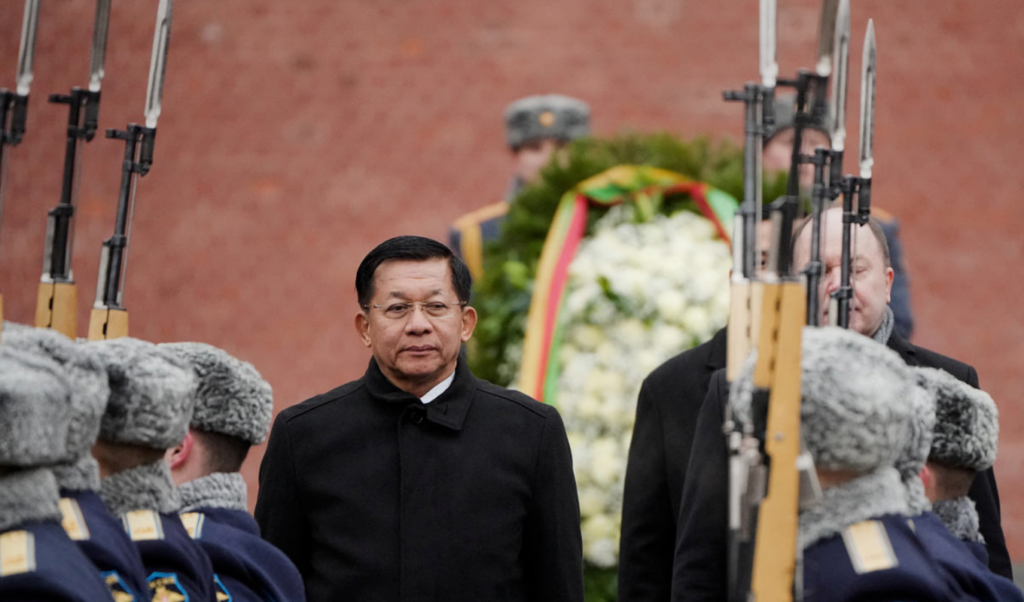
Myanmar’s ruling military junta acknowledged on Monday that its long-promised national election will not be held in roughly one in seven parliamentary constituencies, as it continues to face multiple armed opposition groups across the country.
Election Background
Since the 2021 military coup, Myanmar has been embroiled in civil conflict. The military seized power, detained democratic leader Aung San Suu Kyi, and deposed her civilian government.
- Scheduled Election: Phased voting is due to begin on 28 December.
- Official Purpose: The military has promoted the election as a path to national reconciliation.
- Critics’ View: Observers argue the poll is intended to legitimise continued military rule, and many ousted lawmakers plan to boycott it. Armed opposition groups are expected to block voting in areas under their control.
Constituencies Cancelled
| House | Number of Constituencies Cancelled | Approx. % of Total |
| Lower House | 56 | – |
| Upper House | 9 | – |
| Total | 65 | 14.8% of 440 |
The Union Election Commission, in a notice shared via state media, stated: “These constituencies have been deemed not conducive to holding free and fair elections.”
No specific reasons were provided, but most affected areas are known conflict zones or locations where the military has lost control to pro-democracy guerrillas and ethnic armed groups.
Notable affected areas include:
- Mogok: Rebel-controlled ruby mining hub
- Western Rakhine State: Majority of constituencies where military influence has waned
- Other regions heavily targeted by military air strikes
Security and Logistical Challenges
- Opposition Offensives: Since late 2023, scattered opposition groups have launched coordinated attacks, taking significant territory. The junta has reclaimed some areas but still faces resistance.
- Census Shortfalls: A 2024 census conducted in preparation for the election failed to collect data from 19 million of Myanmar’s 51 million people due to “significant security constraints.”