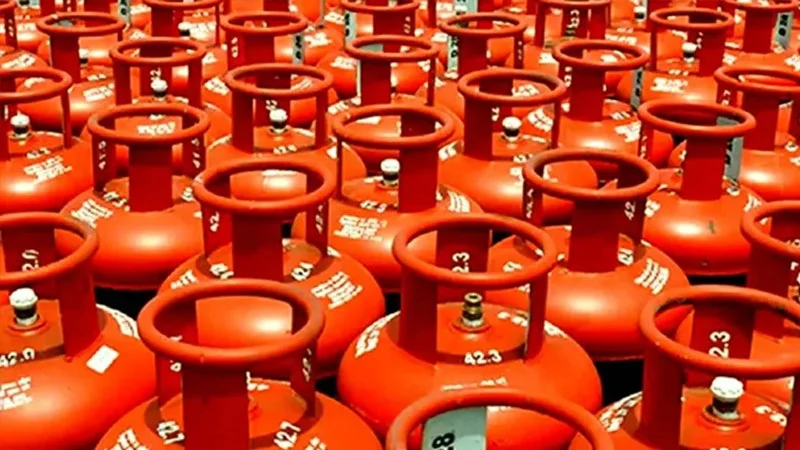
A stark divergence between official regulatory benchmarks and actual retail pricing has created renewed anxiety across Bangladesh’s liquefied petroleum gas (LPG) market. Despite government price caps, consumers across many regions are paying between 400 and 500 taka above state-sanctioned tariffs for standard 12-kilogram cylinders, with prices escalating to as much as 2,100 taka in several urban areas. For millions of households already coping with chronic piped natural gas deficits, the market imbalance is driving domestic utility expenses sharply higher.
Earlier this month, the Bangladesh Energy Regulatory Commission (BERC) set the official September price for a 12-kilogram LPG cylinder at 1,585 taka, reflecting a modest 13-taka reduction from August. Enforcement on the ground, however, has proven largely elusive. Rather than benefiting from the mandated tariff, retail buyers are routinely quoted figures between 2,000 and 2,100 taka—representing an illegal premium of up to 515 taka per unit. Recent field reports indicate that price tags briefly reached 2,200 taka in parts of Dhaka before settling at current elevated levels.
Data from the National Revenue Board (NBR) illustrates a clear contraction in incoming shipments. National imports reached 157,760 metric tonnes in August, whereas receipts through 22 September stood at 118,742 metric tonnes. Industry estimates project total monthly imports for September to fall approximately 25 per cent below the previous month’s total.
Despite these reduced import volumes, a distinct disconnect remains between official assessments and consumer reality. During a consultation hosted by the Energy and Mineral Resources Division on 28 September, private operators assured Energy Minister Iqbal Hasan Mahmud that national supply and stock reserves remained adequate. Minister Mahmud directed operators to guarantee that wholesale inventories translate into smooth retail distribution, strictly warning against artificial hoarding designed to engineer market panics.
Importers attribute the procurement pinch to heightened geopolitical instability across the Middle East, which has severely disrupted transit along the Strait of Hormuz and the Red Sea. Rising maritime risks have driven ocean freight charges higher and constrained vessel availability. Several major suppliers holding long-term delivery contracts have reportedly reduced scheduled shipments to Bangladesh by 30 to 40 per cent, while acquiring supplementary spot cargoes on the open market has grown increasingly difficult. Consequently, several domestic operators have instituted supply rationing to preserve baseline stocks.
Compounding these shipping hurdles is a widening disparity in international cargo premiums. Importers note that BERC’s benchmark price model assumes a premium of 160 US dollars per tonne, whereas prevailing spot premiums currently range between 260 and 400 US dollars. Unable to absorb these unrecovered costs within regulated margins, certain firms have voluntarily curbed their procurement volumes.
Disagreements over accountability have also emerged across the domestic distribution chain. Retail vendors accuse primary importers of throttling supply allocations, creating localized artificial deficits. Conversely, major distributors allege that intermediate dealers and retailers are taking advantage of shipment delays to hoard inventory and extract inflated prices from end consumers.
Bangladesh consumes between 1.5 million and 1.6 million metric tonnes of LPG annually, catering to roughly 10 million primary user connections. Household cooking accounts for nearly 80 per cent of total demand, with the remainder spread across commercial, industrial, and transport sectors. Because private enterprises supply roughly 99 per cent of the domestic market, the nation remains acutely sensitive to global supply line disruptions and spot-market price volatility.
This current disruption echoes a similar crunch in December last year, when reduced import volumes drove 12-kilogram cylinder prices up to 3,000 taka in several regions. While present prices remain below those historical highs, the gap between official state policy and market realities continues to strain household budgets. Without swift stabilization across international maritime routes and firmer enforcement against domestic hoarding, supply pressures are expected to persist well into October.