Bangladesh is facing fresh uncertainty over its energy supply after Qatar extended the force majeure period affecting liquefied natural gas (LNG) deliveries to several Asian buyers, including Bangladesh, until November. The development comes at a difficult time for the country, where gas demand already significantly exceeds available supply.
The potential disruption is not limited to power plants and industrial facilities. It could also affect households. When pressure in the national gas network falls, consumers often turn to liquefied petroleum gas (LPG) cylinders as an alternative. Yet LPG users are now facing complaints of unusually high retail prices, with cylinders reportedly being sold several hundred taka above the government-set rate in some areas.
Bangladesh therefore faces pressure on several fronts at once: uncertainty over imported LNG, declining domestic gas production and higher costs for alternative household fuel.
Why Qatar’s LNG supply matters
QatarEnergy announced on 28 September that force majeure affecting LNG deliveries to Bangladesh, Pakistan and several other Asian buyers had been extended until November because of the situation surrounding the Strait of Hormuz.
For Italian energy company Edison, the suspension has been extended until early December.
The development does not mean Qatar has specifically targeted Bangladesh or completely halted LNG exports. The disruption is linked to the wider conflict in the Middle East and security concerns surrounding the Strait of Hormuz, a critical route for global energy shipments.
Some LNG cargoes continued to pass through the strait in September. However, the uncertainty surrounding future deliveries has increased, creating additional risks for countries that rely heavily on imported gas.
That is particularly significant for Bangladesh because LNG has become an increasingly important component of the country’s gas supply.
A widening gap between demand and supply
Bangladesh’s daily gas demand is estimated at around 3.8 billion cubic feet (bcf). Recent supply, however, has been in the region of 2.6 to 2.7 bcf a day.
Domestic gas production accounts for roughly 1.6 bcf, while LNG contributes around 1 bcf. This leaves an estimated daily shortfall of approximately 1.1 to 1.2 bcf.
The deficit is not a new problem. Production from several older gas fields has been declining, while efforts to explore new reserves and bring additional wells into production have yet to close the gap.
As domestic output falls short of demand, LNG imports have become increasingly important. But imported LNG comes with its own vulnerabilities. Bangladesh needs foreign currency to purchase the fuel, competes with other buyers in the international market and depends on maritime routes and LNG receiving infrastructure to bring the gas into the national system.
The current uncertainty adds another layer of risk to an already stretched supply chain.
The strategic role of Maheshkhali
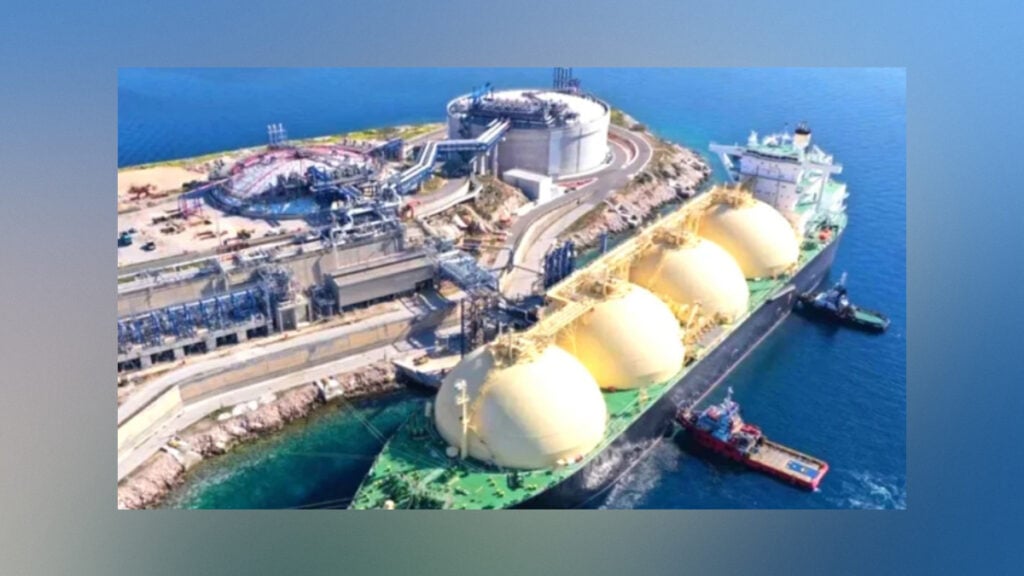
Bangladesh receives imported LNG primarily through two floating storage and regasification units (FSRUs) located at Maheshkhali.
An FSRU is not simply a gas storage facility. LNG arrives by ship in liquid form and is then converted back into gas through a regasification process before being fed into the national gas grid.
This makes the Maheshkhali facilities critical to Bangladesh’s energy security. Any disruption at one of the terminals can immediately reduce the amount of imported gas available to the national network.
In July, gas supplies were affected after an accident involving one FSRU. Supply improved after repairs were carried out. Adverse weather in September also disrupted LNG-related operations.
These incidents highlight the vulnerability of a system that depends not only on domestic production but also on imported fuel, offshore infrastructure, shipping conditions and the security of major international waterways.
Gas shortages are pushing up LPG demand
The effects of the gas shortage are increasingly visible at household level. When pipeline gas pressure falls, consumers who have access to LPG often turn to cylinders for cooking.
In September, the government-set price for a 12-kilogram LPG cylinder was Tk 1,585. Yet reports from Dhaka and other areas indicated that cylinders were being sold for Tk 2,000 or more.
In some cases, consumers reportedly had to pay Tk 500 to Tk 600 above the official price.
Government authorities and LPG importers have maintained that there is no overall shortage of LPG in the country. The problem, according to those claims, is linked more to reduced availability at the retail level and allegations of sales above the officially determined price.
The authorities have instructed district administrations to investigate the situation and monitor the market. This means the LPG problem cannot be viewed solely through the lens of international supply conditions; domestic distribution and market oversight also play a significant role.
What options does Bangladesh have?
If deliveries from Qatar remain uncertain, Bangladesh may have to rely more heavily on alternative sources, including Oman, the United States and purchases from the spot market.
Such measures could help reduce the immediate risk of a supply shortfall, but they are unlikely to provide a cheap or permanent solution. LNG prices can rise when global demand increases, pushing up Bangladesh’s import bill. Competition for cargoes could also intensify during periods of higher seasonal demand in Europe and Asia.
The country therefore faces a difficult balancing act. It needs enough LNG to keep power generation and industry operating while also managing the financial burden associated with imports.
A longer-term solution requires greater attention to domestic gas exploration and production. Faster exploration onshore and offshore, development of new wells and efforts to bring proven reserves into production could help reduce dependence on imported gas.
At the same time, reducing excessive dependence on gas in power generation and industrial activity would strengthen the country’s energy resilience. A more diversified energy mix could reduce the impact of disruptions affecting any single fuel or supply route.
A problem that reaches beyond the kitchen
Bangladesh’s gas crisis is ultimately about much more than whether a household receives adequate pressure through its pipeline.
A delayed LNG cargo can put additional pressure on power plants. Reduced gas availability can disrupt industrial production, while higher fuel costs can raise the cost of manufacturing and other economic activities. Those pressures can eventually reach consumers through higher prices for goods and services.
The uncertainty surrounding Qatar’s LNG deliveries therefore presents Bangladesh with a broader energy-security challenge. The immediate priority is to secure alternative supplies and maintain stable gas distribution. But the longer-term task is harder: increasing domestic production, diversifying energy sources and reducing excessive dependence on imported fuel.
The key question is no longer simply whether Bangladesh can replace a delayed LNG cargo. It is whether the country has enough resilience in its energy system to ensure that one disrupted shipment does not simultaneously threaten household cooking, industrial production and electricity generation.