Rain or thundershowers may occur in isolated areas of six divisions across Bangladesh as a seasonal low-pressure system persists over the Bay of Bengal. Night-time temperatures are expected to fall by 1–3 degrees Celsius nationwide, potentially bringing a noticeable increase in the chill. Meanwhile, scientists have warned that parts of the Hindu Kush Himalayan region, including Bangladesh, could experience above-normal rainfall during the coming winter, raising concerns about landslides, avalanches and other weather-related hazards.
According to the latest forecast issued by the Bangladesh Meteorological Department (BMD), the seasonal low-pressure area is currently positioned over the southern Bay of Bengal, with an extension reaching towards the northern Bay of Bengal.
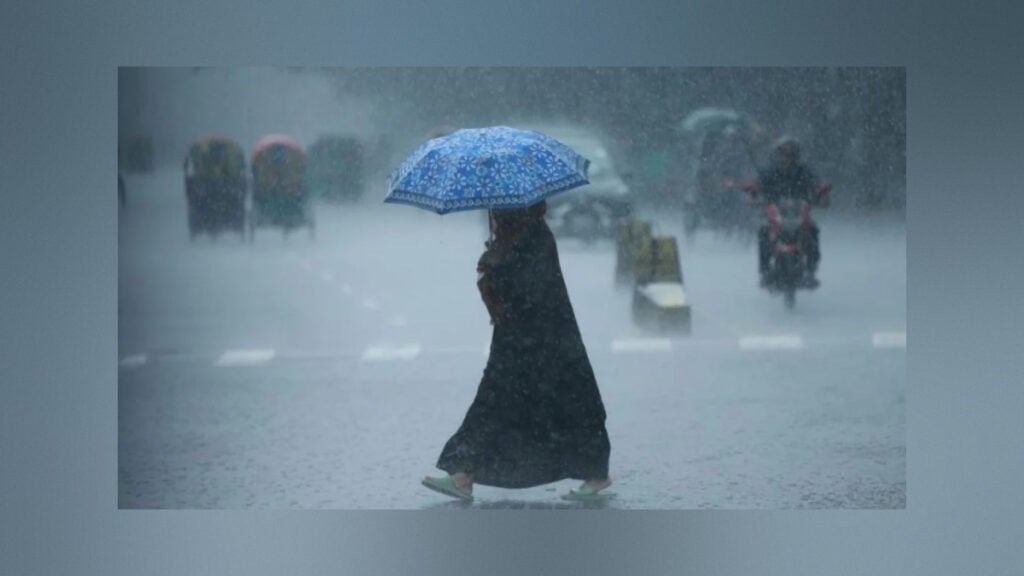
Under its influence, isolated places in the Mymensingh, Dhaka, Khulna, Barishal, Chattogram and Sylhet divisions may experience rain or thundershowers on Tuesday (24 November).
The meteorological department said the country’s skies could remain temporarily partly cloudy until 9am on Wednesday, although the weather is expected to remain predominantly dry. Night-time temperatures may decrease by 1–3 degrees Celsius across the country, while daytime temperatures could also fall slightly. The change is likely to make the weather feel colder, particularly during the night and early morning.
However, the outlook suggests a largely dry spell from Thursday through Saturday, with no rainfall expected anywhere in the country during that period. Both daytime and night-time temperatures are likely to remain relatively unchanged.
Above-normal winter rainfall raises regional concerns
Beyond the immediate weather outlook, a broader climate forecast has raised concerns about potentially unusual rainfall patterns across the Hindu Kush Himalayan region during the upcoming winter.
A report titled HKH Winter Outlook 2026, jointly prepared by the International Centre for Integrated Mountain Development (ICIMOD), Beijing Normal University and the Institute of Atmospheric Physics of the Chinese Academy of Sciences, has highlighted the possibility of above-normal precipitation in several countries across the region.
The report attributes the potential changes in rainfall patterns partly to the influence of El Niño and broader atmospheric irregularities. Bangladesh, Nepal and Afghanistan are among the countries forecast to receive more rainfall than usual. In contrast, some other parts of the region could face drier conditions, increasing the risk of wildfires.
Scientists at ICIMOD have warned that the combination of heavy rainfall and excessive snowfall in the western Himalayas could destabilise mountain slopes. Such conditions may increase the likelihood of landslides and sudden natural disasters during the winter months.
The Hindu Kush Himalayan region stretches across Afghanistan, Pakistan, India, China, Nepal, Bhutan, Bangladesh and Myanmar. Weather disturbances in this vast mountain system can have consequences far beyond high-altitude settlements. Changes in precipitation and snow accumulation can affect river catchments, downstream communities and people living in low-lying areas.
Heavy rainfall in mountainous terrain can trigger flash floods and landslides, while excessive snowfall may increase pressure on unstable slopes. These hazards can threaten homes, roads and other essential infrastructure, particularly in communities located near steep mountain slopes and river channels.
Nepal’s recent disaster highlights the risks
The report also draws attention to a devastating natural disaster in Nepal earlier this year, underscoring the potential consequences of extreme weather and unstable mountain environments.
On 26 August, a catastrophic flash flood struck the Bhote Koshi–Trishuli river corridor in Nepal following a collapse involving glacial ice and rocks, alongside the overflow of a glacial lake. The powerful surge of water swept away homes and infrastructure, leaving at least 1,500 people dead, according to the report.
Glacial lake outburst floods are among the most dangerous hazards in high mountain regions. They occur when water accumulated in a glacial lake is suddenly released, sending large volumes of water and debris rushing downstream. Settlements, roads and other infrastructure situated along river corridors can be particularly vulnerable.
The disaster has reinforced concerns about the growing risks associated with changing conditions in the Himalayan environment. Heavy rainfall, unusual snowfall and changes in glaciers can combine to create dangerous situations, particularly where mountain slopes and glacial lakes are already unstable.
Climate scientists are therefore paying close attention to the expected changes in rainfall and snowfall across the Hindu Kush Himalayan region during the coming winter. For Bangladesh, the forecast of above-normal rainfall is also significant, given the potential effects on river systems and communities in vulnerable areas.
Although the immediate forecast indicates only scattered rainfall in six divisions, the broader winter outlook points to a more complex regional weather pattern. Monitoring changing conditions and preparing for possible weather-related hazards will remain important as the winter season progresses.