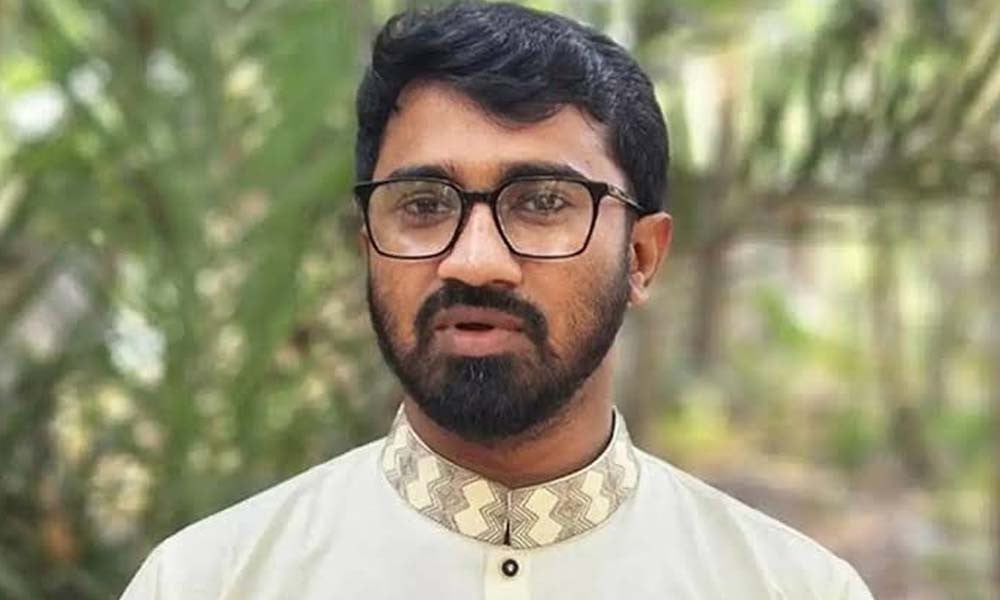
DHAKA — Rashed Khan, the political assistant to the Prime Minister, has publicly criticized Jamaat-e-Islami and its student wing, Chhatra Shibir, alleging their absence during operations to curb the activities of the banned Awami League. Writing on his official Facebook page on Tuesday morning, Mr Khan asserted that recent events have clearly demonstrated how these groups fail to show presence on the streets during critical political moments.
In his statement, Mr Khan drew a sharp contrast between the actions of various political outfits, noting that despite being a smaller organisation, the student wing of the National Citizens Party (NCP), Chhatra Shakti, remained actively deployed on the ground. He expressed appreciation for their presence, stating that their effort deserved recognition. Continuing his critique, he targeted those who had allegedly planned the takeover of Ganamhaban, claiming they demonstrated how to remain hidden during national crises only to assume the guise of revolutionaries when stability returns.
Emphasising the responsibility of pro-Bangladesh political factions in safeguarding the nation’s independence and sovereignty, Mr Khan highlighted the efforts of the Bangladesh Jatiyatabadi Chhatra Dal (BJCD), the student wing of the Bangladesh Nationalist Party (BNP). According to the official, Chhatra Dal activists spent the entire preceding night patrolling main thoroughfares and navigating inner city alleyways on motorcycles to maintain vigil. He added that the group would remain present on the streets throughout the day to counter any potential disruptions.
Mr Khan issued a stern warning regarding potential unrest, instructing Chhatra Dal to lead public resistance against any attempts by the banned Bangladesh Chhatra League to engage in arson or blockades.
Background and Political Context
The remarks reflect ongoing tensions within Bangladesh’s political landscape following major governance shifts. The Awami League, which held power for fifteen consecutive years under former Prime Minister Sheikh Hasina, faced intense popular resistance during the student-led mass uprising in mid-2024. The escalating protests, driven by widespread public discontent over governance, economic pressures, and rights concerns, culminated in Sheikh Hasina resigning and fleeing to India in August 2024.
Following her departure, an interim administration took charge to stabilize the country, oversee institutional reforms, and restore public order. In the subsequent months, legal measures and executive actions were initiated against key figures of the former regime and affiliated student organizations like the Chhatra League due to their alleged involvement in violence during the demonstrations.
The dynamic between student bodies and established political parties remains pivotal in shaping post-uprising security and political narrative. Organizations such as the Chhatra Dal and newly emerged youth platforms have actively sought to assert influence over street vigilance and civic monitoring, leading to public debate regarding the roles and visibility of religious-political forces like Jamaat-e-Islami during transitional periods.