Egypt have expressed bitter frustration over officiating and Video Assistant Referee (VAR) decisions following their dramatic 3-2 defeat to Argentina in the FIFA World Cup round of 16. The Egyptian head coach, Hossam Hassan, launched a scathing attack on the match officials, claiming that crucial decisions were heavily biased towards Argentina. Hassan went as far as to suggest that the refereeing panel deliberately protected Lionel Messi and his team to ensure their progression in the tournament.
However, former English Premier League referee Andy Davies has thoroughly dismissed these claims, offering an analytical perspective on the matches’ most contentious moments. According to the experienced official, the two pivotal decisions made during the high-stakes encounter were entirely consistent with the laws of the game.
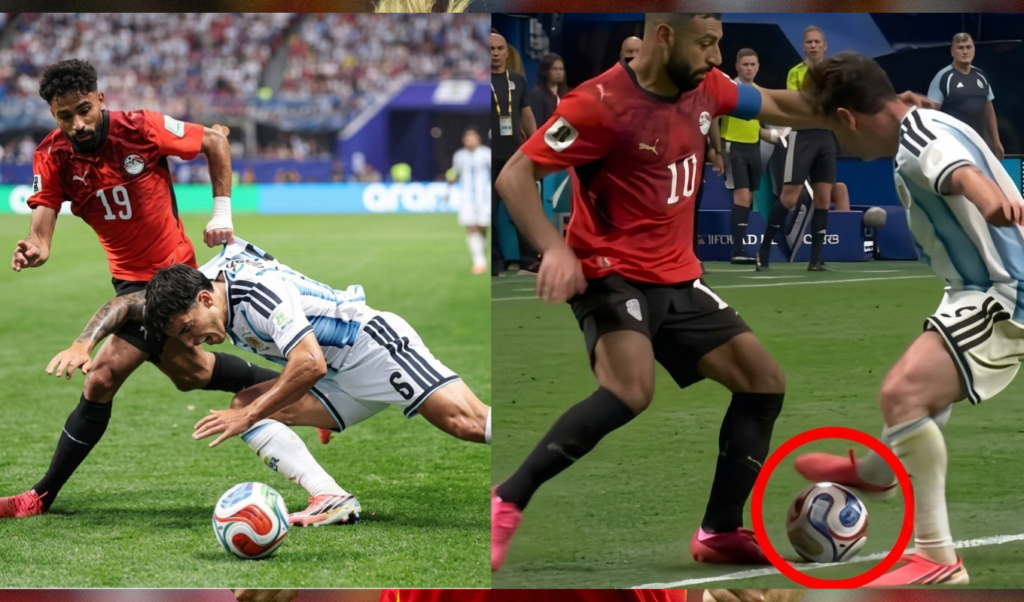
The controversy began in the 62nd minute when Egypt appeared to have taken a commanding 2-0 lead through a strike from Mostafa Ziko. The goal was swiftly disallowed following a VAR intervention. Replays demonstrated that during the build-up, Egyptian defender Marwan Attia had blatantly pulled the shirt of Argentina’s Lisandro Martínez before stepping on his foot. The VAR team advised the on-field referee, François Letexier, to review the incident on the pitchside monitor, leading to the prompt cancellation of the goal.
Davies maintained that both the VAR intervention and the subsequent disallowed goal were textbook applications of the rules. He explained that Attia’s foul directly caused Argentina to lose possession, which Egypt immediately exploited to score. Under current football regulations, if a goal is scored as a direct consequence of a foul committed in the same attacking phase, the goal must be overturned. Consequently, the referee was left with no viable alternative.
As the match drew to a chaotic close, Egypt vehemently appealed for two separate penalties prior to Argentina netting their late winning goal. The first incident involved allegations that Alexis Mac Allister had pulled Hamdi Fathi’s shirt inside the penalty area. Shortly afterwards, Mohamed Salah claimed he was brought down by Julián Álvarez whilst driving into the box. On both occasions, Letexier waved play on, a stance that was subsequently validated by the VAR room.
Davies defended these non-calls as well, asserting that Mac Allister’s brief shirt tug did not materially impact Fathi’s movement or ability to play the ball, rendering it insufficient for a penalty kick. Regarding the incident involving Salah, the former Premier League official noted the absence of any clear, deliberate foul. He characterised the contact as a natural collision of boots resulting from both players moving at high speed, which rarely warrants a penalty.
The veteran official concluded that comparing Egypt’s disallowed goal to Salah’s penalty claim is fundamentally flawed. While the first incident involved a clear and disruptive foul, the second was merely standard physical contact within the regular flow of the game. Based on the established laws of football, the refereeing team operated with complete technical accuracy.