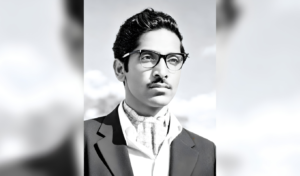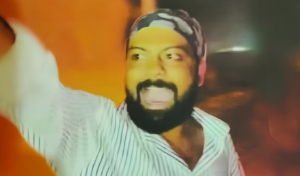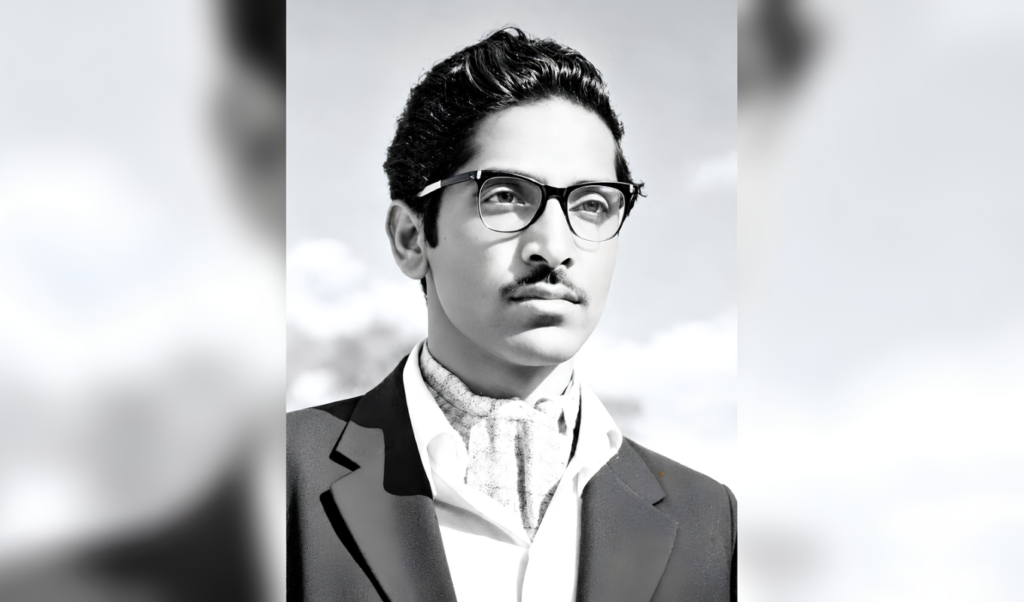
Some individuals do not merely belong to the history of their own era; through their ideals, actions, and philosophy of life, they leave behind enduring examples for generations to come. Comrade Abul Jamal Muhammad Takiullah was one such rare figure. A direct participant in the Language Movement, a dedicated organiser of communist politics, a documentary photographer, and a visionary who dreamed of an egalitarian, humane society.
The fourth son of the renowned polymath, educationist, and scholar Dr Muhammad Shahidullah, Takiullah carved out an identity defined by independent thought, wisdom, and political commitment. Although raised in a family steeped in intellectual tradition, he dedicated his life to the struggle for an exploitation-free, non-communal society built on equality. His journey was marked by uncompromising idealism, political devotion, and an unwavering dream of human emancipation.
Historic Role in the Language Movement
Takiullah played a pivotal role during the initial phase of the Language Movement in 1948. He was not merely an active participant; he was one of its key organisers. Associating himself with Tamaddun Majlish, he worked tirelessly to build public opinion in favour of Bengali as a state language, mobilise students, and draft posters and leaflets.
On 11 March 1948, students and citizens marched from the University of Dhaka toward the Secretariat demanding state recognition for Bengali, only to be met with police resistance. Some of the rare, historic photographs that still bear witness to that day were captured through Takiullah’s own lens. He documented the turbulent moments of the protest, police barricades, and the defiant faces of demonstrators. Those frames are far more than mere photographs; they stand as priceless historical records of the struggle for linguistic rights.
In choosing the path of the Language Movement, he also sacrificed a promising military career. Despite having the opportunity to join the armed forces as a commissioned officer, he placed the cause of his country, mother tongue, and people’s rights above personal ambition.
Uncompromising Soldier of Leftist Politics
From the 1940s onward, Takiullah became deeply involved in the communist movement. In 1951, he served as the general secretary of the Communist Party’s Dhaka District Committee. He devoted his energy to establishing the rights of working people, organising labourers and employees, and striving for a society free from exploitation.
A substantial chapter of his political life was spent behind bars and in hiding. Between 1951 and 1964, he was imprisoned for various terms totalling nearly six years. Yet, when it came to political principles, he refused to yield. Neither prison torture nor prolonged confinement could shake his convictions. Even inside jail, he remained active in protests and rights campaigns. When Munier Chowdhury’s historic play Kabar, written on the Language Movement, was staged inside prison, Takiullah took part as an actor. Although he stepped back from active party politics in later years, he never abandoned his dream of dignity for working people and a discrimination-free society.
Pioneering Contribution to Bangla Calendar Reform
Another remarkable achievement of Comrade Takiullah was the reform of the Bangla calendar used in Bangladesh. Building on the earlier initiatives of his father, Dr Muhammad Shahidullah, he conducted extensive research to formulate a scientific method for calculating Bangla dates. Following review by a Bangla Academy expert committee and subsequent government approval, the revised Bangla calendar came into effect in Bangladesh in 1996, corresponding to 1402 Bangabda.
This reform established a consistent and rational framework for counting Bangla months, including Pahela Baishakh. Alongside this, he carried out research on a 4,000-year comparative calendar harmonising the Bangla, Gregorian, and Hijri eras. As a language veteran and political organiser, his scholarly work in preserving Bengali cultural heritage earned him distinct respect.
Photographer, Researcher, and Humanitarian
Photography remained a lifelong passion for Takiullah. Through his camera, he captured the daily struggles of working-class people, rural nature, boats, bullock carts, and ordinary lives. His photographs were featured in exhibitions both at home and abroad.
Beyond photography, he made notable contributions to research and writing. He studied the life and works of his father, Dr Muhammad Shahidullah, and played a vital role in compiling catalogues of his published and unpublished writings. In 2017, Takiullah published his autobiography, Palatak Jibaner Banke Banke, chronicling his political struggles, years underground, prison experiences, and steadfast adherence to his ideals.
In his personal life, he was remarkably modest, humble, and averse to publicity. On his own initiative, he arranged adult literacy classes at his residence for working people. Even after losing his eyesight in the final stage of his life, his mind remained firmly anchored in the vision of an egalitarian society.
State Recognition and Final Farewell
Born in Dhaka on 4 November 1926, this extraordinary figure breathed his last on 16 November 2017 at the age of 91 while undergoing treatment at Square Hospital in the capital. In 2018, the Government of Bangladesh posthumously honoured him with the Ekushey Padak in recognition of his outstanding contribution to the Language Movement.
Living On Across Generations
Comrade Takiullah was never merely a language fighter or a leftist political leader; he embodied an ideal and a life of relentless struggle. The lure of personal gain, social standing, or fame never swayed him from his core beliefs.
At a time when inequality, exploitation, communalism, and division threaten social harmony, his philosophy of life offers renewed clarity. He believed that a human being’s true identity lies not in religion, caste, or class, but in humanity itself. He envisioned a world devoid of discrimination and deprivation—a world founded on equality, human dignity, freedom, and fundamental rights.
Over the passage of time, many titles fade and many achievements are forgotten, yet a life dedicated to human welfare endures. Comrade Takiullah’s integrity, patriotism, and dream of equality will continue to serve as a guiding light for future generations, remembered with deep respect and affection.