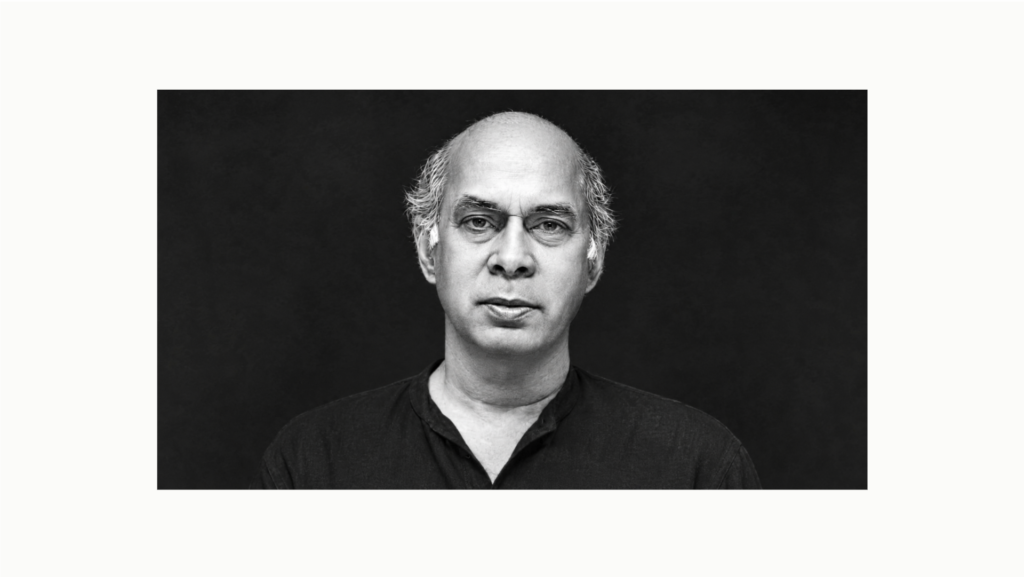
Rashid Karim occupies a distinctive place in the history of Bengali literature. Regarded as one of the leading novelists and fiction writers of modern Bengali literature, he developed a unique literary voice through his perceptive portrayal of urban middle-class life, human psychology and the complexities of personal relationships. His writing explored inner conflicts, changing social values, the delicate dynamics between men and women, and the loneliness experienced by individuals in an increasingly complex society. Through his nuanced depiction of urban realities and psychological depth, he established a literary world that remains distinctive in Bengali fiction.
Karim’s contribution extended far beyond conventional storytelling. He had an exceptional ability to explore the hidden corners of the human mind, revealing the contradictions of everyday life, emotional tensions within relationships and the uncertainties created by changing social circumstances. His restrained, thoughtful and carefully crafted prose earned him a special position among Bengali literary figures.
Early Life and Education
Rashid Karim was born on 14 August 1925 in Kolkata, then part of British India. He spent his childhood and adolescence in the city, where he received his education at two prominent institutions: St Xavier’s College and Islamia College.
Following the Partition of India in 1947, Karim left Kolkata and moved to Dhaka, which was then part of East Pakistan. Unlike many writers who pursued literature as their principal profession, he built a career in the oil industry. He eventually joined Meghna Petroleum Limited, where he rose to the position of general manager.
Although his professional responsibilities kept him occupied, his interest in literature remained a defining part of his life. His experiences of different social environments and changing political circumstances also became important elements of his literary outlook.
Literary Beginnings and a Long Hiatus
Karim developed a passion for writing during his teenage years. Between 1942 and 1945, he published short stories in several literary magazines and newspapers, including Saugat, Mohammadi, Purbasha, Nabayug and Millat. His early writings gradually brought him recognition among readers of Bengali literature.
His literary presence was not confined to printed publications. Stories and literary talks written by him were also regularly broadcast by the Kolkata station of All India Radio, helping him reach a wider audience.
However, around 1945, he unexpectedly withdrew from literary activities. For nearly 16 years, he remained away from writing, leaving behind the promising literary career he had begun during his youth.
He returned to literature in 1961, marking a significant new chapter in his creative life. His first novel, Uttam Purush, was published that year and attracted considerable attention from readers and critics. The novel also earned him the prestigious Adamjee Literary Award, establishing his position as an important voice in Bengali fiction.
Following this successful return, Karim produced a series of notable novels, demonstrating his ability to examine human relationships and social realities from different perspectives. Among his major works are Prasanna Pashan, Amar Jato Glani, Prem Ekti Lal Golap, Sadharan Loker Kahini, E Kaler Rupkatha, Shyama, Baroi Nihsanga, Mayer Kachhe Jachchhi, Chini Na, Padatale Rakt and Lunch Box.
These works reflected his continuing interest in the psychological experiences of ordinary people, particularly those living within the social and emotional boundaries of urban middle-class society.
Amar Jato Glani and the Spirit of the Liberation War
One of the most significant works in Karim’s literary career is his novel Amar Jato Glani, published in 1973. The novel explores the background of the Bangladesh Liberation War and the psychological conditions of individuals and society during that turbulent period.
The Liberation War was not merely a struggle for territorial independence. It was also a profound test of identity, conscience, moral responsibility and personal values. The conflict placed individuals in difficult circumstances, forcing them to confront questions of loyalty, courage, survival and ethical responsibility.
Karim approached these realities through his characteristic psychological insight. Rather than limiting his narrative to external events, he examined how historical upheavals affected people’s inner lives, relationships and moral positions.
The broader historical experiences of the subcontinent also influenced his writing. The Partition of India, the Language Movement, political transformations, democratic movements and Bangladesh’s struggle for independence formed an important part of the historical and social backdrop reflected in his literary works.
His ability to connect individual experiences with wider historical developments gave his fiction considerable depth. Through personal dilemmas and everyday situations, he presented the emotional consequences of major events that shaped the lives of ordinary people.
Short Stories, Essays and Memoirs
Although Karim is particularly remembered for his novels, his literary contribution also included short stories, essays and memoirs.
His short-story collection Pratham Prem is among his notable works. His significant essay collections include Ar Ek Drishtikon, Atit Hoya Nutan Punoray and Moner Gohone Tomar Murtikhani. His memoir-based book Jiban-Maran also holds an important place in his body of work.
A defining characteristic of Karim’s writing was his ability to uncover profound emotional and psychological meanings within seemingly ordinary incidents. He understood that everyday experiences could reveal the deepest aspects of human nature. Consequently, his stories often focused on the struggles that take place within families, relationships and individual minds.
Urban loneliness, middle-class aspirations, personal limitations, love, disappointment, self-respect and emotional insecurity frequently appeared in his fiction. He explored how social expectations and personal desires could come into conflict, often leaving individuals caught between what they wanted and what circumstances allowed them to achieve.
His portrayal of women and men, particularly their emotional interactions and complicated relationships, was marked by sensitivity and psychological observation. Instead of relying on exaggerated drama, he preferred subtle characterisation and carefully developed situations.
His economical prose also contributed to his literary identity. He avoided unnecessary ornamentation, allowing the psychological and emotional dimensions of his characters to emerge naturally. This distinctive approach helped make his writing both intellectually engaging and closely connected to everyday life.
Awards and Recognition
Rashid Karim received numerous awards and honours in recognition of his contribution to Bengali literature. These distinctions reflected the appreciation of literary institutions and cultural organisations for his sustained creative achievements.
Among his notable awards and recognitions were:
- Adamjee Literary Award – 1961
- Bangla Academy Literary Award – 1972
- Ekushey Padak – 1984
- Lekhika Sangha Award – 1991
- Janakantha Gunijan Honour – 2001
- Kazi Mahbubullah-Jebunnesa Trust Award – 2002
The Bangla Academy Literary Award and Ekushey Padak were particularly significant acknowledgements of his contribution to the literary and cultural heritage of Bangladesh. Together with his other honours, they established his reputation as one of the country’s respected literary figures.
Illness and Final Years
In 1992, Karim suffered a stroke that caused paralysis and significantly affected his ability to lead a normal life. His physical condition deteriorated, and he spent much of his later years dealing with illness and remaining largely confined to his home.
The condition also brought considerable limitations to his creative activities. For a writer whose literary strength depended so heavily on observation, reflection and engagement with human experiences, the later years were particularly difficult.
Despite these challenges, his established literary works continued to retain their importance among readers and admirers of Bengali fiction.
His Passing and Enduring Literary Legacy
Rashid Karim died in Dhaka on 26 November 2011, at the age of 86. His death marked the end of a distinguished literary journey that had spanned several decades and witnessed some of the most significant historical and social transformations of the subcontinent.
His contribution to Bengali literature lies not only in the number of novels and stories he wrote but also in the distinctive perspective he brought to fiction. He gave particular attention to the psychological complexities of urban life, the uncertainties of middle-class existence and the emotional struggles that shape human relationships.
His writing captured the relationship between individuals and the society around them, showing how historical events, changing values and personal circumstances influence the human mind. Through his restrained narrative style and thoughtful characterisation, he created a literary identity that distinguished him from many of his contemporaries.
Literary works often outlive their creators, continuing to influence readers and inspire new generations long after their authors have passed away. Karim’s novels, particularly Uttam Purush, Amar Jato Glani and Prasanna Pashan, remain important examples of his creative achievement.
On the anniversary of his death, Rashid Karim is remembered with deep respect for his remarkable contribution to Bengali fiction. His exploration of the human mind, his understanding of urban society and his sensitive portrayal of life’s contradictions continue to form an enduring part of Bangladesh’s literary heritage.
Tributes to Rashid Karim, a remarkable storyteller whose literary vision continues to resonate across generations.