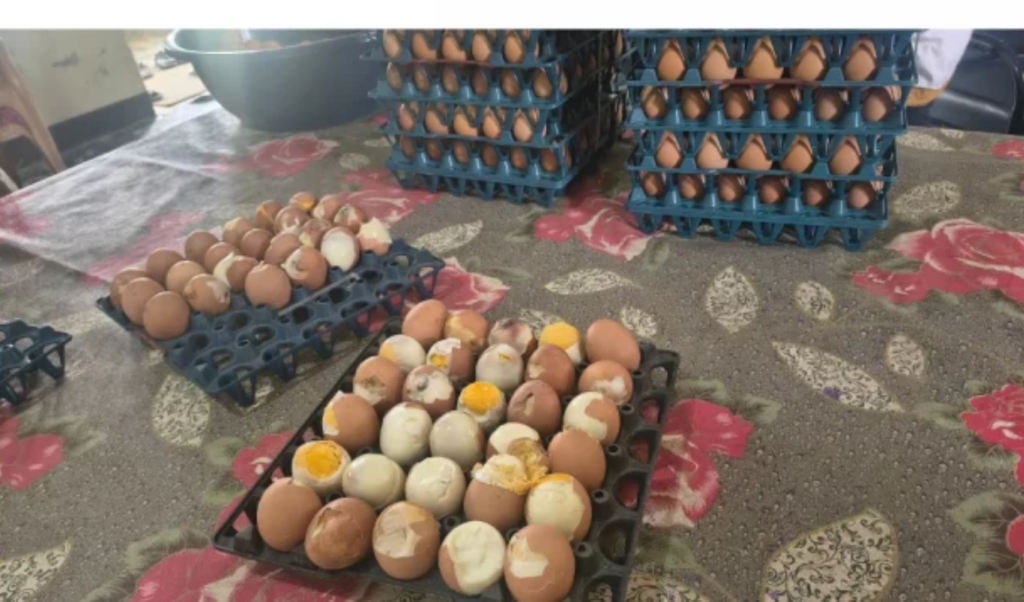
The distressing incident unfolded on Sunday at Guptergaon Government Primary School. Trouble began immediately after morning lessons, when classroom teachers began distributing boiled eggs to first-grade pupils as part of their scheduled daily nutrition allowance. Upon peeling the shells, an overpowering stench rapidly inundated the classrooms. Teachers observed that the contents were severely discoloured, blackened, and hardened, with several eggs oozing foul, rotten fluid. Realising the immediate health risk, school staff intervened promptly to ensure no child ingested the spoiled produce.
“When the first-graders began peeling the eggs, an unbearable stench filled the entire room,” recalled Ashikur Rahman, an assistant teacher and designated food manager at the institution. “The insides were blackened, solid, and filled with foul-smelling liquid. They were completely unfit for human consumption, so the children threw them away instantly.”
Rahman added that Sunday’s delivery was not an isolated mishap. According to school officials, this marks the third occasion where the assigned contractor has supplied rotten eggs to the same educational facility, raising serious questions regarding quality control, vendor accountability, and oversight mechanisms in regional supply chains.
Confirming the details of the breach, Nurul Haq, the acting headmaster of Guptergaon Government Primary School, stated that the contractor’s personnel had delivered a batch of 218 eggs to the campus on Sunday morning. “Following our immediate protest and formal notification regarding the spoiled consignment, representatives from the contractor arrived back at the school at around 2:00 PM to collect and remove the rotten eggs from the premises,” Haq explained.
Broad Nutritional Context & Recurrent Supply Chain Lapses
The government-backed school feeding programme aims to combat childhood malnutrition, improve daily attendance, and boost overall cognitive engagement among children in rural and socio-economically disadvantaged districts. Designed to supplement essential nutrients, the standardized menu typically comprises boiled eggs, fresh buns, packaged milk, fortified biscuits, and seasonal local fruits. For many pupils, these items form a vital portion of their recommended daily intake of proteins and essential micronutrients.
However, recurring logistics breakdowns and lax quality inspections at local distribution points continue to jeopardize the health of vulnerable pupils. Local residents and anxious guardians have voiced growing indignation, demanding an urgent administrative inquiry into the contractor responsible for the Phulpur distribution zone. Community leaders insist that rigorous strictures, vendor blacklisting, and penalties must be implemented to prevent commercial contractors from compromising child safety in state-funded welfare programmes.