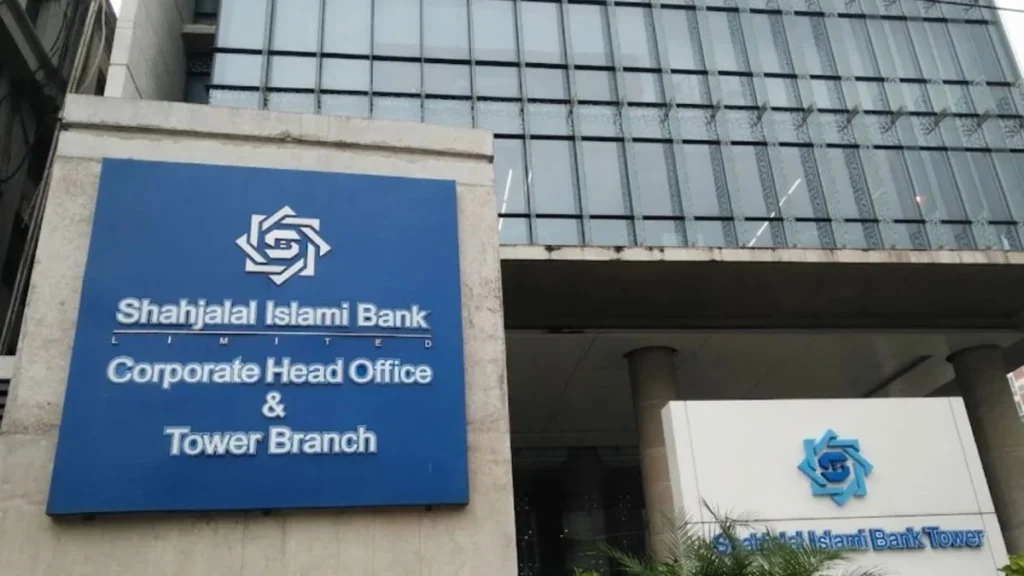
A special inspection report by Bangladesh Bank has revealed widespread regulatory and Shariah violations at Shahjalal Islami Bank, accusing the institution of operating conventional interest-based lending under an Islamic banner. According to the central bank’s findings, the lender irregularly rescheduled Tk 3,011 crore in loans and bypassed fundamental principles of Islamic finance across its head office, Dhaka main branch, and Sylhet branch.
Under strict Shariah banking rules, financial transactions must be backed by real economic activity, requiring the genuine buying and selling of goods, the transfer of ownership, and shared risk. However, central bank inspectors discovered that Shahjalal Islami Bank routinely bypassed these core requirements. Instead of facilitating actual trade, the bank relied on fabricated or incomplete documentation to disburse funds. Investigators found instances where loans were created without any underlying commercial transactions, profits were booked repeatedly against the same batch of goods, and new credit facilities were issued solely to adjust and conceal existing defaulted loans.
At the branch level, particularly within the Dhaka main and Sylhet branches, the audit uncovered severe operational lapses. Cash memos were issued in the names of clients despite the complete absence of verifiable suppliers or proof of product delivery. In several cases, borrowers withdrew the disbursed investment funds directly in cash, defeating the purpose of asset-backed Islamic financing. Despite the scale of these discrepancies, the bank’s own internal Shariah audit team failed to flag the irregularities in its routine reports.
The inspection also highlighted direct financial engagements with conventional, interest-bearing institutions—a practice strictly prohibited for Shariah-compliant lenders. Shahjalal Islami Bank placed Tk 100.67 crore across five non-bank financial institutions (NBFIs): Bangladesh Finance, Bay Leasing and Investment, IIDFC, Phoenix Finance and Investments, and Union Capital. Because these entities generate their primary revenue through conventional interest, the central bank noted that any returns earned from them cannot be recognised as legitimate banking income.
Similarly, during 2025, the bank routed its agricultural credit programmes through 11 interest-based organisations, transferring Tk 1.85 crore in proceeds directly into its general income account. Bangladesh Bank has instructed the lender to immediately reclassify both the NBFI returns and the agricultural credit earnings into a separate compensation account, rather than treating them as distributable profit, and ordered corrective action within three months.
Responding to the allegations on Saturday, Shahjalal Islami Bank Managing Director Mosleh Uddin Ahmed attributed the compliance gaps to a historic lack of formalised statutory frameworks. He noted that Islamic banking in the country had operated largely on religious edicts, or fatwas, for 25 years without a dedicated legal act.
“Bangladesh Bank has pointed out specific areas where Shariah principles were breached, and we have already rectified them,” Ahmed told Jugantor. Addressing the NBFI placements and microfinance funding, he stated that such investments were previously permitted under earlier regulatory practices. “If the central bank now deems these placements and NGO financing contrary to Shariah after 25 years, we will cease doing them,” he said, adding that the bank welcomes the newly established Islamic Banking Regulation and Policy Department (IBRPD) and will strictly adhere to its evolving directives. On the matter of the Tk 3,011 crore loan rescheduling, the managing director maintained that the bank acted entirely within the bounds of policy support guidelines issued in writing by the central bank.