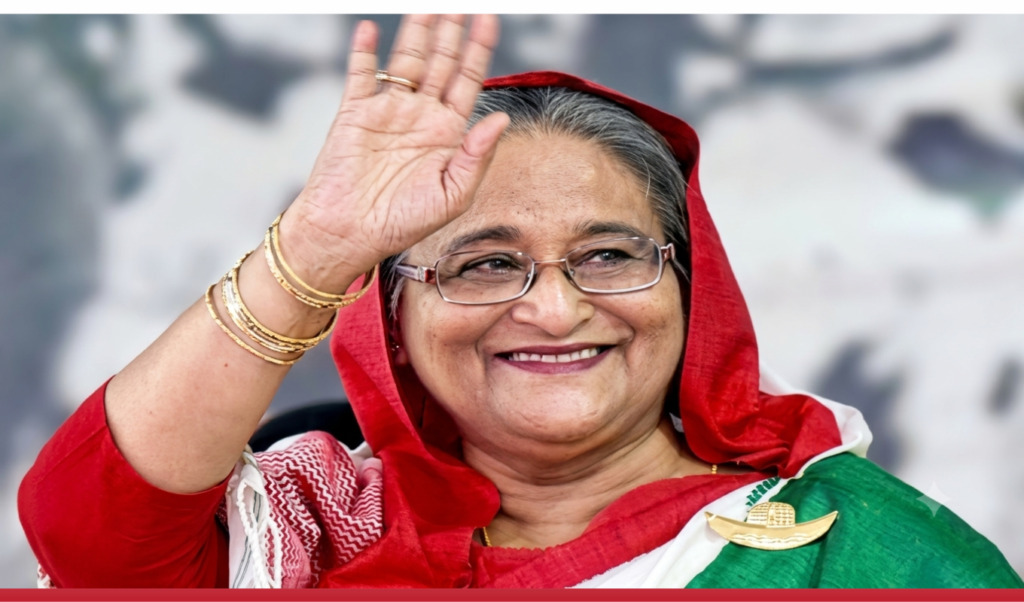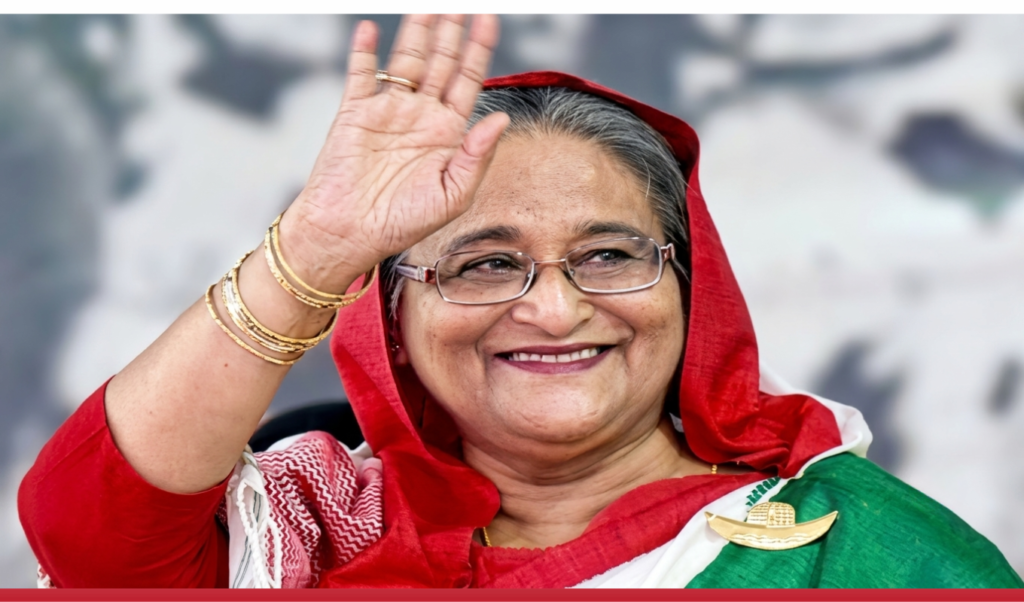
In her first public appearance before international media in two years, Bangladesh’s former Prime Minister, Sheikh Hasina, addressed a virtual press conference organised by the Foreign Correspondents’ Club (FCC) South Asia in New Delhi on Tuesday. Delivering an emotionally charged address, the ousted leader announced her intention to return to Bangladesh this December with a renewed commitment to restoring democracy, the rule of law, and a secular state.
Visibly moved during her speech, Sheikh Hasina broke down in tears as she recalled her family members and the martyrs of the 1971 Liberation War. She asserted that despite being forced to leave the country, her dedication to the people of Bangladesh remained resolute. Emphasising that her sense of duty to the nation far outweighed any fear of death, she called upon all political parties to embrace a national reconciliation effort in the interest of unity.
The virtual event also featured contributions from former ICT Adviser Sajeeb Wazed Joy and former Minister Mohibul Hassan Chowdhury Nowfel. Sajeeb Wazed Joy directly challenged the resurgence of fundamentalism in the country and questioned the rationale behind granting indemnity to those involved in the violence during July and August. Mohibul Hassan Chowdhury, meanwhile, urged political tolerance and long-term peace, transcending party lines.
Sheikh Hasina asserted that the quota reform movement was a carefully calculated pretext aimed at overthrowing her government through targeted violence and murder. She explicitly alleged the involvement of Dr Muhammad Yunus, head of the current interim administration, and demanded a thorough, independent investigation into the deaths of police officers and journalists, as well as the widespread destruction of state infrastructure. She further cautioned the international community that ongoing political instability in Bangladesh poses a severe threat to security and investment across the entire South Asian region.
In response to her statements, Prime Minister Tariq Rahman warned the public against creating unnecessary issues intended to destabilise the nation. Political analysts note that the Awami League’s message of political reconciliation—framed as a deliberate effort to avert further bloodshed—has effectively placed the ball in the court of the Bangladesh Nationalist Party (BNP) and Prime Minister Tariq Rahman.
Background and Regional Context
The former Prime Minister’s announcement marks a critical turning point in Bangladesh’s complex political landscape. Sheikh Hasina’s departure followed weeks of intense student-led demonstrations that initially began as protests against controversial civil service quota allocations before escalating into widespread unrest. The subsequent political upheaval saw the installation of an interim administration tasked with maintaining public order and overseeing state institutions.
However, political instability in Dhaka carries profound implications for the broader South Asian region. India and other neighboring nations share vital trade, security, and diplomatic ties with Bangladesh, making steady governance in the country a regional priority. As international observers closely monitor the unfolding situation, the proposed return of the former leader in December introduces fresh dynamics into an already fragile political environment, leaving all eyes on how the ruling coalition responds in the coming months.