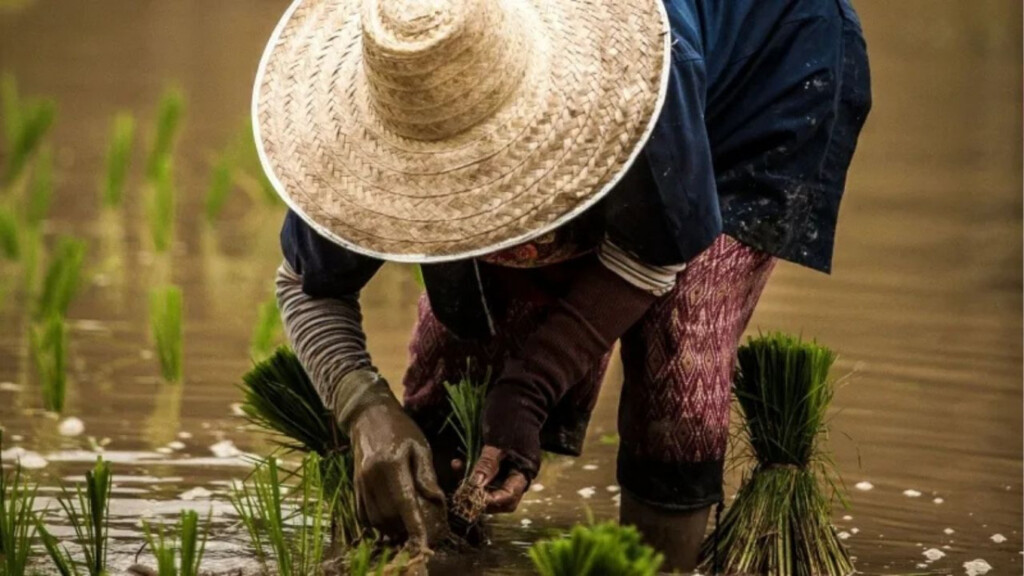
The Democratic Socialist Republic of Sri Lanka is set to significantly bolster its agricultural safety net in response to a volatile climate and increasing human-wildlife conflict. The Agricultural and Agrarian Insurance Board (AAIB) has announced the launch of a dedicated “Insurance Month,” commencing in February 2026, aimed at dramatically expanding the coverage available to the nation’s farming community.
Mitigating Multi-Faceted Risks
Sri Lankan agriculture has long been at the mercy of the elements. However, recent years have seen an intensification of weather-related shocks, including prolonged droughts and flash flooding. Perhaps more unique to the region is the escalating threat posed by wild elephants, whose encroachment into farmlands as a result of habitat loss has caused devastating financial losses for rural families.
The new AAIB initiative is designed to be a comprehensive shield. Under this programme, protection is not merely limited to weather events but extends to:
Climate Risks: Drought, excessive rainfall, and floods.
Environmental Hazards: Wild elephant incursions and accidental fires.
Biological Threats: Insect infestations, exotic pests, and crop diseases.
A Tiered Premium Structure
In an effort to ensure the scheme remains accessible to smallholder farmers, the AAIB has introduced a structured premium system. By pegging premiums at a modest 7% of the insured value, the board aims to incentivise participation among those who previously viewed insurance as a luxury.
The following table outlines the coverage and premium costs for key staple and cash crops under the new 2026 guidelines:
| Crop Category | Max Compensation (per acre) | Premium (7% per acre) | Equivalent in LKR |
|---|---|---|---|
| Grains & Pulses (Cowpea, Mung Bean, Millet) | $192 | $13.44 | LKR 60,000 / 4,200 |
| Tubers & Vegetables (Sweet Potato, Cassava) | $320 | $22.40 | LKR 100,000 / 7,000 |
| High-Value Staples (Paddy, Maize, Onions) | Case-by-case | 7% of value | Variable |
(Note: Exchange rate calculated at $1.00 = LKR 310.98)
Securing the National Food Supply
This expansion is viewed by economists as a vital step toward national food security. By stabilising farm incomes against unpredictable shocks, the government hopes to prevent a mass exodus of labour from the agricultural sector. As farmers gain the confidence that a single herd of elephants or a delayed monsoon will not lead to total bankruptcy, they are more likely to invest in modern farming techniques and higher-yield seeds.
The “Insurance Month” will feature a series of regional workshops and mobile registration units to ensure that even the most remote agrarian communities in the North and East can access these vital financial tools.