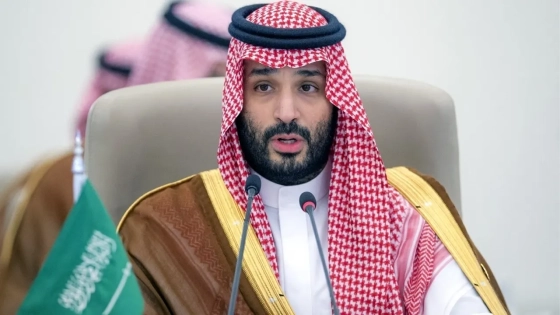
Saudi Arabia finds itself trapped in an increasingly precarious geopolitical position, driven by a series of strategic miscalculations attributed to Crown Prince Mohammed bin Salman. A potent combination of relentless missile strikes by Yemen’s Houthi rebels, deteriorating relations with the United Arab Emirates (UAE), and an over-reliance on American security guarantees has thrust Riyadh into a profound state of uncertainty.
The very leader who envisioned transforming the Kingdom into a global nexus for investment, tourism, and elite international sports now sees those ambitions severely jeopardised. Observers increasingly question whether the Crown Prince’s foreign policy decisions have dragged Saudi Arabia into a costly conflict from which an exit strategy remains elusive.
A primary catalyst for the current dilemma stems from a breakdown in regional coordination regarding Yemen. While Saudi Arabia and the United Arab Emirates previously maintained a united front against the Iranian-aligned Houthis, deepening bilateral rivalries eventually prompted Abu Dhabi to draw down its military presence. Riyadh failed to plug the resulting operational vacuum, leaving anti-Houthi ground forces severely fragmented and compromised.
Compounding this failure was Riyadh’s underestimation of the Houthis’ evolving military capabilities. Resurgent retaliatory strikes have brought critical infrastructure under threat, including Saudi commercial airports, key oil processing plants, and major pipelines. Despite launching heavy aerial campaigns, Saudi forces have struggled to contain the conflict or neutralize the Houthi missile arsenal.
Simultaneously, the Kingdom’s traditional security architecture has shown deep fractures. For decades, Riyadh anchored its defense strategy on guaranteed support from Washington. However, when security threats escalated, former US President Donald Trump declined to execute direct military strikes against the Houthis on Saudi Arabia’s terms, choosing instead to engage in diplomatic discussions with the rebel group. This shift exposed the fragility of reliance on Washington and sparked alarm within Riyadh over the reliability of Western security commitments.
The ongoing warfare poses a direct threat to the Crown Prince’s flagship Vision 2030 blueprint, which aims to diversify the national economy away from crude oil dependency. Security vulnerabilities endanger oil export infrastructure and cast a long shadow over multi-billion-dollar developmental giga-projects, international sporting events, and foreign direct investment targets.
In an effort to mitigate these vulnerabilities, Saudi Arabia has sought to broaden its diplomatic and defense partnerships, expanding security cooperation with Egypt, Turkey, Pakistan, France, and the United Kingdom, alongside subtle signals aimed at repairing ties with Abu Dhabi. Nevertheless, a sustainable resolution remains distant, leaving Riyadh to ponder whether it can successfully navigate this crisis or if the Yemeni conflict will permanently derail the Crown Prince’s grand national vision.