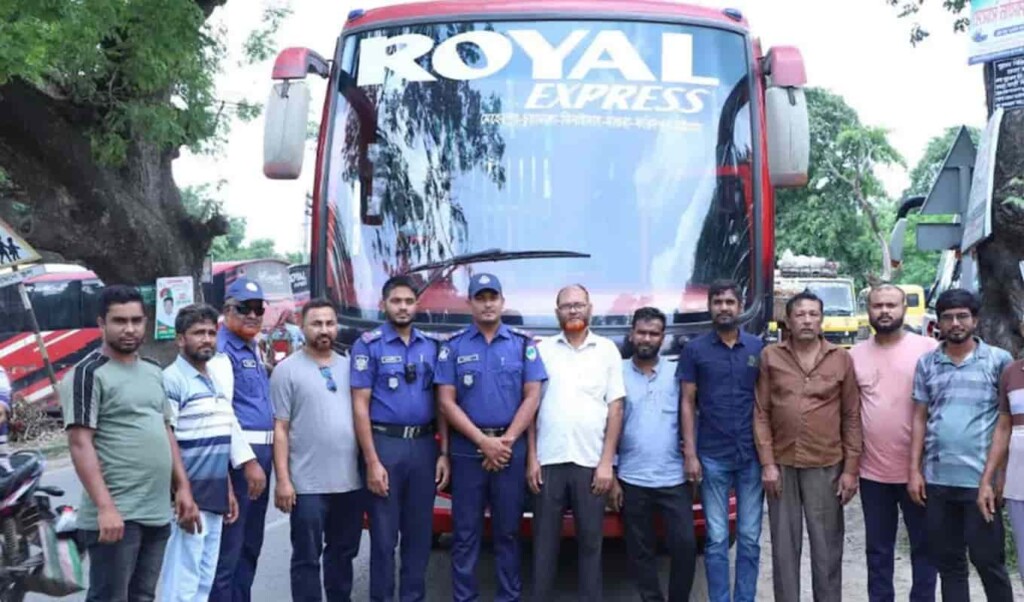
In a major initiative to enhance public safety and rid the transport sector of substance abuse, Chuadanga District Police have launched mandatory drug screenings for commercial bus drivers, supervisors, and helpers across the region.
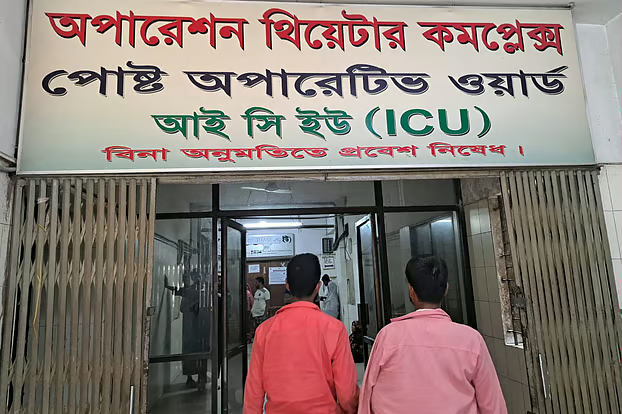
Carried out in partnership with the local Transport Owners’ Association, the testing scheme is taking place at Chuadanga Government Hospital. Law enforcement authorities confirmed that any transport worker testing positive for narcotic substances will face immediate dismissal from their post, alongside formal legal proceedings under existing statutory laws.
Broad Coverage Across Commercial Operators
The mandatory health and sobriety checks encompass staff from a vast array of major long-distance and regional transport operators. Transport crews currently being screened in structured phases include those working for Royal Express, Purbasha Paribahan, JR Paribahan, Chuadanga Deluxe, Darshana Deluxe, Golden Line, Jononi, Nadia, Sathi Paribahan, Rekha Paribahan, Mamun Paribahan, Shamim Enterprise, New Modern Paribahan, Saudia Paribahan, and the state-run Bangladesh Road Transport Corporation (BRTC).
Driving under the influence remains a critical hazard on regional highways, where commercial vehicle operators often face demanding schedules. By making drug testing a mandatory requirement for operational clearance, district authorities intend to foster greater accountability among transport unions, fleet owners, and crew members.
Mandatory Guidelines for Highway Safety
In conjunction with the clinical testing, police management has laid down a series of binding operational directives aimed at addressing systemic causes of highway incidents:
-
Regulated Shift Durations: Transport management must enforce mandatory driver switches at pre-determined route points to prevent over-exhaustion.
-
Guaranteed Rest Periods: Operators are forbidden from assigning continuous back-to-back journeys without affording drivers sufficient downtime.
-
Physical and Mental Assesments: Transport staff must demonstrate physical fitness and mental alertness prior to taking charge of a vehicle; no driver who is fatigued, unwell, or impaired may operate a bus.
-
Adherence to Traffic Regulations: Drivers must strictly observe speed limits, refrain from reckless overtaking, and adhere fully to established highway safety codes.
-
Active Terminal Supervision: Transport owners and union representatives are tasked with monitoring departure hubs regularly to enforce these measures.
Deterrence and Public Safety Objectives
Districts officials stressed that operating heavy passenger vehicles while impaired represents a reckless endangerment of public safety. Chuadanga District Police affirmed that drug testing will not remain a short-term campaign, but will instead become a permanent, routine aspect of transport oversight in the district.
Authorities have urged all transport proprietors, trade union representatives, and vehicle operating crews to embrace these regulations fully, maintaining a zero-tolerance approach to narcotics in order to ensure safer, more orderly travel across the country’s road network.