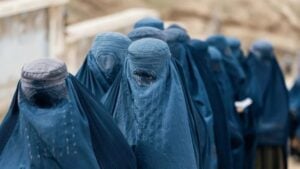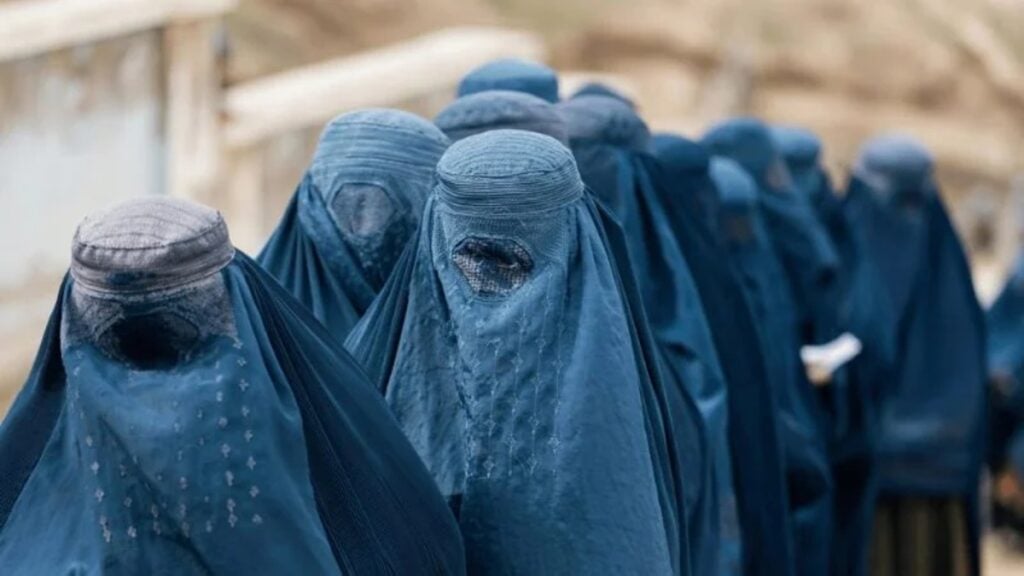
The directive also prohibits government officials and healthcare workers from addressing women by their names, according to a report by Spanish newspaper El País. The measure has been described by women’s rights activists as another attempt to erase women’s identities from public life and institutional records.
In Afghan society, the term ‘Bibi’ is commonly used to refer to an older woman or grandmother. However, replacing a woman’s actual name with generic labels in official documents can undermine her individual identity and make it more difficult to establish her legal and social status.
Afghan women’s rights activist Lala Osmani described the practice as an institutionalised process of stripping women of their human dignity. Speaking to El País, she said, “The first step in taking away a person’s humanity is taking away their name.”
Concerns over healthcare and patient identification
The restriction could create serious complications in healthcare facilities, where accurate patient identification is essential for safe and effective treatment.
If several women are registered under the same generic designation, medical staff could struggle to distinguish between patients, their prescriptions and their medical histories. Such confusion could increase the risk of medication errors, incorrect treatment and difficulties in accessing medical records.
The consequences could be particularly serious for women requiring emergency treatment, maternity care or ongoing medical assistance. Accurate identification is fundamental to maintaining medical records, monitoring treatment and ensuring that patients receive the appropriate care.
Osmani has warned that the policy could undermine the reliability of healthcare documentation and place women at greater risk when seeking medical assistance.
A setback for women’s identity rights
The latest restriction comes after years of campaigning in Afghanistan for women’s names to be recognised in official documents, particularly birth certificates.
In 2017, Osmani launched the ‘Where Is My Name’ campaign, calling for mothers’ names to be included on their children’s birth certificates. The initiative sought to challenge social conventions that often excluded women’s names from public and family documentation.
Following the campaign, mothers were permitted to have their names included on birth certificates in September 2020, marking a significant step towards recognising women’s identities in official records.
However, the progress made during that period has been reversed in many areas since the Taliban returned to power in 2021. Women and girls have faced sweeping restrictions on education, employment and participation in public life, with their access to opportunities increasingly curtailed.
The latest directive in Balkh is viewed as another development in the broader erosion of women’s rights under Taliban rule.
Fears the restriction could spread nationwide
Zubaida Akbar, director of the Afghanistan programme at US-based non-governmental organisation Femena, fears the policy could eventually be extended beyond Balkh to other parts of the country.
She said the Taliban had previously introduced restrictions in particular regions before expanding them nationwide, raising concerns that the latest measure could become a countrywide practice.
If implemented more broadly, the directive could affect millions of women, making it increasingly difficult for them to establish their identities through official channels or access services that require proper documentation.
An Afghan journalist’s struggle to establish motherhood
The difficulties associated with the absence of women’s names from official documents have also been highlighted by Afghan journalist Khadija Amin, who is currently living in exile in Spain.
Amin encountered problems when she approached German police over her right to see her children. Their birth certificates did not contain sufficient information to identify her as their mother, complicating her efforts to establish her parental identity.
Her experience illustrates how the omission of women’s names from official records can have consequences extending beyond administrative inconvenience, potentially affecting family relationships, legal rights and access to justice.
Osmani said that calling a woman by her real name in Afghanistan had itself become an act of resistance.
The restrictions in Balkh have renewed concerns that Afghan women are being systematically excluded from institutional recognition. Their names are not merely personal identifiers; they are essential to establishing legal identity, accessing healthcare, exercising family rights and participating in society.
As restrictions on women continue to expand, activists warn that removing their names from official records could deepen their marginalisation and make it even harder for them to assert their rights in an increasingly restrictive environment.