Friday, 1st May 2026
Breaking News :
Four Rivers Above Danger Level, Floods Threaten Five Districts Iran Prepared to Present Revised Diplomatic Proposal to Washington UN Urged by 173 Lawyers to Revoke Awami League Ban Tehran Proposes Phased Framework for Regional Stability and Maritime Access Five Arrested in Connection with Murder of Customs Official in Comilla Defying Strait Ban: IRGC Attacks Cargo Ship off Oman Arrest Warrant Issued against MP Amir Hamza Trump Warns Iran Amid Rising Hormuz Strait Tensions Nationwide Fuel Price Surge Raises Economic Concerns DMP Busts Major Mobile Smuggling Network in Dhaka Raid Four Rivers Above Danger Level, Floods Threaten Five Districts Iran Prepared to Present Revised Diplomatic Proposal to Washington UN Urged by 173 Lawyers to Revoke Awami League Ban Tehran Proposes Phased Framework for Regional Stability and Maritime Access Five Arrested in Connection with Murder of Customs Official in Comilla Defying Strait Ban: IRGC Attacks Cargo Ship off Oman Arrest Warrant Issued against MP Amir Hamza Trump Warns Iran Amid Rising Hormuz Strait Tensions Nationwide Fuel Price Surge Raises Economic Concerns DMP Busts Major Mobile Smuggling Network in Dhaka Raid Four Rivers Above Danger Level, Floods Threaten Five Districts Iran Prepared to Present Revised Diplomatic Proposal to Washington UN Urged by 173 Lawyers to Revoke Awami League Ban Tehran Proposes Phased Framework for Regional Stability and Maritime Access Five Arrested in Connection with Murder of Customs Official in Comilla Defying Strait Ban: IRGC Attacks Cargo Ship off Oman Arrest Warrant Issued against MP Amir Hamza Trump Warns Iran Amid Rising Hormuz Strait Tensions Nationwide Fuel Price Surge Raises Economic Concerns DMP Busts Major Mobile Smuggling Network in Dhaka Raid Four Rivers Above Danger Level, Floods Threaten Five Districts Iran Prepared to Present Revised Diplomatic Proposal to Washington UN Urged by 173 Lawyers to Revoke Awami League Ban Tehran Proposes Phased Framework for Regional Stability and Maritime Access Five Arrested in Connection with Murder of Customs Official in Comilla Defying Strait Ban: IRGC Attacks Cargo Ship off Oman Arrest Warrant Issued against MP Amir Hamza Trump Warns Iran Amid Rising Hormuz Strait Tensions Nationwide Fuel Price Surge Raises Economic Concerns DMP Busts Major Mobile Smuggling Network in Dhaka Raid Four Rivers Above Danger Level, Floods Threaten Five Districts Iran Prepared to Present Revised Diplomatic Proposal to Washington UN Urged by 173 Lawyers to Revoke Awami League Ban Tehran Proposes Phased Framework for Regional Stability and Maritime Access Five Arrested in Connection with Murder of Customs Official in Comilla Defying Strait Ban: IRGC Attacks Cargo Ship off Oman Arrest Warrant Issued against MP Amir Hamza Trump Warns Iran Amid Rising Hormuz Strait Tensions Nationwide Fuel Price Surge Raises Economic Concerns DMP Busts Major Mobile Smuggling Network in Dhaka Raid Four Rivers Above Danger Level, Floods Threaten Five Districts Iran Prepared to Present Revised Diplomatic Proposal to Washington UN Urged by 173 Lawyers to Revoke Awami League Ban Tehran Proposes Phased Framework for Regional Stability and Maritime Access Five Arrested in Connection with Murder of Customs Official in Comilla Defying Strait Ban: IRGC Attacks Cargo Ship off Oman Arrest Warrant Issued against MP Amir Hamza Trump Warns Iran Amid Rising Hormuz Strait Tensions Nationwide Fuel Price Surge Raises Economic Concerns DMP Busts Major Mobile Smuggling Network in Dhaka Raid Four Rivers Above Danger Level, Floods Threaten Five Districts Iran Prepared to Present Revised Diplomatic Proposal to Washington UN Urged by 173 Lawyers to Revoke Awami League Ban Tehran Proposes Phased Framework for Regional Stability and Maritime Access Five Arrested in Connection with Murder of Customs Official in Comilla Defying Strait Ban: IRGC Attacks Cargo Ship off Oman Arrest Warrant Issued against MP Amir Hamza Trump Warns Iran Amid Rising Hormuz Strait Tensions Nationwide Fuel Price Surge Raises Economic Concerns DMP Busts Major Mobile Smuggling Network in Dhaka Raid Four Rivers Above Danger Level, Floods Threaten Five Districts Iran Prepared to Present Revised Diplomatic Proposal to Washington UN Urged by 173 Lawyers to Revoke Awami League Ban Tehran Proposes Phased Framework for Regional Stability and Maritime Access Five Arrested in Connection with Murder of Customs Official in Comilla Defying Strait Ban: IRGC Attacks Cargo Ship off Oman Arrest Warrant Issued against MP Amir Hamza Trump Warns Iran Amid Rising Hormuz Strait Tensions Nationwide Fuel Price Surge Raises Economic Concerns DMP Busts Major Mobile Smuggling Network in Dhaka Raid Four Rivers Above Danger Level, Floods Threaten Five Districts Iran Prepared to Present Revised Diplomatic Proposal to Washington UN Urged by 173 Lawyers to Revoke Awami League Ban Tehran Proposes Phased Framework for Regional Stability and Maritime Access Five Arrested in Connection with Murder of Customs Official in Comilla Defying Strait Ban: IRGC Attacks Cargo Ship off Oman Arrest Warrant Issued against MP Amir Hamza Trump Warns Iran Amid Rising Hormuz Strait Tensions Nationwide Fuel Price Surge Raises Economic Concerns DMP Busts Major Mobile Smuggling Network in Dhaka Raid Four Rivers Above Danger Level, Floods Threaten Five Districts Iran Prepared to Present Revised Diplomatic Proposal to Washington UN Urged by 173 Lawyers to Revoke Awami League Ban Tehran Proposes Phased Framework for Regional Stability and Maritime Access Five Arrested in Connection with Murder of Customs Official in Comilla Defying Strait Ban: IRGC Attacks Cargo Ship off Oman Arrest Warrant Issued against MP Amir Hamza Trump Warns Iran Amid Rising Hormuz Strait Tensions Nationwide Fuel Price Surge Raises Economic Concerns DMP Busts Major Mobile Smuggling Network in Dhaka Raid

Bangladesh

The Problem is Not With Urdu, The Problem is With Pakistan Syndrome

Khabor Wala Desk

Published: 23rd February 2026, 3:23 AM

The Problem is Not With Urdu, The Problem is With Pakistan Syndrome

As the month commemorating linguistic heritage returns, a fresh controversy has gathered momentum around the public use of certain politically charged words—terms loosely translated as freedom, revolution, justice, oppressed and oppressor. Over the past two years, these expressions have been reintroduced into mainstream discourse by groups whose political identities, particularly ahead of national elections, are no longer opaque. Many critics argue that these actors represent either the defeated forces of 1971 or ideological descendants operating under revised banners. In response, advocates of Bengali nationalism—now joined in part by proponents of a broader Bangladeshi nationalism—have mounted a vigorous rebuttal.

Yet the debate warrants a deeper examination. Beneath the rhetorical exchanges lies a psychological and historical reality that deserves scrutiny.

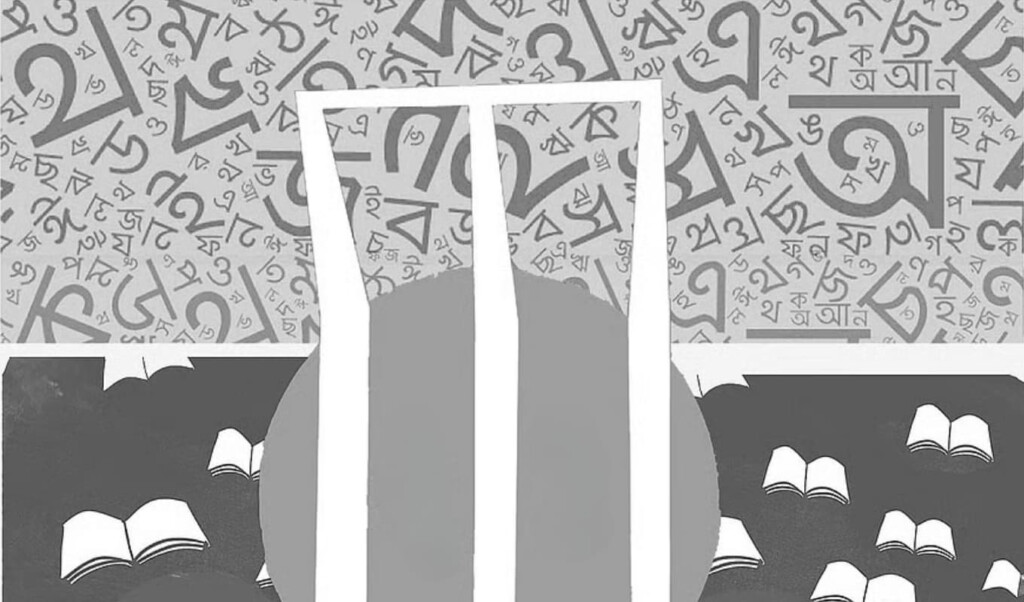
The Language Movement of 1952 is frequently recalled as a struggle against Urdu. In truth, the conflict was never about hostility towards a particular tongue. It was about the right to speak, administer, and think in one’s mother language. Had another language—Punjabi, Pashto, Sindhi, or Saraiki—been imposed by the Pakistani state, resistance would likely have been identical. The central issue was not Urdu itself, but what may be described as the “Pakistan syndrome”: a pattern of political centralisation that sought to privilege a minority identity at the expense of a majority.

The demographic facts of the period are revealing. At the time of Pakistan’s formation, Urdu was not the mother tongue of most citizens. It was primarily spoken by migrants from northern India—commonly referred to as Muhajirs—who constituted a relatively small share of the population.

Language (circa 1951) Approximate Share of Population
Bengali 54%
Punjabi 28%
Pashto 8%
Sindhi 7%
Urdu (mother tongue) 7%

To declare Urdu the sole state language was therefore less a cultural decision than a political calculation. It would have rendered the majority administratively disadvantaged overnight—particularly in civil service examinations, legal proceedings and official communication. Such a shift threatened to transform a literate population into one deemed unqualified by fiat.

Even today, in Pakistan, Urdu remains widely used in official settings, yet it is not the primary language spoken at home by most citizens. Its ranking in terms of native speakers trails behind several regional languages. The pattern illustrates a paradox: symbolic reverence does not necessarily translate into lived linguistic practice.

The present controversy in Bangladesh similarly exposes contradictions. Many who loudly champion Urdu possess limited proficiency in it and little familiarity with its literary canon. A genuine engagement with the works of writers such as Saadat Hasan Manto or poets like Faiz Ahmed Faiz, Habib Jalib, Kishwar Naheed, Fahmida Riaz and Ahmad Faraz often reveals discomfort rather than devotion. Their writings, many of which critique authoritarianism and social injustice, complicate simplistic narratives of cultural nostalgia.

The underlying tension, therefore, appears less about love for Urdu and more about unresolved antagonism towards the historical legacy of 1952, the Mass Uprising of 1969, and the Liberation War of 1971. These milestones remain foundational to Bangladesh’s political identity. Attempts to dilute or relativise them frequently resurface in coded linguistic debates.

Today, 21 February is observed globally as International Mother Language Day, an acknowledgement of sacrifice in defence of linguistic rights. That legacy is diminished not by the existence of other languages, but by intolerance and historical amnesia. The enduring struggle is not against Urdu, nor against any language. It is against authoritarian impulses, sectarian politics and calculated misinformation—the enduring features of the so-called Pakistan syndrome.

To honour the past authentically is to strengthen pluralism, cultural confidence and liberal democratic values, ensuring that divisive rhetoric loses relevance before it gains traction.
Comments