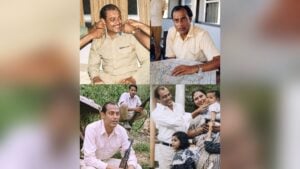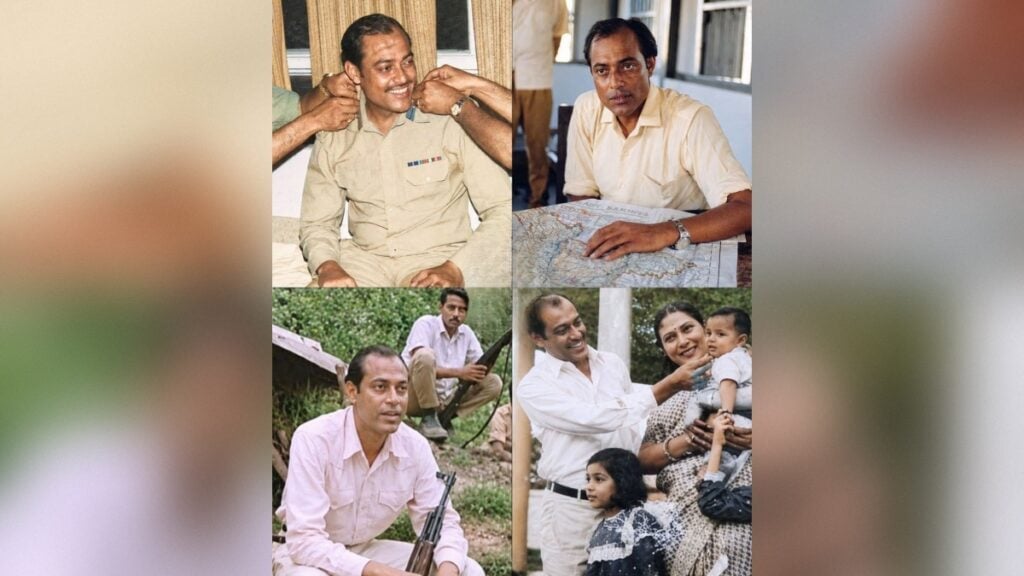
The history of Bangladesh’s 1971 Liberation War is defined by exceptional military figures whose bravery, strategic foresight, and leadership set them apart. Amongst these iconic leaders, Major General Khaled Mosharraf, Bir Uttom, stands as a premier figure—a courageous frontline combatant, an astute organiser, and a master tactician of modern irregular warfare.
Evaluating Mosharraf solely as a heroic freedom fighter fails to capture the full scope of his military genius. He was the architect who demonstrated how small, well-organised guerrilla units could paralyse a heavily fortified occupying force, erode enemy morale, and project the reality of a nation’s liberation struggle onto the international stage.
+----------------------------------------------------------------------------------------------------+
|                      CHRONOLOGY OF MAJOR GENERAL KHALED MOSHARRAF (1937–1975)                      |
+----------------------+-----------------------------------------------------------------------------+
| Date                 | Event / Historic Milestone                                                  |
+----------------------+-----------------------------------------------------------------------------+
| 9 November 1937      | Born in Islampur, Jamalpur sub-division (then Mymensingh District).         |
| March 1971           | Serves with 4th East Bengal Regiment; revolts against Pakistan Army.         |
| April 1971           | Plays key role in Teliapara Strategy Meeting; appointed Sector 2 Commander. |
| June 1971            | Formulates urban strategy; oversees the creation of the Crack Platoon.      |
| August–Sept 1971     | Raises and commands the regular military brigade known as 'K-Force'.        |
| 23 October 1971      | Sustains severe head injury during the Battle of Belonia / Salda Nadi.      |
| 1972–1975            | Appointed Chief of General Staff (CGS) of the Bangladesh Army.              |
| 3 November 1975      | Leads military coup to restore chain of command; appointed Chief of Army.   |
| 7 November 1975      | Assassinated during a counter-coup in Sher-e-Bangla Nagar, Dhaka.           |
+----------------------+-----------------------------------------------------------------------------+
Early Life and the Revolt of 1971
Born on 9 November 1937 in Islampur, within the Jamalpur sub-division of the former Mymensingh district, Khaled Mosharraf was the son of Mosharraf Hossain. After completing his education, he joined the Pakistan Military Academy and was commissioned into the Pakistan Army.
When the Pakistani military launched Operation Searchlight on the night of 25 March 1971 to crush Bengali nationalist aspirations, Mosharraf was serving as a Captain with the 4th East Bengal Regiment. Rejecting his commission under the occupying regime, he aligned himself immediately with the Bengali struggle for self-determination and led his troops into open rebellion.
Following initial resistance operations, Mosharraf played a decisive role at the historic Teliapara headquarters meeting in April 1971, where the strategic framework, command structure, and sector designations of the Bangladesh Liberation War were established.
Sector 2 Commander and the Urban Warfare Doctrine
Appointed Commander of Sector 2, Mosharraf assumed responsibility for a highly sensitive strategic expanse covering Dhaka, Comilla, Faridpur, and Noakhali. Recognising that Sector 2 encompassed the political and economic heart of the country, he devised a dual-track strategy combining regular conventional engagements along the border with aggressive urban guerrilla warfare in the interior.
To destabilise the occupying forces in the capital, Mosharraf, alongside Major A.T.M. Haider, conceptualised and raised the urban guerrilla unit known as the Crack Platoon in June 1971. Initially comprising 17 young civilian volunteers—mostly students and young professionals from Dhaka—the unit underwent intensive specialized sabotage and tactical training at the Melaghar camp in Tripura.
Deploying to Dhaka in early June, the Crack Platoon executed sudden hit-and-run attacks targeting major infrastructure, military checkpoints, fuel depots, and high-profile targets such as the Hotel Intercontinental. These operations served two vital purposes: destroying military assets and obliterating the Pakistani regime’s propaganda campaign, which sought to convince visiting World Bank delegates and international observers that conditions in East Pakistan had returned to normal.
The Raising of K-Force and Conventional Warfare
Mosharraf recognised that while guerrilla tactics could weaken an army of occupation, victory required conventional military power. In August 1971, he organised regular elements of the East Bengal Regiment into a unified brigade designated as K-Force—derived from his initial.
Comprising the 4th, 9th, and 10th East Bengal Regiments, K-Force functioned as a mobile, highly disciplined strike brigade capable of undertaking sustained artillery-supported offensives alongside Allied forces during the final phase of the war.
On 23 October 1971, while directing operations during the ferocious Battle of Salda Nadi in Kasba, Comilla, Mosharraf was hit by enemy shrapnel, sustaining a critical head injury. Evacuated to the Military Hospital in Lucknow, India, he underwent extensive surgery and recovered to return to active service.
Post-Independence Service and Tragic End
Following independence, Mosharraf was awarded Bir Uttom, Bangladesh’s second-highest military decoration for gallantry. He rose to the rank of Brigadier and was appointed Chief of General Staff (CGS) of the Bangladesh Army.
The political instability that followed the assassination of President Sheikh Mujibur Rahman on 15 August 1975 severely disrupted the army’s chain of command. Seeking to restore internal order and neutralize the faction of officers controlling the government, Brigadier Mosharraf led a military counter-coup on 3 November 1975. He assumed command as Major General and Chief of Army Staff.
However, the political landscape remained volatile. On 7 November 1975, amid a sudden counter-uprising, Major General Khaled Mosharraf was killed at Sher-e-Bangla Nagar in Dhaka, along with fellow war heroes Lieutenant Colonel A.T.M. Haider, Bir Uttom, and Colonel Khondkar Nazmul Huda, Bir Bikrom.
Khaled Mosharraf remains a towering figure in South Asian military history—a leader who successfully bridged the gap between urban guerrilla strategy and conventional warfare to secure the independence of Bangladesh.