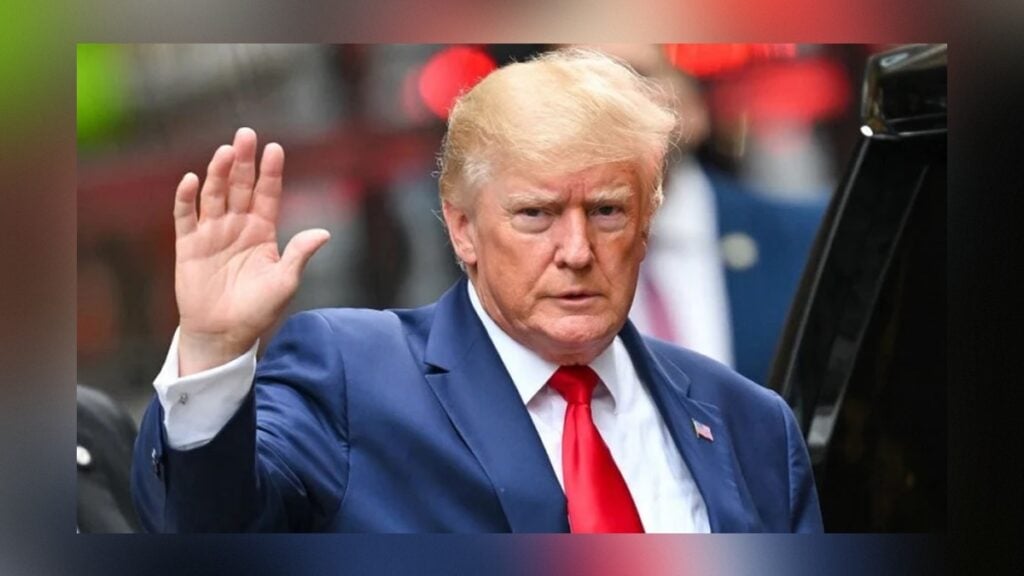
US President Donald Trump has warned that American forces are prepared to strike Iran “whenever they want”, while insisting that the conflict between Washington and Tehran is unlikely to last for a long time.
Trump made the remarks on Wednesday as tensions between the United States and Iran intensified following a fresh wave of military exchanges. His comments came amid reports of civilian casualties in Iran and retaliatory Iranian attacks involving several Gulf states.
Iranian health officials said on Thursday that at least 18 people had been killed and 142 injured in recent US strikes. According to Hossein Kermanpour, spokesman for Iran’s Health Ministry, the casualties were recorded between 30 August and 2 September.
Kermanpour said 61 of those injured were women and 44 were minors. Among those killed were two women and one child. In a post on social media platform X, he stressed that behind every casualty was an individual and a family.
The latest escalation follows a renewed deterioration in relations between the two countries after fighting intensified again in July. On Wednesday, the United States carried out large-scale strikes at several locations in Iran, prompting Tehran to launch retaliatory attacks, according to Iranian and regional officials.
The conflict has now raised concerns beyond the immediate US-Iran confrontation. Kuwait, Bahrain and Iraq have all been drawn into the latest developments, while Iran has said it targeted American military facilities in Kuwait and the United Arab Emirates.
Kuwaiti military authorities said their air-defence systems were being used to intercept Iranian drones and missiles. Iran described its attacks as a response to what it called US actions against the Iranian population.
A US official, however, told Al Jazeera that the latest Iranian strikes had failed to hit any American military installations in the region. The official also said that US bases in Kuwait had not been struck.
Iran has separately reported losses within its armed forces, saying three military pilots and six navy personnel were killed in US attacks.
Bahrain condemns attacks on Kuwait
Bahrain has condemned the reported Iranian attacks on Kuwait, accusing Tehran of violating Kuwait’s sovereignty through repeated attacks.
In a statement, Bahrain’s Foreign Ministry said the strikes were undermining efforts to prevent the conflict from spreading across the region and were creating additional risks for regional security and stability.
Manama also called on the United Nations Security Council to take firm action to ensure that Iran complies with international law.
The developments have heightened concern among Gulf states, which are already facing the possibility of being drawn further into the confrontation between Washington and Tehran. Any expansion of military operations beyond Iran and the United States could increase the risks to civilian populations and critical infrastructure across the region.
UN chief raises alarm over civilian deaths
UN Secretary-General António Guterres has expressed concern over civilian casualties in the conflict, with particular attention to reports of an attack on a wedding ceremony in Iran.
His spokesman, Stéphane Dujarric, said Guterres had called for an immediate end to military operations and condemned attacks against civilians.
“The Secretary-General condemns all attacks against civilians,” Dujarric said, stressing that all parties must fulfil their obligations under international humanitarian law.
The United States military has rejected reports that it deliberately targeted civilian infrastructure. US Navy Captain Tim Hawkins, a spokesman for US Central Command, said in an email that American officials were aware of the reports, which had initially appeared in Iranian state media.
Hawkins said the US military does not target civilian infrastructure.
The reported attack on a wedding has also drawn comparisons with an earlier incident involving a school in Minab during the first day of the conflict. That incident reportedly killed 160 people and has become one of the most serious allegations involving civilian infrastructure during the fighting.
The Pentagon has not yet issued a formal statement on the Minab incident. Reuters, citing two sources, reported that the figures surrounding the incident may have been affected by outdated information.
The issue has also attracted attention in Washington. Democratic members of the US Congress have called on the administration to release information emerging from its investigation into the incident. However, the report has not yet been provided to lawmakers.
With Washington threatening further military action and Tehran continuing to respond to US strikes, the confrontation is entering a particularly volatile phase. The involvement of Gulf countries has added another layer of uncertainty, while mounting reports of civilian casualties are increasing international pressure for an end to the fighting.