The United States is facing a significant depletion of its critical weapon stockpiles, a vulnerability that could intensify if military strikes against Iran continue at their current rate. This assessment comes at a highly volatile juncture, following President Donald Trump’s formal declaration that the ceasefire with Iran is officially over. Defence experts warn that the current ammunition deficit could severely compromise the Pentagon’s ability to respond to potential future conflicts with major adversaries, such as China or North Korea.
During the initial phases of the conflict with Iran, the US military deployed thousands of frontline missiles. These operations required a heavy reliance on long-range precision guided munitions to strike enemy positions and neutralize incoming aerial and missile threats. The sheer volume of munitions expended has raised alarms across the defence establishment. Michael O’Hanlon, director of foreign policy research at the Brookings Institution, confirmed that stockpiles have plummeted well below preferred levels.
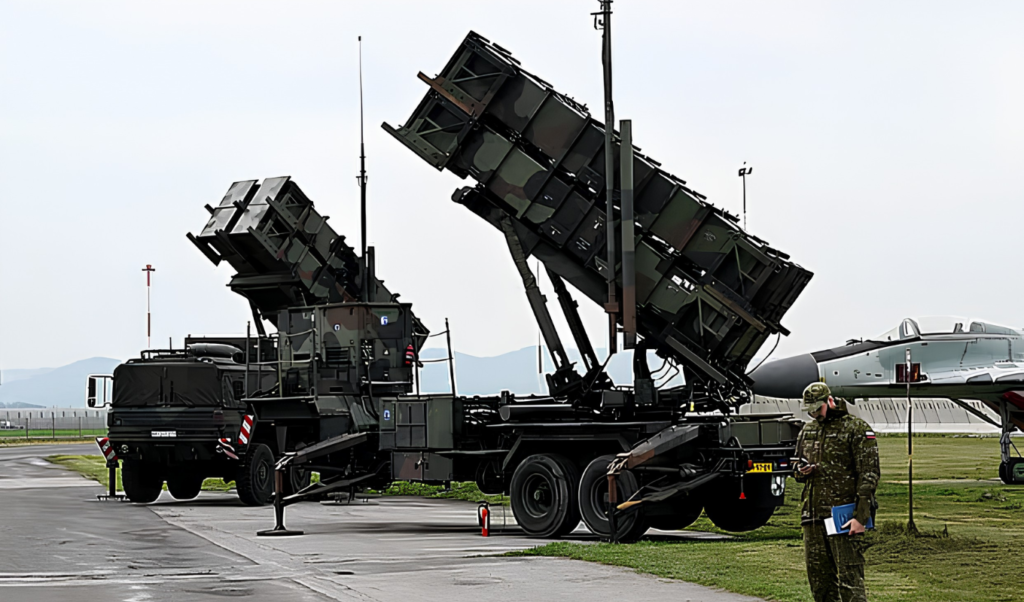
Analysis from the Centre for Strategic and International Studies (CSIS) indicates that by the time full-scale hostilities subsided in April, the Pentagon had already fired approximately half of its Terminal High Altitude Area Defence (THAAD) interceptors. The military had also expended nearly half of its Patriot air defence missiles and roughly 30 per cent of its land-attack Tomahawk cruise missiles. Three sources with direct knowledge of the Department of Defence’s internal inventory figures have verified the accuracy of these statistics.
Replacing these sophisticated weapon systems presents a severe logistical challenge, given that the production lines operate at a remarkably slow pace. Under the current fiscal year’s delivery schedule, the Pentagon receives only about 15 new Tomahawk missiles and 20 new Patriot missiles each month. Alarmingly, there are no projected deliveries for THAAD interceptors in 2026. Mark Cancian, a defence analyst at CSIS and a retired US Marine Corps colonel, estimated that it will take at least three years, if not longer, to replenish these inventories to pre-war levels. He cautioned that if the current rate of expenditure persists, the resulting depletion will introduce critical strategic risks in the Indo-Pacific theatre.
Compounding the crisis is a lack of immediate emergency financing. John Ferrari, a defence procurement expert at the American Enterprise Institute, noted that the US Congress has yet to approve supplementary funding to address these missile shortages. Consequently, replenishment remains tethered to a sluggish, peace-time annual procurement cycle. While the White House has formally requested a supplemental budget from lawmakers to cover the rising operational costs of the war, the proposal faces a difficult and highly polarised path to passage in Congress.
In response to these mounting concerns, a Pentagon official stated that the defence department is fully committed to rapidly expanding the domestic defence industrial base. To circumvent bureaucratic delays and accelerate missile manufacturing, President Trump invoked the Defence Production Act in June. The Pentagon has also finalised new contracts with major defence manufacturers to establish additional assembly lines. The official maintained that the department is leveraging cutting-edge technology to scale production and strengthen supply chain resilience.
However, external experts remain sceptical about immediate relief. Cancian noted that whilst invoking the Defence Production Act is helpful, its near-term impact will be limited because expanding industrial capacity takes considerable time. He warned that an extended weapon shortage jeopardises more than just potential operations involving China. In any contingency plan involving North Korea, the US military would require an immense volume of interceptors and strike missiles to neutralise Pyongyang’s artillery assets and protect allied forces stationed in Seoul. Continued high-intensity expenditure in the Middle East could leave the US dangerously exposed elsewhere.