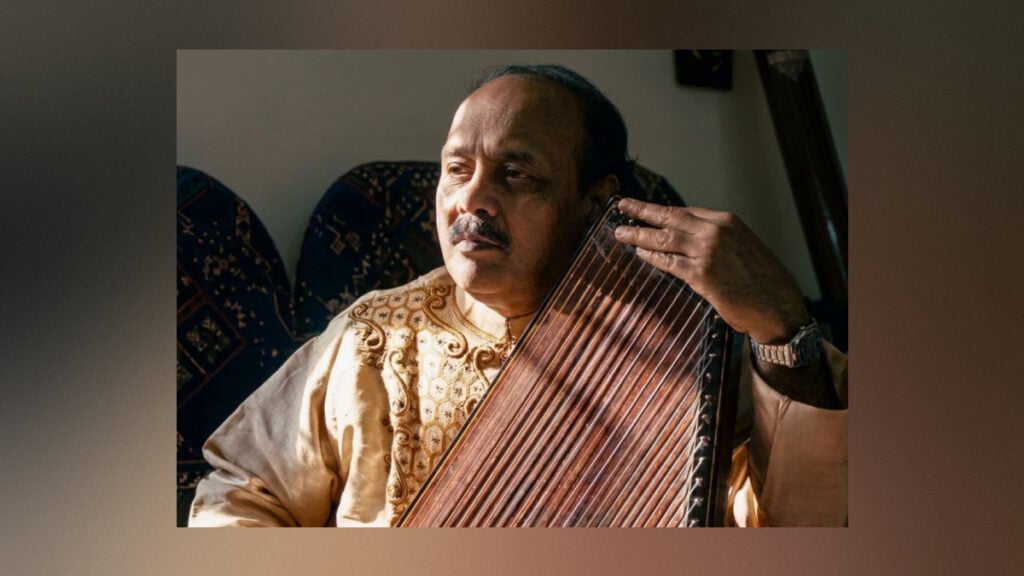
Rain can be nature’s lament, a gentle reminder of memories that refuse to fade. Each falling drop may bring back a familiar voice, a cherished moment or emotions long tucked away in the heart. When rain mingles with a beloved melody, the past often feels remarkably close. On the birthday of Ustad Niaz Mohammad Chowdhury, one of Bangladesh’s distinguished singers, the evocative song Aj Ei Brishtir Kanna Dekhe Mone Porelo Tomay brings his voice and musical legacy to mind once again.
Happy birthday, Ustad Niaz Mohammad Chowdhury. The occasion offers an opportunity to celebrate an artist whose musical journey has been shaped by dedication to classical traditions, the expressive depth of raga-based compositions and the emotional richness of Bengali songs.
Chowdhury holds a distinctive place in Bangladesh’s musical landscape. His career reflects a commitment to disciplined practice and artistic integrity, qualities that extend beyond the conventional measures of commercial popularity. His journey also highlights the patience and perseverance required to sustain a demanding musical tradition.
A Life Dedicated to the Pursuit of Music
Classical music demands considerably more than a melodious voice. It requires a thorough understanding of ragas, precise control of pitch, an instinctive sense of rhythm and the ability to interpret the emotional character of a composition. These skills develop through years of disciplined practice, attentive listening and guidance from experienced teachers.
Although classical music has a comparatively limited audience in Bangladesh, dedicated performers have continued to preserve and enrich the tradition. Chowdhury is among the musicians associated with this demanding art form. His musical identity brings together the depth of classical music, the intricacies of raga-based singing and the emotional appeal of Bengali melodies.
His artistic journey reflects an approach in which music is more than a means of achieving recognition. The pursuit of tonal purity, an appreciation of ragas and respect for musical traditions are central to the discipline he represents.
Training Under the Patiala Gharana Tradition
The Patiala gharana is one of the prominent traditions of Hindustani classical music, renowned for its contribution to vocal performance across the Indian subcontinent. Chowdhury received classical music training from two celebrated exponents of this tradition, Ustad Amanat Ali Khan and Ustad Fateh Ali Khan.
The knowledge he acquired through this musical lineage helped deepen his understanding of classical performance. Regular practice, an appreciation of musical structure and close attention to the nuances of vocal expression are essential elements of this tradition.
His musical interests encompass forms such as khayal, thumri and ghazal, each of which demands a different approach to melody and emotional interpretation. Khayal allows considerable scope for improvisation and the development of a raga, while thumri places particular emphasis on expressive nuance. Ghazal, meanwhile, draws much of its appeal from the relationship between poetry, melody and feeling.
The beauty of classical music often lies in subtle changes of pitch, the unfolding of a raga and the performer’s command of rhythm and phrasing. Sustaining a meaningful relationship with this demanding art form requires patience, discipline and continuous learning. Chowdhury’s musical background reflects that tradition of dedication.
Early Life and Education
Niaz Mohammad Chowdhury was born on 25 October 1952 in Khainkut village, in Shibpur upazila of Narsingdi district, Bangladesh. Although he spent part of his early childhood in the village with his family, Dhaka became the principal setting for his upbringing.
His academic journey progressed alongside his growing interest in music. He completed his secondary education at Nawab Kumar Institution in Bakshibazar, Dhaka, in 1967, followed by higher secondary education at Dhaka College in 1969. In 1971, he graduated from the University of Dhaka.
His formal education formed an important part of his early life, while music gradually became his principal pursuit. At one stage, he also taught for a period at a university in London. Despite this experience outside the immediate world of performance, his commitment to music remained an enduring feature of his life.
From Television to International Stages
Chowdhury’s international musical journey began in 1979, when he travelled to Malaysia and Singapore to perform. These early engagements marked an important stage in his career, creating opportunities to present his music to audiences beyond Bangladesh.
His first television music performance came later, in 1985, on Bangladesh Television’s programme Amar Joto Gaan. The programme was presented by the distinguished academic, poet and lyricist Dr Abu Hena Mostafa Kamal.
Performing abroad gave Chowdhury opportunities to introduce Bengali music and Bangladesh’s musical traditions to audiences from different cultural backgrounds. When a musician performs beyond national borders, the experience can also create a meeting point between cultures, allowing listeners unfamiliar with the language to appreciate the expressive qualities of the music.
His performances in different countries therefore form a notable part of his musical journey. They also illustrate the role individual artists can play in presenting their country’s cultural heritage to international audiences.
Finding an Individual Path Amid Changing Musical Tastes
The 1980s and 1990s were important decades for the growth of Bangladesh’s recorded music industry. Audio cassettes helped songs reach households across the country, while new singers, fresh compositions and changing arrangements broadened the popular music scene. Several performers gained widespread recognition during this period.
Against this changing musical backdrop, Chowdhury developed a distinct identity through his engagement with classical music and his commitment to disciplined practice. His contribution cannot be assessed solely by counting popular songs or measuring the scale of his public visibility.
Classical music follows a different rhythm from the commercial music industry. A performer’s development depends on years of training, the gradual refinement of technique and an increasingly sophisticated understanding of musical expression. The results are not always captured by conventional measures of popularity.
Chowdhury’s significance lies partly in his association with a tradition in which artistic depth and musical discipline remain central. His career provides an opportunity to reflect on the value of sustained artistic commitment in an industry that often places considerable emphasis on immediate recognition.
A Voice That Connects Classical Music with Emotion
Chowdhury’s command of raga-based performances and his engagement with forms such as khayal, thumri and ghazal have contributed to his distinctive musical identity.
One of the remarkable qualities of classical music is the opportunity it offers performers to discover different emotional dimensions within the same raga. Through changes in phrasing, melodic development and interpretation, a familiar musical structure can reveal new shades of feeling.
Music, in this context, becomes more than a sequence of pleasing sounds. It becomes a language through which performers communicate emotions that words alone may struggle to express. For listeners, the experience can be both intellectually engaging and deeply personal.
Chowdhury’s association with this musical tradition reflects the importance of such depth and sensitivity. Those drawn to his singing can appreciate not only the melody itself but also the discipline and experience that underpin classical performance.
The Enduring Appeal of a Rain-Soaked Melody
Among Chowdhury’s widely recognised songs is Aj Ei Brishtir Kanna Dekhe Mone Porelo Tomay, a melody whose title evokes memories, longing and affection. Rain has long occupied a special place in Bengali poetry and music, often serving as a symbol of separation, reflection and the persistence of love.
The sound of rainfall can recall a particular person or a moment from the past. A familiar melody may intensify that feeling, transforming an ordinary scene into a deeply personal experience. The appeal of a song often depends not only on its composition and performance but also on the memories listeners attach to it.
A song can accompany people through different stages of life. What once sounded like a simple expression of affection may later bring back the memory of a relationship, a period of separation or a time that can no longer be revisited. Such associations allow music to remain meaningful long after its first release.
The emotional appeal of Chowdhury’s rain-themed song reflects this relationship between music and personal memory. Its atmosphere connects with experiences familiar to many listeners, making it more than a performance to be heard and forgotten.
Remembering the singer on a rainy day therefore carries a particular significance. The weather, the melody and the memories it evokes become intertwined, reminding listeners of the powerful role music can play in their emotional lives.
A Commitment Beyond Publicity
Chowdhury is also associated with a relatively private approach to his personal and artistic life. Rather than continually seeking public attention, he has maintained a connection with music that reflects the quieter, more disciplined side of an artist’s journey.
The contemporary music industry places considerable emphasis on visibility. Television appearances, publicity campaigns and social media engagement can all influence how frequently an artist is discussed. Yet public exposure and artistic depth are not necessarily the same thing.
A musician’s contribution cannot be measured entirely by how often their name appears in the media. The ability to interpret a composition with sensitivity, maintain technical discipline and create a lasting emotional connection with listeners can be equally important.
Media platforms nevertheless have an important role in preserving classical music and introducing it to younger audiences. Recordings of experienced performers, discussions of musical traditions and opportunities to learn from established artists can help make this heritage more accessible.
Chowdhury’s career provides a reminder of why such efforts matter. Sustaining a musical tradition requires not only accomplished performers but also institutions, teachers, audiences and platforms that support the continued transmission of knowledge.
Music and Family Heritage
Music also occupies a place in Chowdhury’s family life. His wife, Sabra Niaz, comes from a musical family, while his father-in-law, Syed Zakir Hossain, was a respected figure associated with classical music in the Indian subcontinent and was known as a composer and teacher.
Such a family environment can provide a setting in which musical appreciation and artistic traditions are shared across generations. It can also encourage an understanding of music that extends beyond performance to include discipline, sensitivity and respect for cultural heritage.
The couple have two children, Faiyaz Mohammad Chowdhury and Mehnaz Chowdhury Barkha. Although neither is described as a professional musician, both sing and share an interest in music.
The presence of music within a family is not limited to the inheritance of vocal ability. It can also involve the passing on of aesthetic values, habits of attentive listening and respect for artistic practice. In this respect, the musical connections within Chowdhury’s family form another dimension of his life.
Preserving Bangladesh’s Classical Music Heritage
A country’s cultural identity is shaped by many forms of artistic expression. Popular songs, film music and folk traditions all play their part, but classical music also occupies an important place in the wider cultural landscape. Its traditions depend on specialist knowledge, sustained training and the transmission of musical understanding from one generation to the next.
Classical music can be demanding for both performers and students. Learning a raga, developing control over pitch and rhythm, and understanding the principles of a musical form require time and sustained effort. Expanding access to training and creating opportunities for young musicians are therefore important to the continued development of the tradition.
Experienced performers have a valuable role in this process. Their knowledge, interpretations and practical experience can help younger musicians understand not only the technical foundations of classical music but also the artistic sensitivity needed to perform it meaningfully.
Preserving recordings, documenting musicians’ experiences and making performances available to future audiences can also contribute to this effort. Such initiatives would help ensure that valuable musical knowledge remains accessible to students, researchers and listeners.
The career of an artist such as Chowdhury offers an opportunity to reflect on the importance of these responsibilities. Music can entertain, but it can also deepen emotional understanding, refine artistic sensibilities and strengthen a society’s relationship with its cultural roots.
Birthday Wishes for a Dedicated Musician
Ustad Niaz Mohammad Chowdhury’s birthday is an occasion to celebrate not only the singer but also the dedication that has shaped his musical life. His association with classical traditions and the emotional appeal of his Bengali songs have given listeners different reasons to remember his work.
Musical tastes change with time. New genres emerge, technologies transform the way songs are recorded and shared, and audiences discover different performers. Yet a melody that becomes part of someone’s personal history can retain its significance for decades. A familiar voice may bring back a forgotten moment, offer comfort during a difficult period or evoke affection for someone who is no longer present.
That is the enduring power of music. It allows individual experiences to find expression in a form that others can recognise and share. For many listeners, Aj Ei Brishtir Kanna Dekhe Mone Porelo Tomay carries precisely this association with rain, memory and longing.
On this birthday, the song once again brings Chowdhury to mind, recalling the emotional connection between a singer and the people who listen to him.
Happy birthday, Ustad Niaz Mohammad Chowdhury.
May your dedication to music continue to inspire younger generations, and may your contribution to Bangladesh’s musical heritage receive the recognition and preservation it deserves. Your commitment to classical traditions and the expressive power of Bengali song remains a reason for listeners to celebrate your journey.
Wishing you good health, happiness and a long life filled with music.
May the melodies endure, may the tradition of musical practice flourish, and may your songs continue to find a place in the hearts of listeners for years to come.