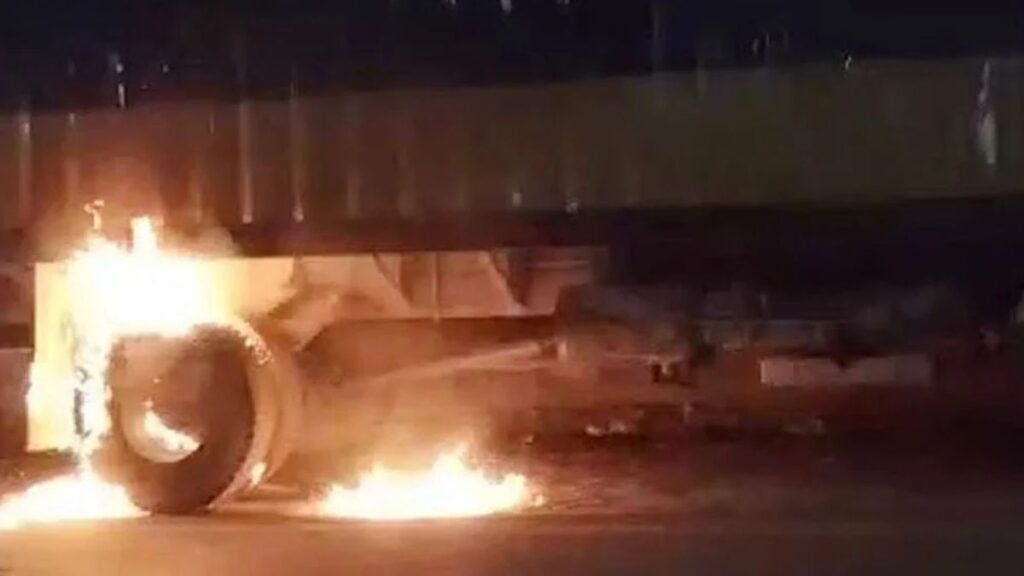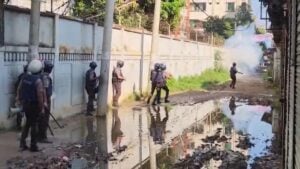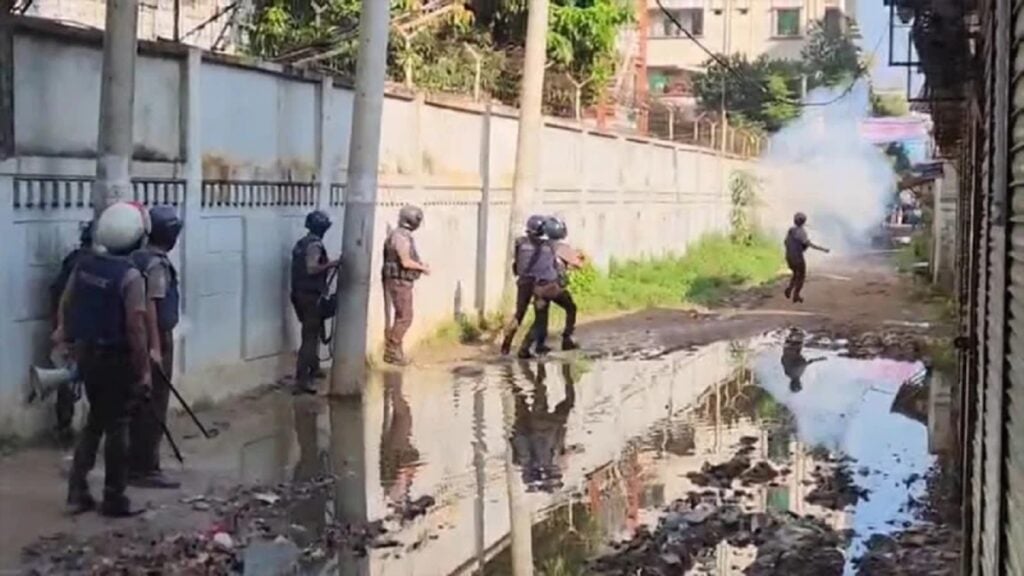
Workers arrived at their respective factories in the morning, as they would on a normal working day. However, employees at several establishments, including Sharmin Group, Next Collection and Yagi Bangladesh Limited, refused to start work and gathered outside their factory premises. As the situation became increasingly tense, the authorities announced a general holiday at the affected factories.
The workers are demanding an immediate announcement of a revised minimum wage. They argue that the government is already taking steps through the wage board to determine a new pay structure and that the process should be completed without further delay. According to them, the proposed minimum monthly wage of Tk 30,000 is necessary to cope with the rising cost of living and growing household expenses.
Factory owners, however, say the wage board’s work is still under way and that workers are expected to receive their revised wages from December. They have urged workers to allow the formal process to continue rather than disrupting production through demonstrations and work stoppages.
Amid the continuing unrest, factory authorities say they have little choice but to suspend operations under Section 13(1) of the Bangladesh Labour Act. Under this provision, workers taking part in a strike during such a closure are not entitled to wages for the period concerned, according to the employers’ interpretation cited in the report.
Mohammad Ismail Hossain, managing director of Sharmin Group, one of the major garment manufacturers in the Narsinghpur area of Ashulia, expressed concern over the financial consequences of the ongoing unrest.
He said the factory was losing between Tk 1.5 crore and Tk 2 crore every day as workers entered the premises, stopped production and subsequently left. The disruption was also affecting the flow of work orders, while repeated interruptions risked undermining the confidence of international buyers.
Hossain warned that prolonged instability could make it increasingly difficult for garment manufacturers to sustain their businesses. He also highlighted the potential consequences for the industry’s ability to maintain production schedules and fulfil export commitments.
The garment sector is a major contributor to Bangladesh’s export earnings and employs millions of workers. Maintaining stable industrial relations is therefore essential not only for factory owners and employees but also for the country’s position in the international apparel market. Repeated production disruptions can create uncertainty among overseas buyers, particularly when manufacturers struggle to meet delivery deadlines.
Meanwhile, law enforcement agencies have strengthened security measures across the industrial zone. Mohammad Mominul Islam Bhuiyan, Superintendent of Police of Industrial Police-1, said additional police personnel had been deployed alongside members of the Border Guard Bangladesh (BGB) to deal with the situation.
He added that the authorities were closely monitoring developments at the factories and taking precautionary measures to prevent further escalation.
The latest confrontation reflects the growing tension between workers seeking higher wages and factory owners concerned about production losses and business stability. With workers demanding an immediate decision and employers relying on the wage board’s ongoing process, a negotiated settlement remains crucial to restoring normal operations in Ashulia’s garment industry.